FishDiveR: wavelet analyses and machine learning provide robust classification of animal behaviour from time-depth data
January 2026
Calvin S. Beale, Jenna L. Hounslow, Angela J. E. Beer, Matias Braccini, Mark V. Erdmann, Alastair Harry, Neil R. Loneragan, Mark Meekan, Stephen J. Newman, David Righton, Ferawati Runtuboy, Michael J. Travers, Serena Wright & Adrian C. Gleiss
Keywords: Behaviour Classification • K-means Clustering • Satellite Archival Tags • Principal Component Analysis • R package • Vertical Movement • Sampling Frequency
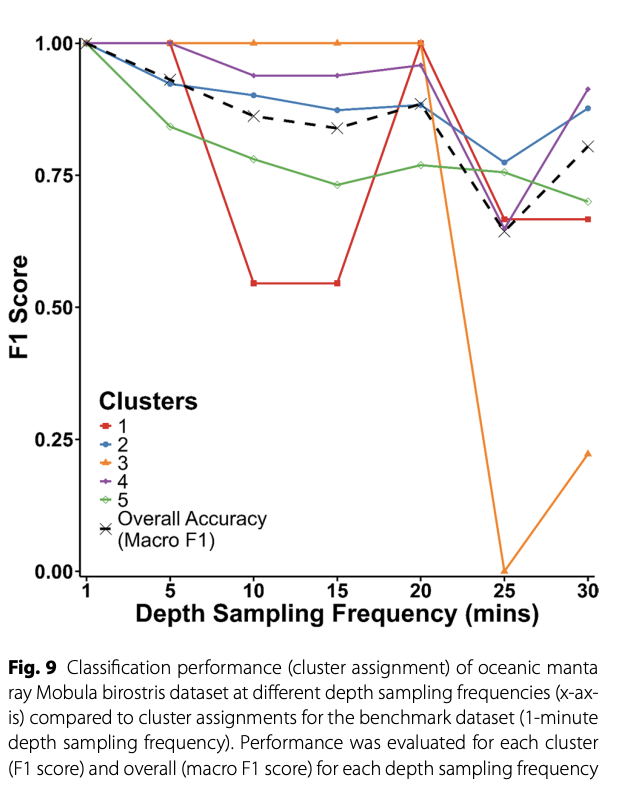
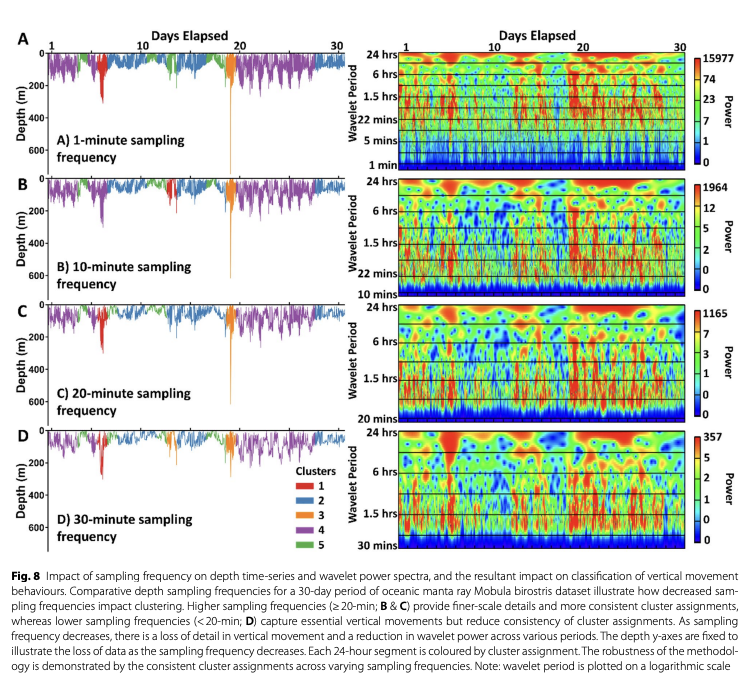
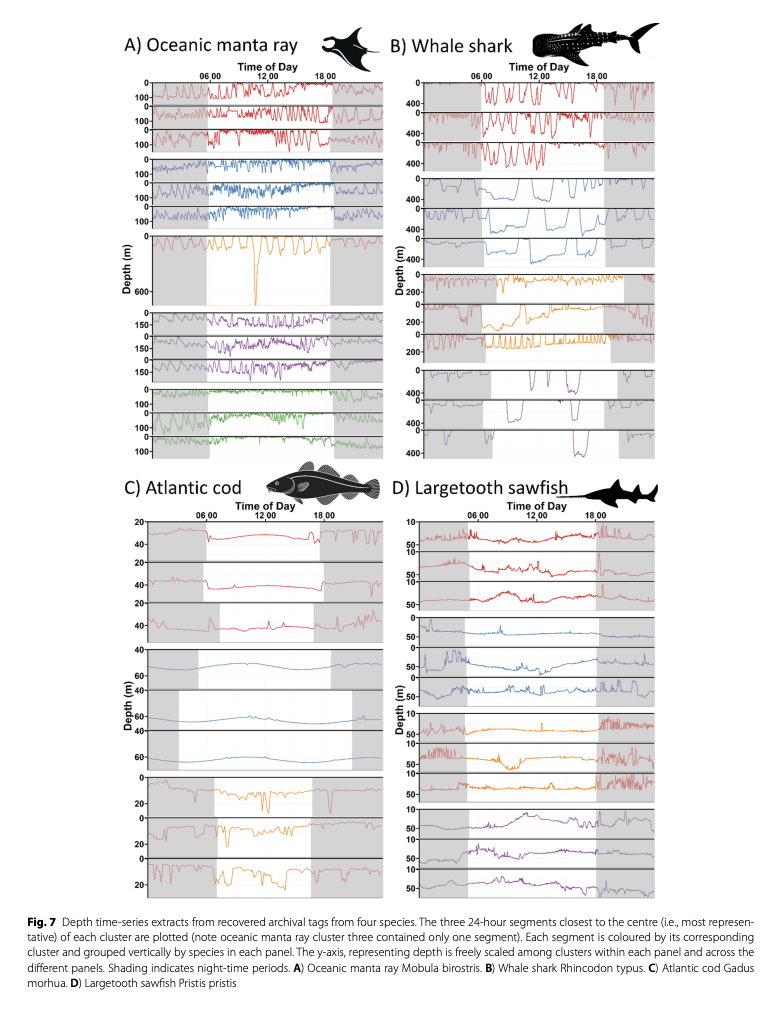
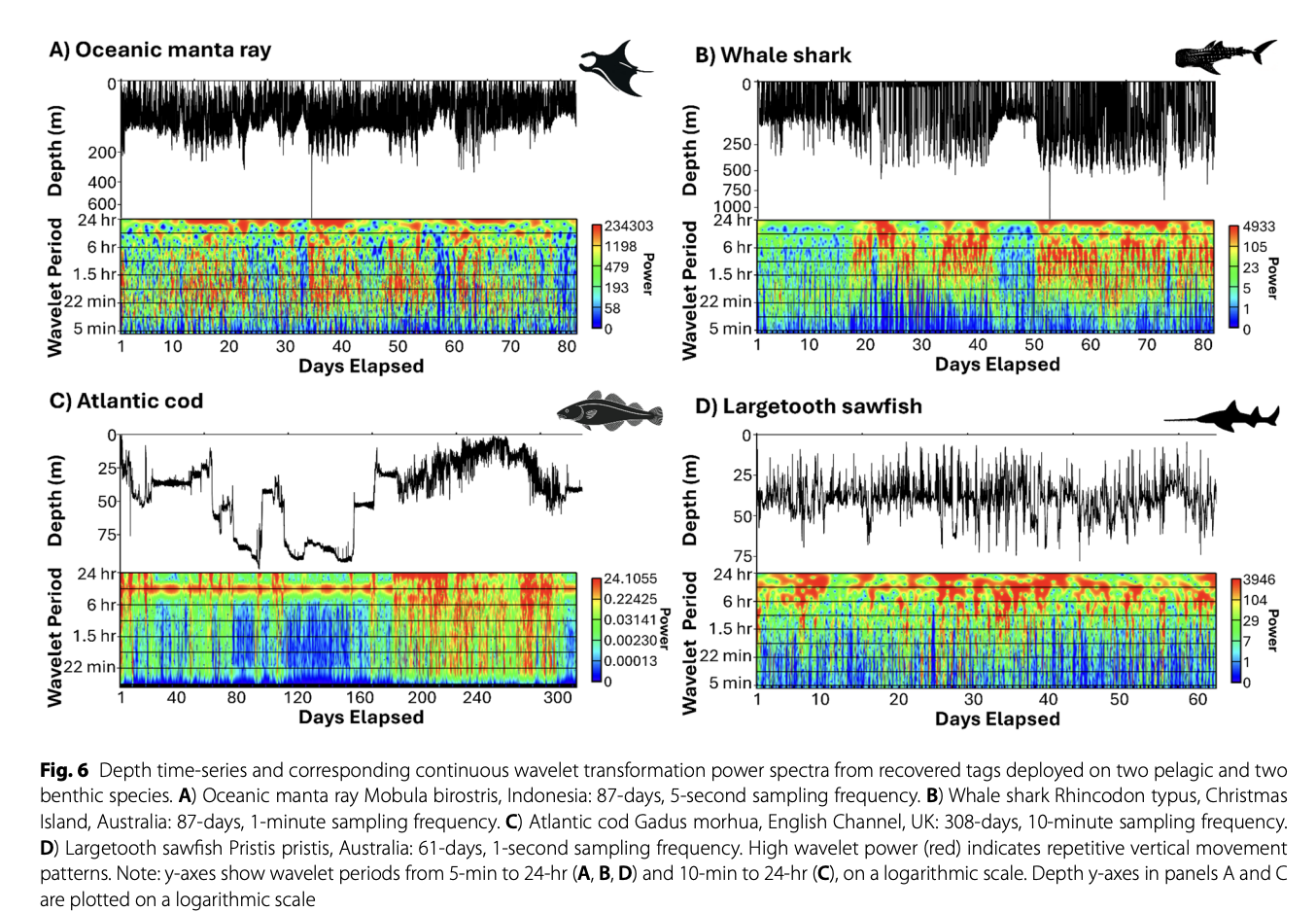
Summary: Biologging technologies now generate vast, high-resolution depth and temperature records for aquatic animals, yet much of this information is reduced to simple summaries that mask fine-scale behavioural structure. This study introduces a scalable analytical framework that extracts recurring vertical movement patterns from archival tag data using wavelet analysis, multivariate dimension reduction and unsupervised clustering. The workflow proved highly accurate in simulations and consistently identified distinct behavioural modes across diverse taxa, including the oceanic manta ray (Mobula birostris), whale shark (Rhincodon typus), Atlantic cod (Gadus morhua) and largetooth sawfish (Pristis pristis). Performance remained robust even when data were down-sampled.
Abstract
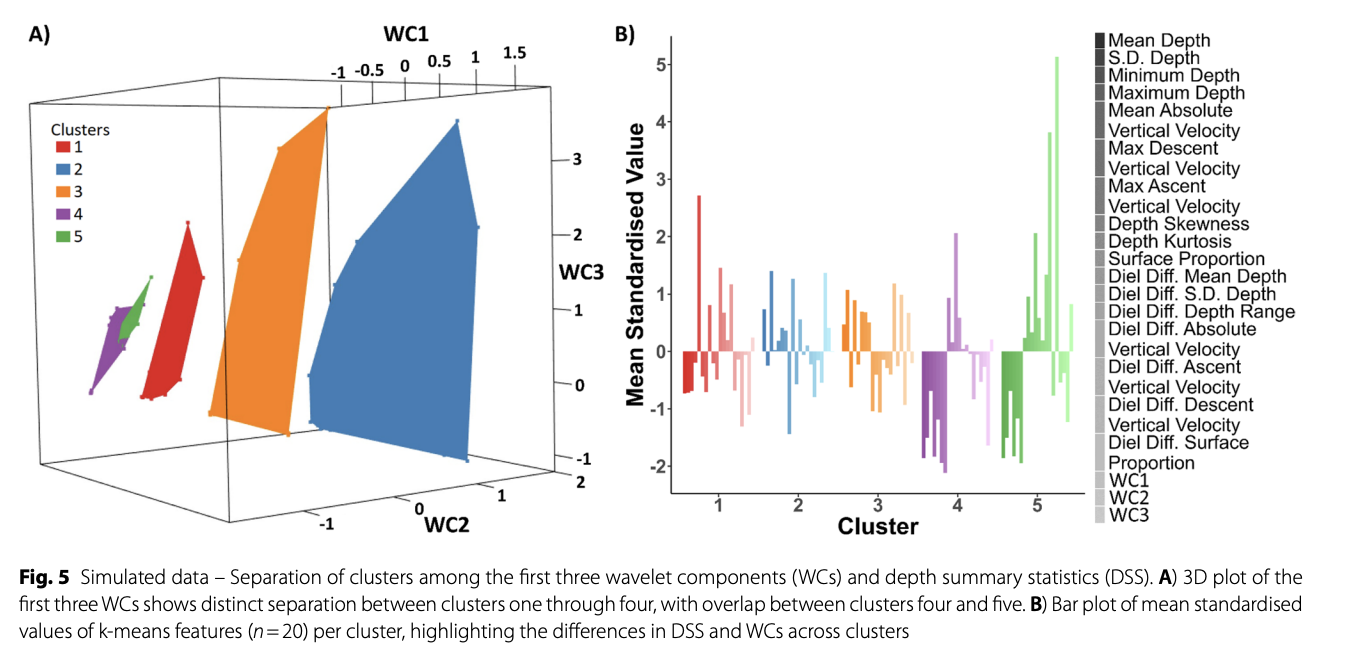
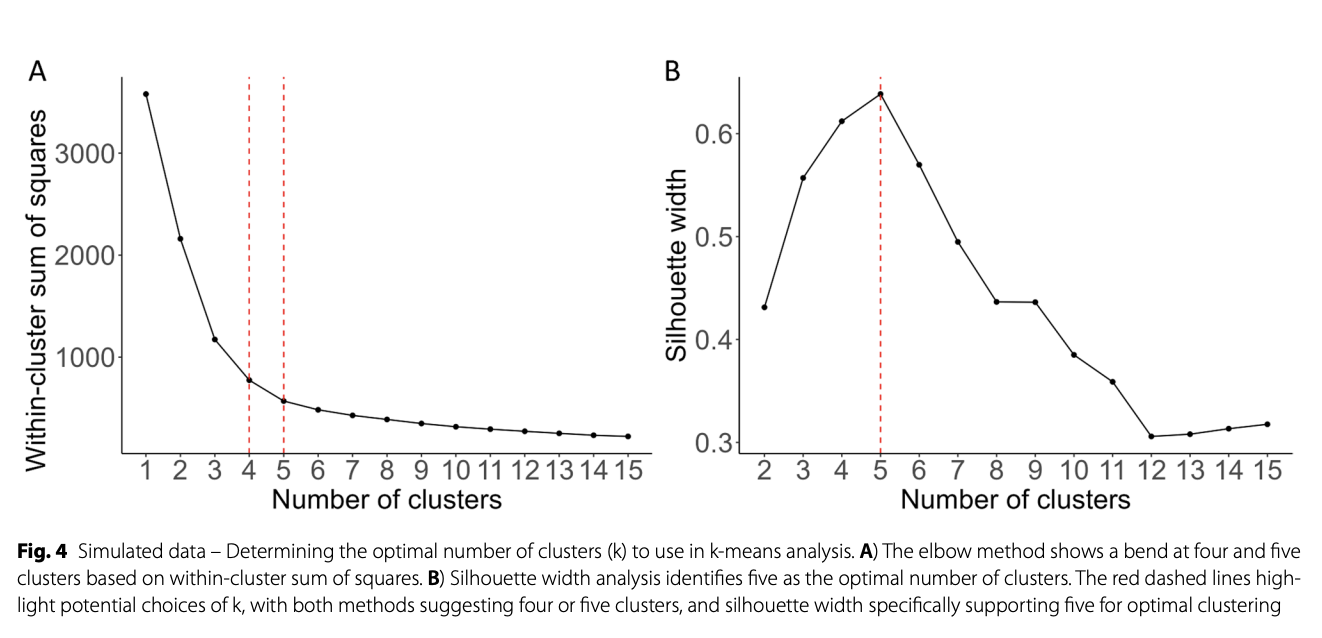
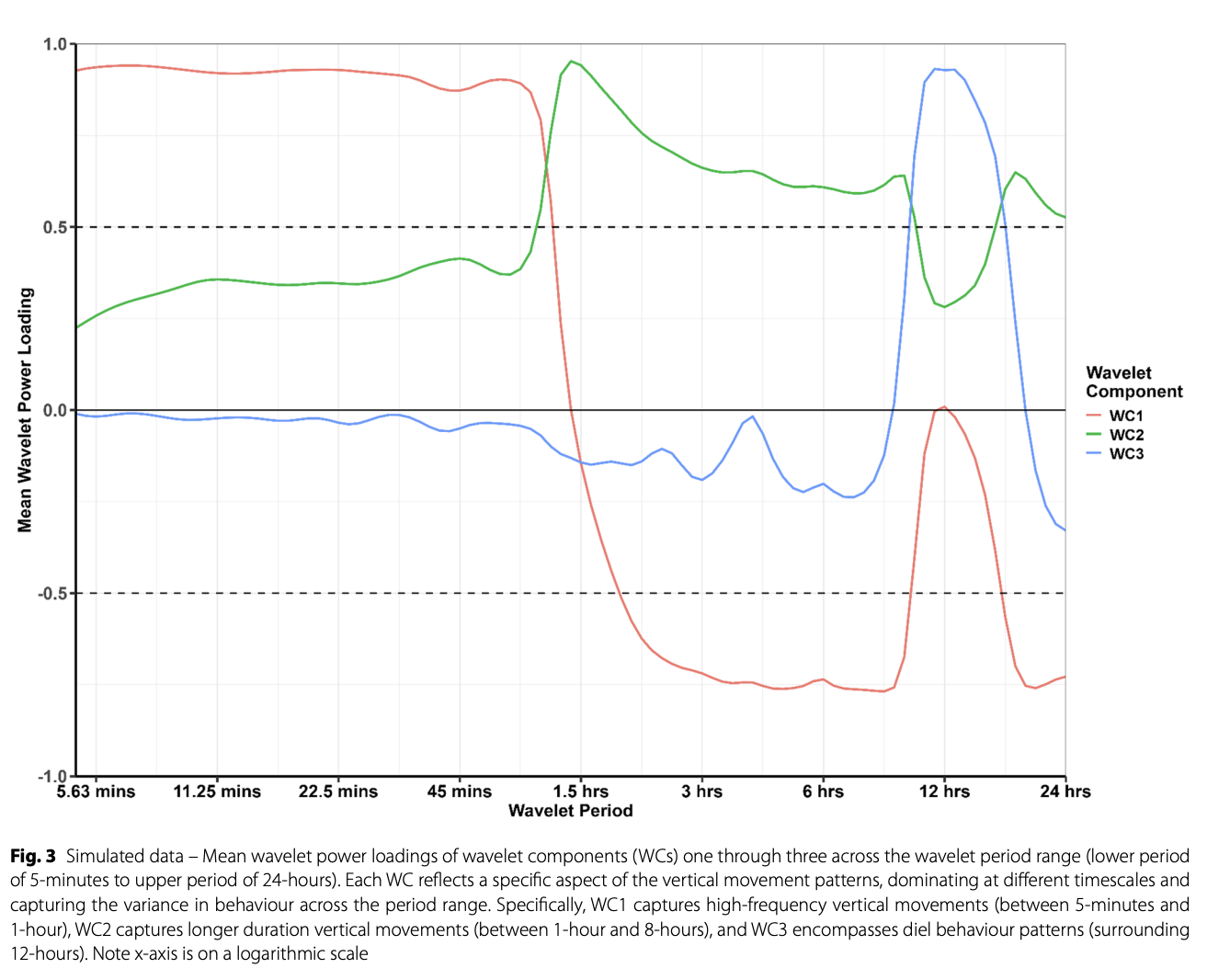
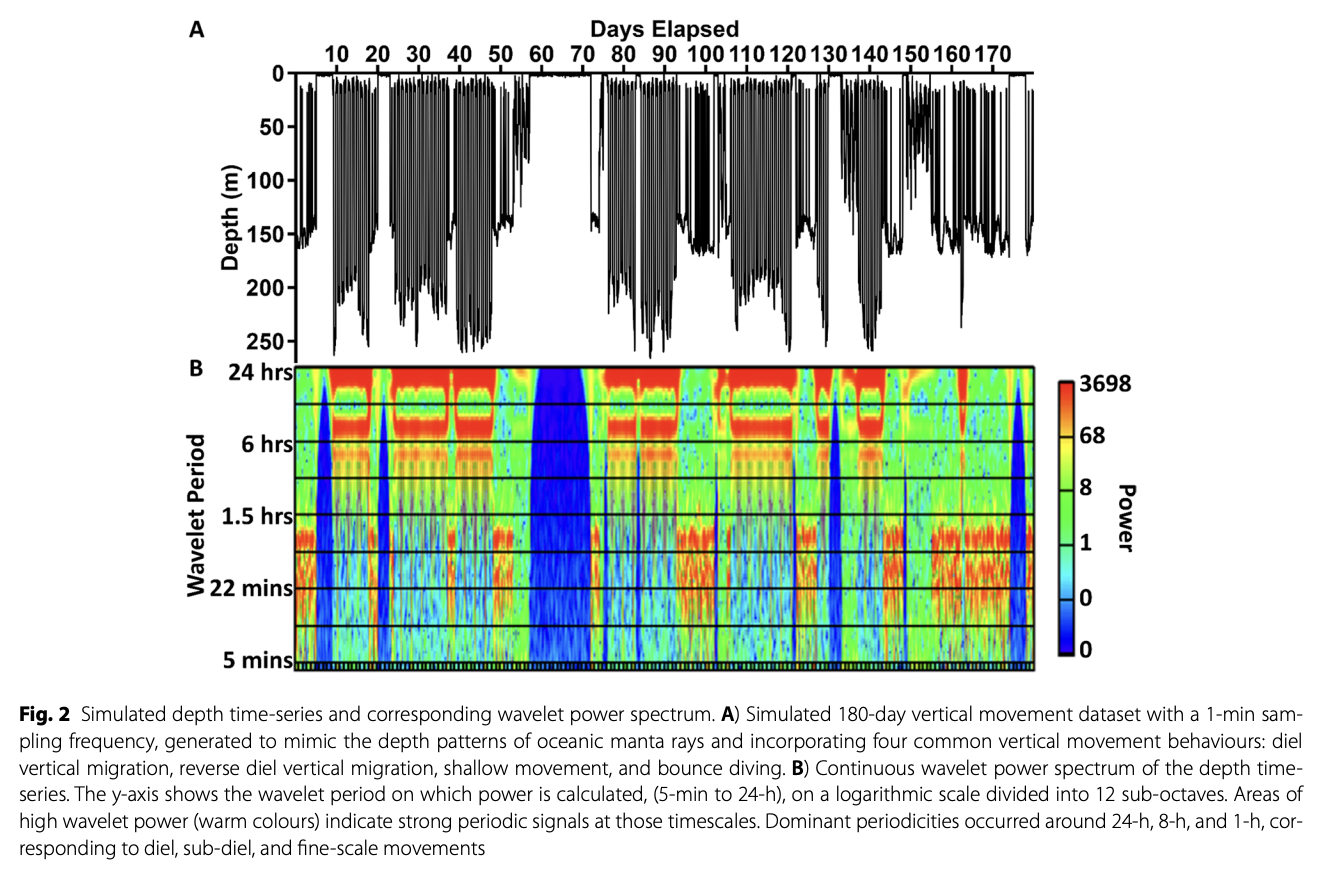
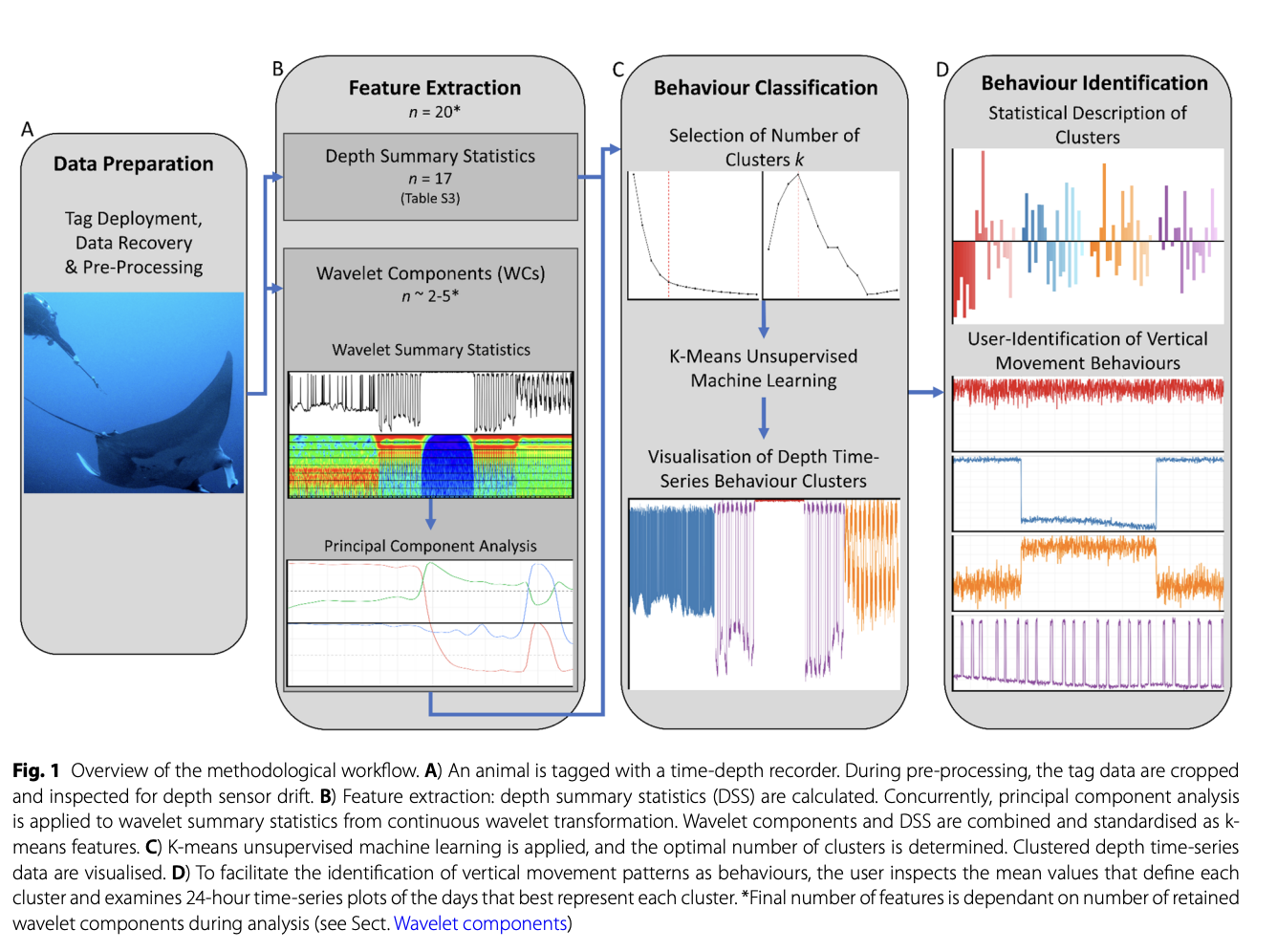
“Biologging devices have revolutionised our understanding of aquatic animal movement by enabling the collection of detailed depth and temperature time-series. The advent of pop-up satellite archival tags has been particularly impactful, facilitating the collection of tens of thousands of depth time-series (DTS) datasets, with deployment periods ranging from days to years. Datasets from recovered tags are more detailed than those transmitted via satellite, yet both are commonly reported with rudimentary histograms of time-at-temperature and time-at-depth. Such histograms often fail to capture the complex temporal dynamics of vertical movements that are available from the high sampling frequency time-series in recovered tags. This study describes a robust and effective methodological workflow for the quantitative analysis of large DTS datasets collected from archival tags deployed on gill-breathing aquatic animals, utilising continuous wavelet transformation (CWT), Principal Component Analysis (PCA), and k-means clustering. CWT was employed to detect key periodic patterns within the data. Daily wavelet components were calculated across different wavelet periods (e.g., 5-min through 24-h) and reduced via PCA to characterise daily vertical movement behaviour while preserving variance. Finally, unsupervised k-means clustering was used to classify vertical movement behaviours according to their wavelet components and depth summary statistics. This approach efficiently processed large quantities of data, and validation using simulated data demonstrated its robustness and versatility, with assigned behaviour clusters matching the original simulated behaviour types with high consistency (97.7%). For the empirical data, distinct behavioural clusters were identified across a wide range of species, including an oceanic manta ray Mobula birostris, whale shark Rhincodon typus, Atlantic cod Gadus morhua, and largetooth sawfish Pristis pristis. Down sampling of the DTS revealed the workflow to be somewhat insensitive to the sampling frequency of tags, maintaining 83.9% consistency as sampling frequency decreased from one to 15-minutes. These results not only underscore the workflow’s efficacy but also highlight its broad applicability in diverse settings. To facilitate uptake of this approach, an R package FishDiveR, tailored for the implementation of this analytical methodological workflow has been developed.”
Author Affiliations
Murdoch University
Raja Ampat Manta Project, The Manta Trust Affiliate Project,
University of Papua
Royal Roads University
Department of Primary Industries and Regional Development, Western Australian Fisheries and Marine Research Laboratories, Government of Western Australia
Re:Wild
University of Western Australia
Ocean Sciences and Solutions Applied Research Institute, Neom Corp
Centre for Environment, Fisheries and Aquaculture Science
University of East Anglia
Funding
MAC3 Impact Philanthropies
Henry Foundation
Save the Blue Foundation
Daniel Roozen
Katrine Bosley
Harbig Family Foundation
Contribution towards the Manta Trust's Strategic Plan
Goal 3: Strategic Objective 3.1 – All manta and devil ray species in the regions where we work are fully protected and conserved through species management plans.
Goal 3: Strategic Objective 3.4 – The environmental drivers on manta ray populations are better understood to help determine the impact of the climate crisis and inform conservation measures.
Goal 3: Strategic Objective 3.5: Impact of boat strikes and entanglement are better understood to inform necessary conservation measures.