Closing the Gaps: Integrating Biological, Ecological and Taxonomic Data to Support the Identification and Conservation of the Atlantic Pygmy Devil Ray (Mobula hypostoma)
May 2026
Atlantine Boggio-Pasqua, Kim Bassos-Hull, Guy M. W. Stevens, Jorge Manuel Morales-Saldaña, Sylvain Adnet, Morgan A. Ferguson, Nicole A. Pelletier, Breanna C. DeGroot, Krystan A. Wilkinson, Emily Humble, Luis Fernando Del Moral-Flores, Cody R. Mott, Jeffrey R. Guertin, Matthew J. Ajemian, Jessica Valek, Alexander Q. Fogg, Betty Laglbauer, Aristide Takoukam Kamla, Jessica H. Pate, Karen Fuentes, Lisa Hoopes, Ludwig Coulier, Michael Price, James Kinsler, Richard Collister, Ana Ferreira, Jennifer T. Wyffels, María del Pilar Blanco-Parra, Ramón Bonfil, Juan Carlos Pérez-Jiménez, Godefroy De Bruyne, Philip D. Doherty, Kristian Metcalfe, Youri Ivann Mvomo Minko, Andrielli M. Medeiros & Giuseppe Notarbartolo di Sciara
Keywords: Bycatch • Coastal • Distribution • Elasmobranch • Life History • Morphometrics • Neotype • Species Conservation • Taxonomic Clarification
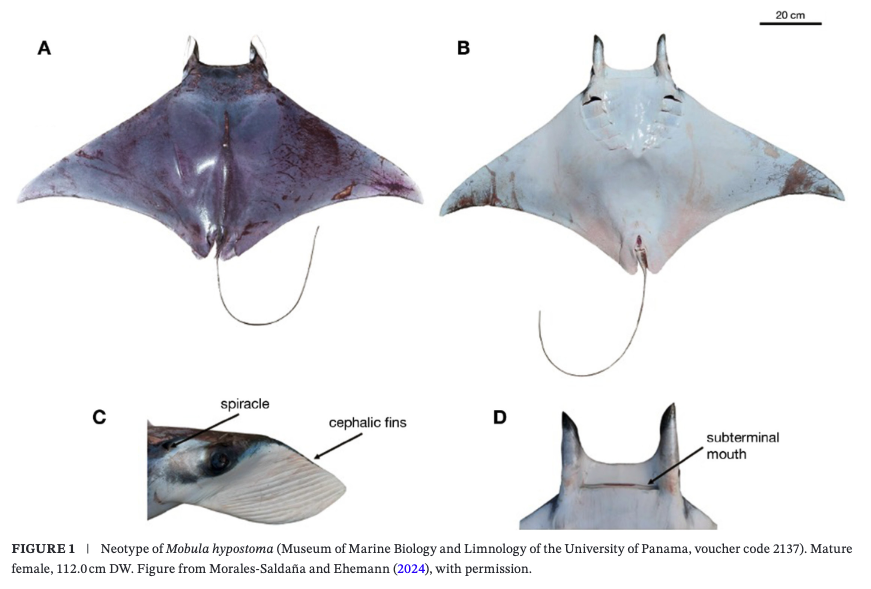
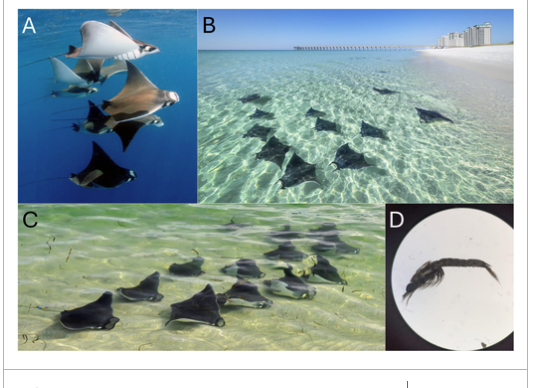
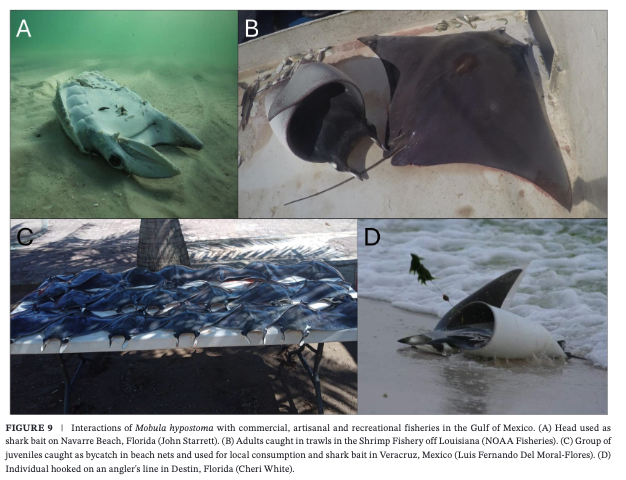
Summary: Pygmy devil rays comprise four small species worldwide that remain relatively poorly understood, having received far less attention than larger devil rays and manta rays. The Atlantic pygmy devil ray (Mobula hypostoma), the smallest mobulid in the Atlantic, is frequently confused with other regional species, limiting effective monitoring and conservation. This study consolidates new and existing data to provide a comprehensive synthesis of its biology, ecology, and distribution, and clarifies key morphological traits to improve species identification. By addressing major knowledge gaps and stabilising its taxonomy, it establishes a critical baseline for reliable identification, future research, and conservation assessments.
Abstract
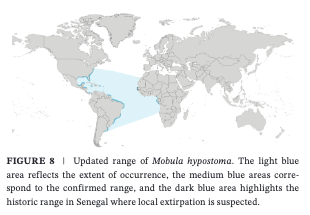
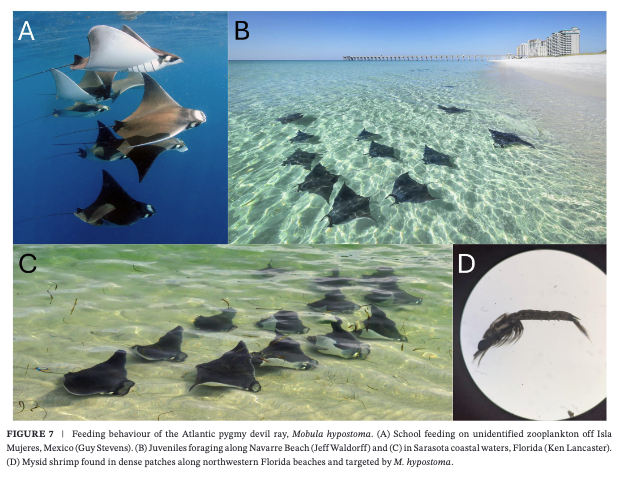
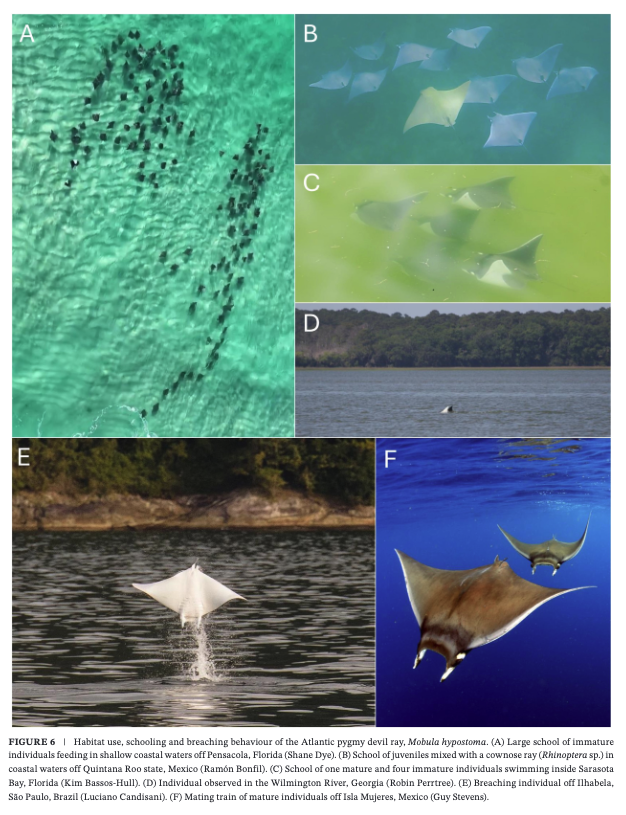
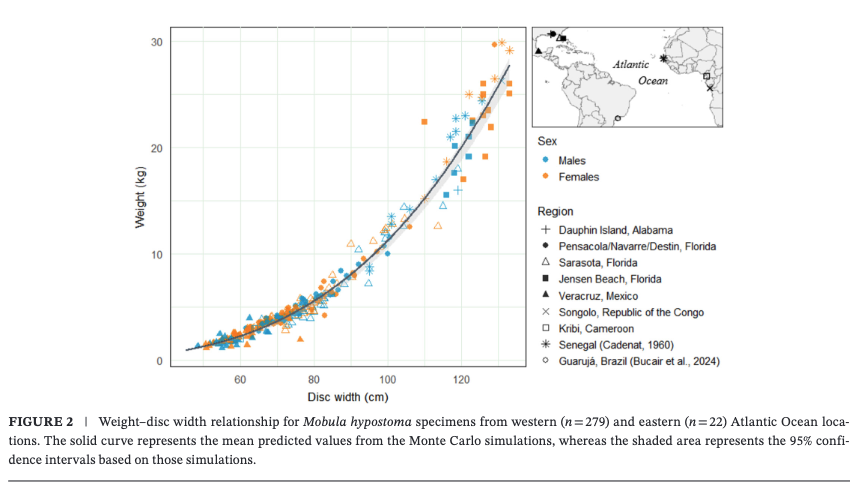
“The Atlantic pygmy devil ray (Mobula hypostoma) is an endangered mobulid species whose conservation is hindered by taxonomic confusion and significant gaps in ecological and life history knowledge. Here, we present an integrative study that clarifies the species' taxonomic status, updates its distribution and synthesizes new and existing data on its biology and ecology to inform conservation strategies. We provide further support for the synonymy of Mobula rochebrunei with M. hypostoma based on consistent morphometric and biological traits across Atlantic populations and designate a neotype to stabilize species identification and improve range assessments. Field and aquarium data from over 300 individuals provide detailed morphometrics, weight–disc width relationships, size at maturity and evidence of sexual dimorphism in dentition. Our results suggest that M. hypostoma relies heavily on shallow coastal and estuarine habitats, where it exhibits schooling, foraging and mating behaviours—key life history events that increase vulnerability to bycatch in artisanal and commercial fisheries. A synthesis of confirmed sightings and historical records expands the known distribution to multiple previously unreported range states and territories. Although the species benefits from protection in parts of its western Atlantic range, it remains unprotected and data-deficient elsewhere, particularly off the coast of West and Central Africa, where range restriction has likely occurred. By consolidating taxonomic, biological, ecological and behavioural data, this study provides a foundation for improved monitoring, management and policy efforts aimed at ensuring the long-term survival and recovery of M. hypostoma.”
Author Affiliations
Aix-Marseille University
Sarasota Dolphin Research Program, Brookfield Zoo Chicago, c/o Mote Marine Laboratory
Sharks and Rays Conservation Research Program, Mote Marine Laboratory
The Manta Trust
Smithsonian Tropical Research Institute
Department of Biology, McGill University
ISEM
St. Petersburg College
Harbor Branch Oceanographic Institute, Florida Atlantic University
Royal (Dick) School of Veterinary Studies and the Roslin Institute, University of Edinburgh
Universidad Nacional Autónoma de México, Facultad de Estudios Superiores Iztacala
Inwater Research Group
Destin–Fort Walton Beach, Okaloosa County Board of County Commissioners
African Marine Conservation Organisation
Marine Megafauna Foundation
Manta México Caribe
IUCN Center for Species Survival, Georgia Aquarium
Département Océanique, Nausicaa, Centre National de la Mer
SeaWorld Yas Island Abu Dhabi
SeaWorld Orlando
St. Louis Aquarium
Oceanário de Lisboa
Marine Science Research Center, Ripley’s Aquariums
Department of Marine and Earth Science, The Water School, Florida Gulf Coast University
Secretaria de Ciencia, Humanidades, Tecnología e Innovación
El Colegio de la Frontera Sur
El Colegio de la Frontera Sur (ECOSUR)
Wildlife Conservation Society (WCS), Gabon-Congo Program
Centre for Ecology & Conservation, Faculty of Environment, Science and Economy, University of Exeter
College of Marine Science and Aquatic Biology, University of Khorfakkan
Sharjah Marine Sciences Research Centre (SMSRC), University of Khorfakkan
Laboratoire d’Hydrobiologie et d’Ichtyologie, IRAF, CENAREST, Libreville, Gabon
Universidade da Região de Joinville, São Francisco do Sul, Santa Catarina, Brazil
Instituto de Pesquisas Cananéia
Tethys Research Institute
Funding
Save Our Seas Foundation
Mote Scientific Foundation
Manta Trust
African Marine Mammal Conservation
National Geographic Society
Georgia Aquarium
Disney Conservation Fund
Wildlife Conservation Congo Programme
U.S. Army Medical Research and Materiel Command, Department of Defense
Contribution towards the Manta Trust's Strategic Plan
Goal 2: Strategic Objective 2.3 – The impact of fisheries on manta and devil rays is quantified and used to inform mitigation strategies.
Goal 3: Strategic Objective 3.1 – All manta and devil ray species in the regions where we work are fully protected and conserved through species management plans.
Goal 3: Strategic Objective 3.2 – Critical habitats for manta and devil rays are identified and protected through spatial management tools (e.g. MPAs, ISRAs, LMMAs).
Goal 3: Strategic Objective 3.5 – Impact of boat strikes and entanglement are better understood to inform necessary conservation measures.
Goal 4: Strategic Objective 4.3– Improved awareness and understanding of manta and devil ray biology, ecology, and conservation status among stakeholders and the wider public.