
Beyond Boundaries—Satellite telemetry reveals regional movements and partial protection of oceanic manta rays (Mobula birostris) in the Mexican Pacific
26 October 2026
M. P. Cabral, C. S. Marques, J. D. Stewart, E. M. Hoyos-Padilla & J. T. Ketchum
Mobula birostris • Satellite Telemetry • Species Distribution Modelling • Machine Learning • Movement Ecology • Marine Protected Area • Eastern Tropical Pacific
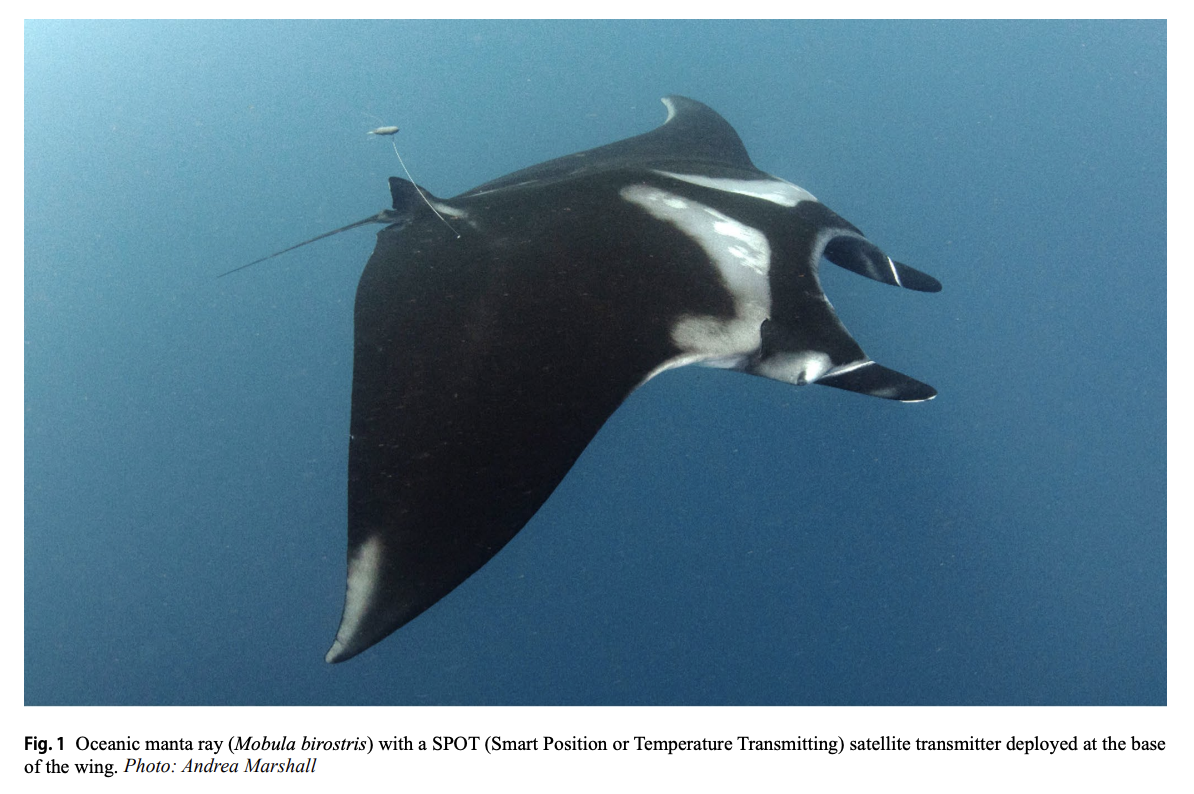
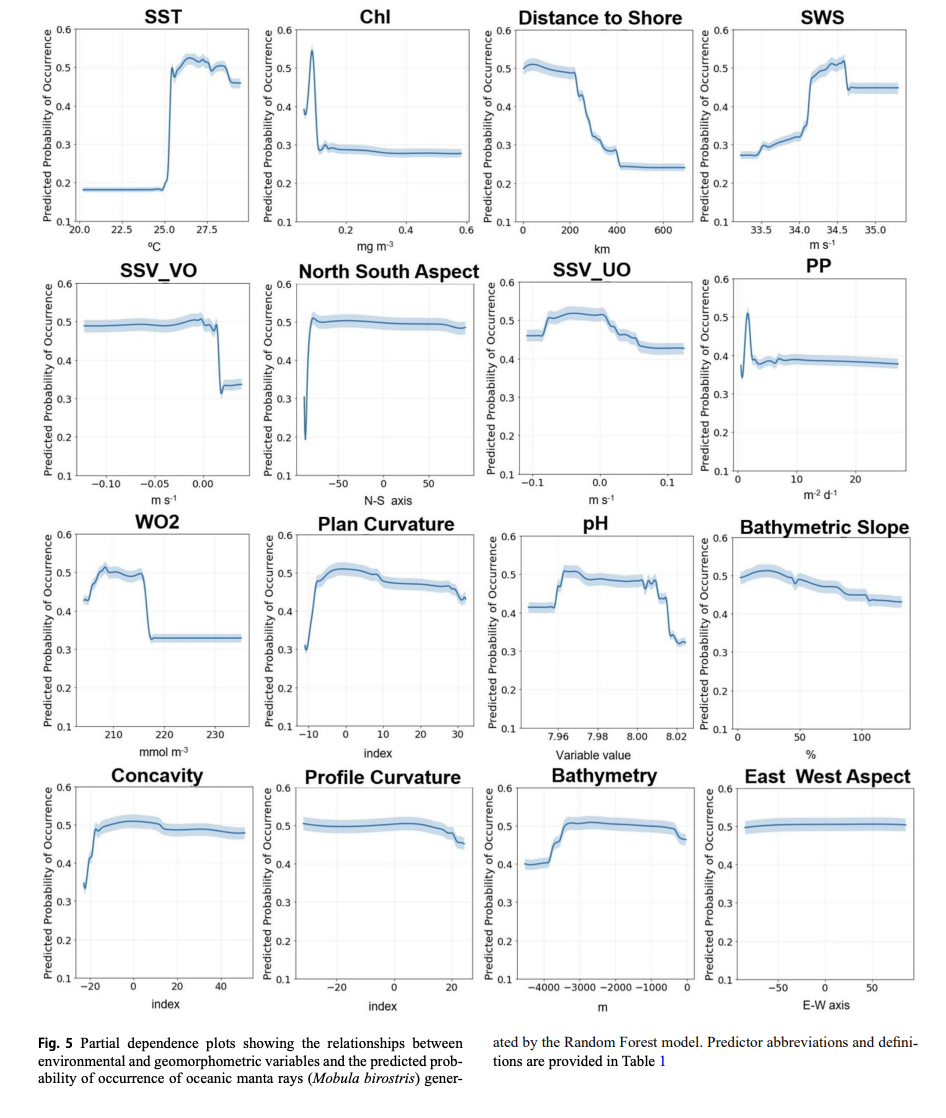
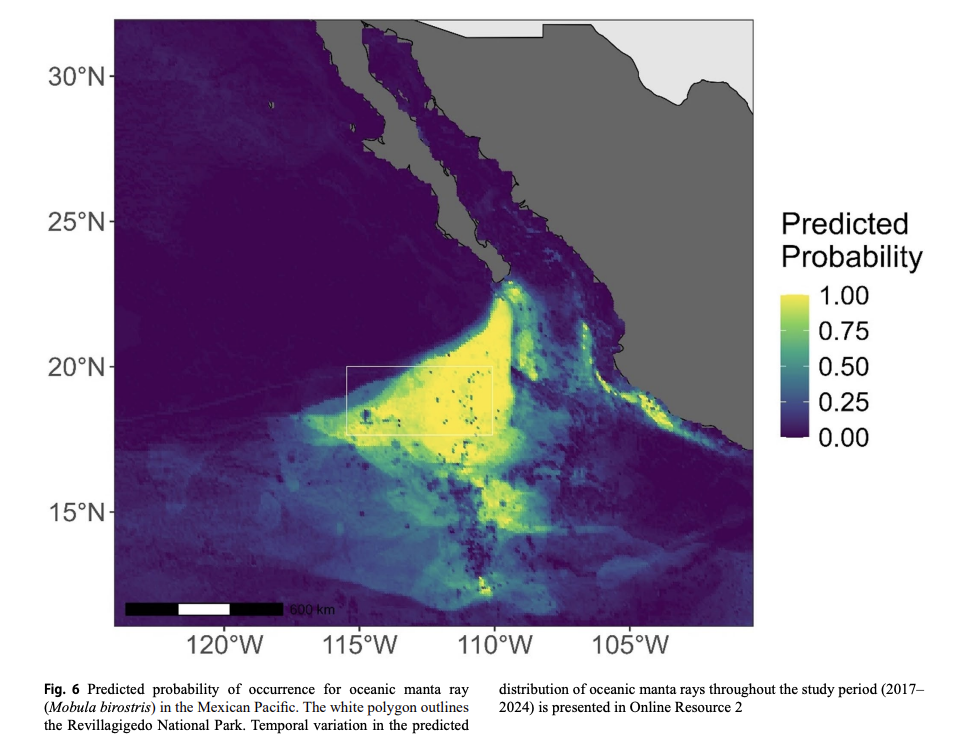
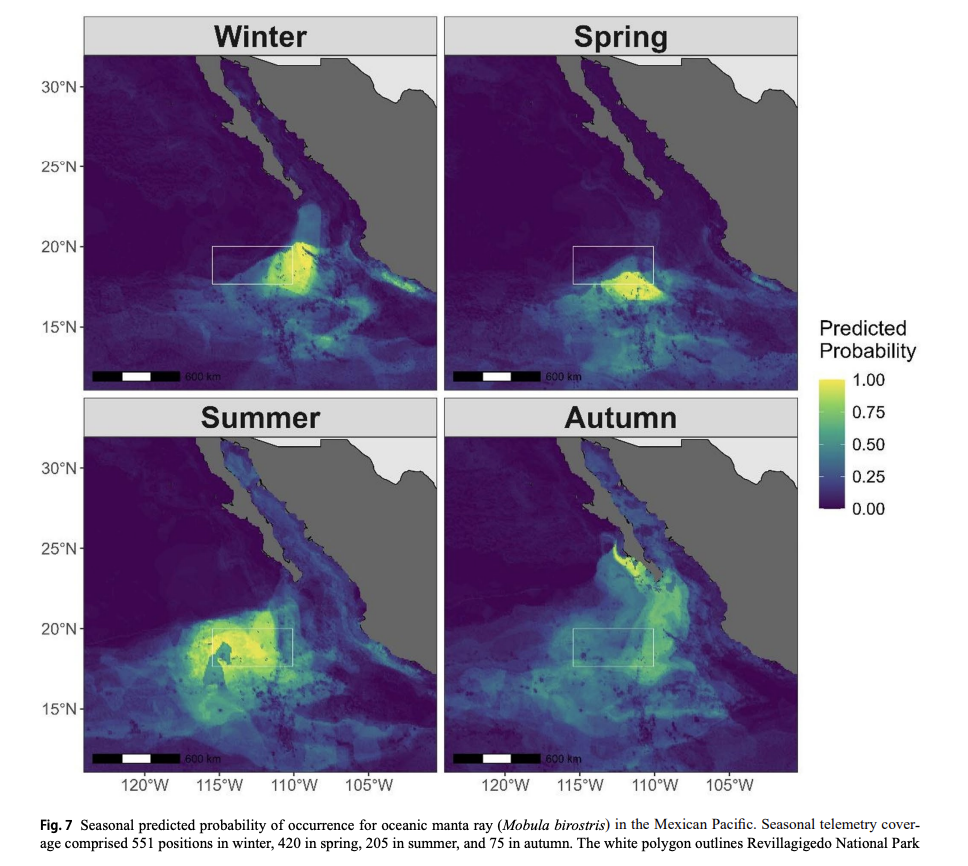
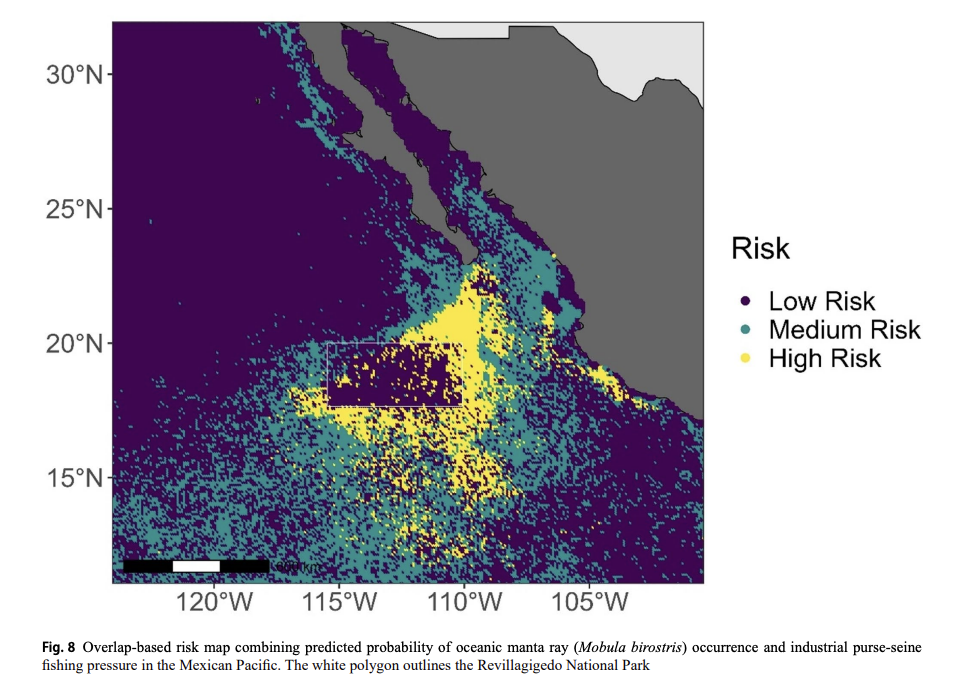
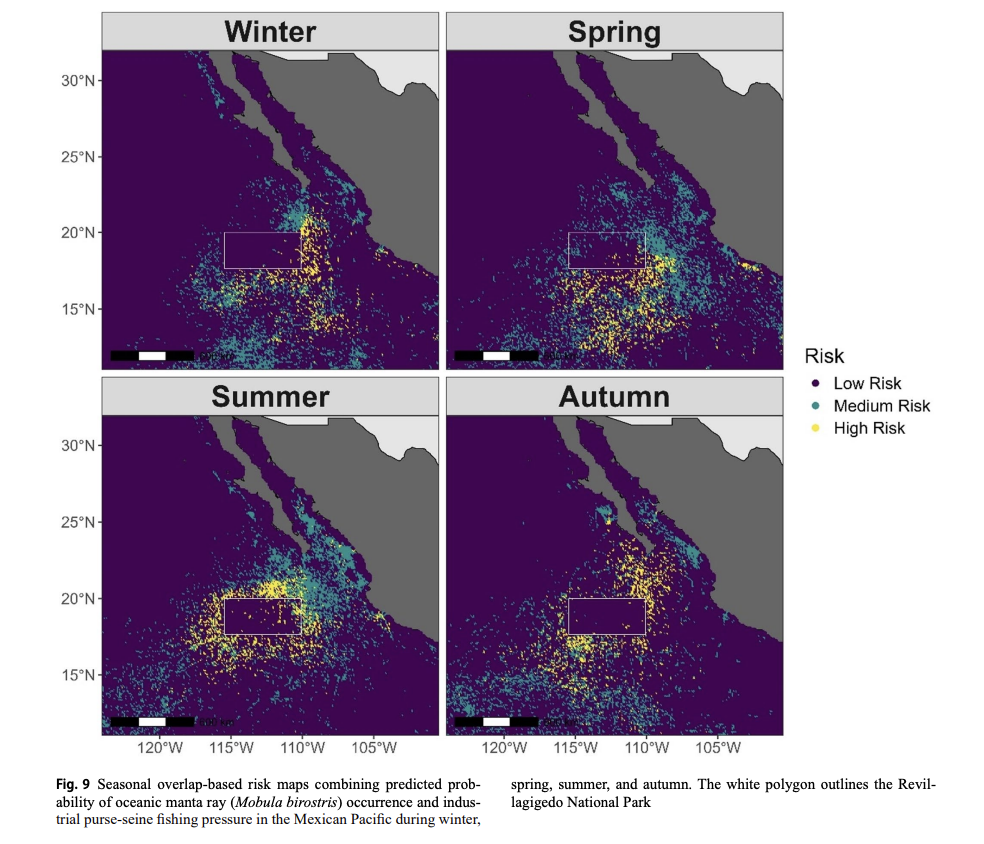
Summary: Oceanic manta rays (Mobula birostris) are vulnerable to fisheries. From 2017 to 2024, researchers used satellite tags to track 12 individuals. The mantas were tagged at Socorro and San Benedicto islands in Mexico's Revillagigedo National Park, a no-take marine protected area. A machine-learning model linked where they occurred to warm, low-chlorophyll, offshore waters with weak currents. The mantas used the park most but also ranged outside it, moving toward the Gulf of California in summer and autumn. Over a third of positions were outside the park, where they overlapped with intense tuna purse-seine fishing along its edges. One manta travelled over 1,300 km. The authors call for regional cooperation, bycatch reduction and larger, connected protected areas.
Abstract
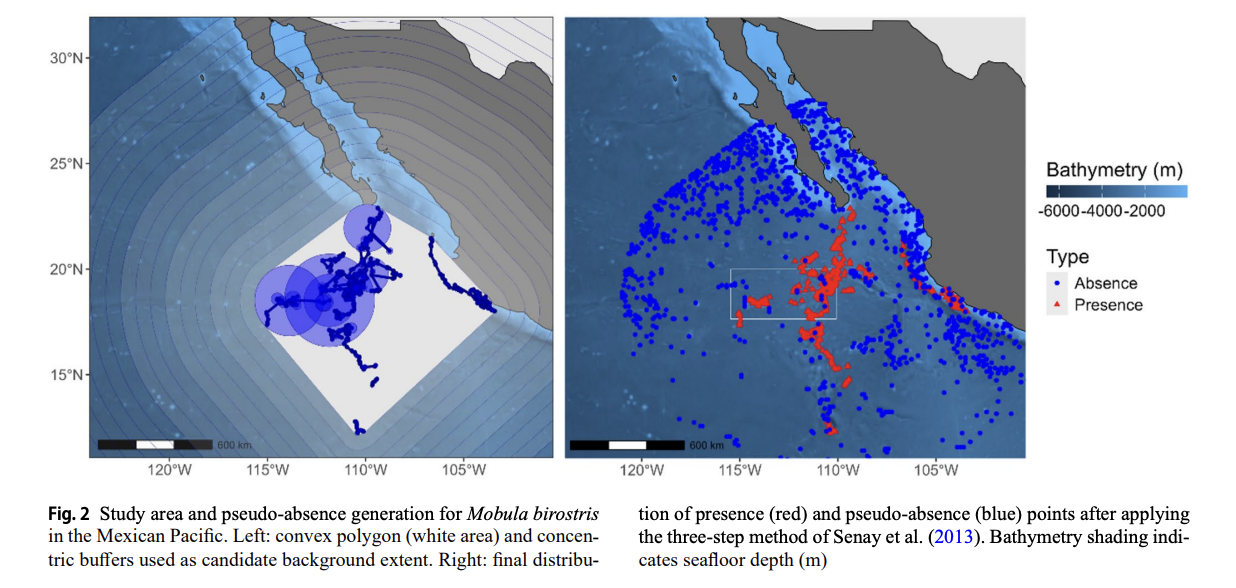
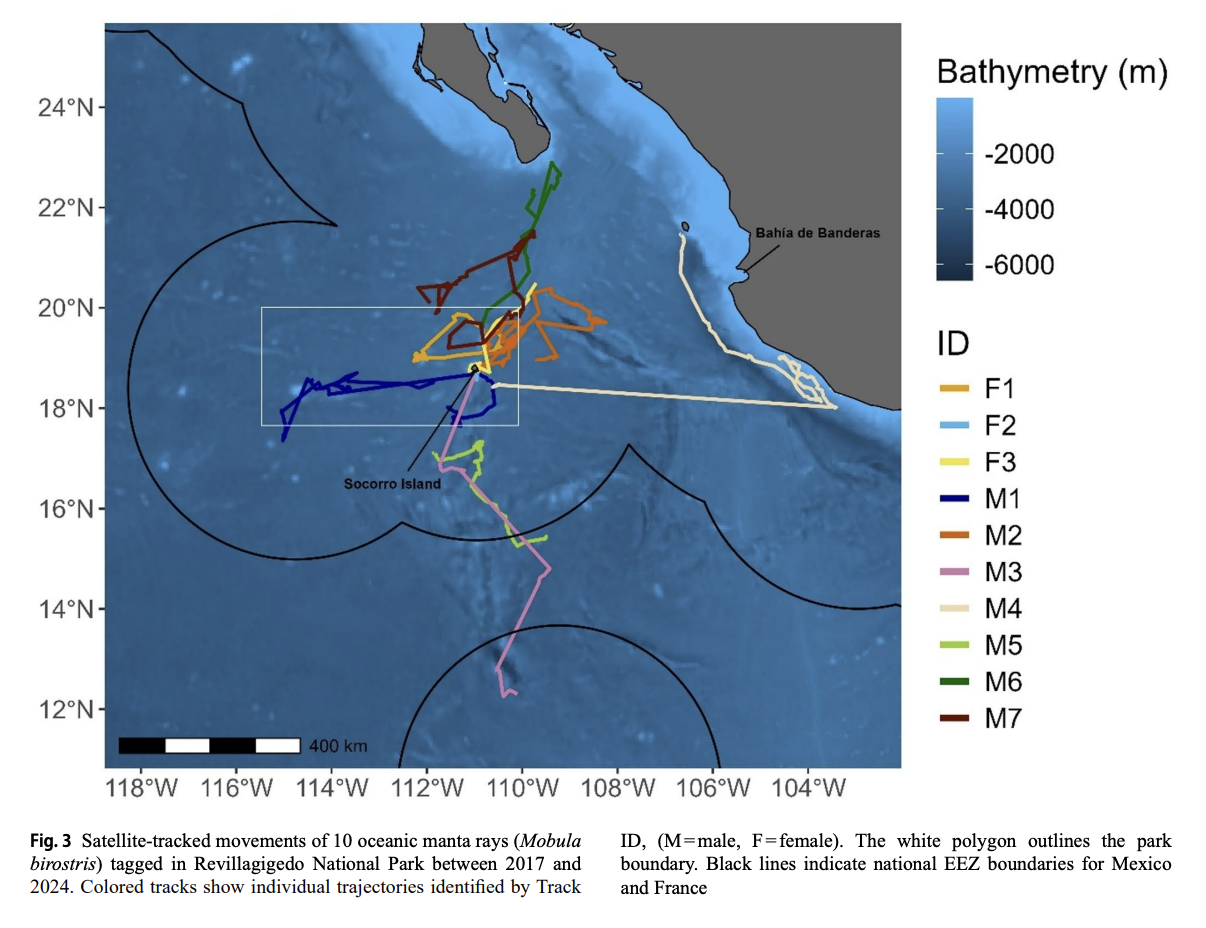
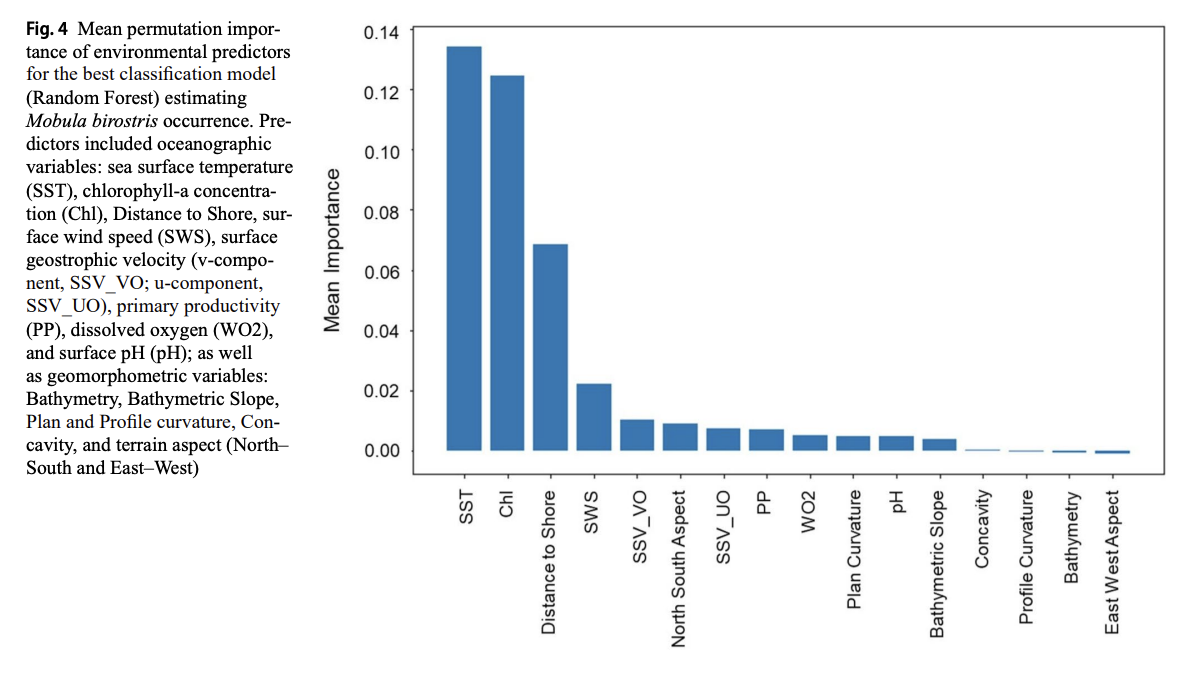
“The oceanic manta ray (Mobula birostris) is a wide-ranging pelagic species threatened due to its low reproductive output and high susceptibility to anthropogenic pressures, particularly fisheries. Satellite telemetry data from 12 individuals tracked between 2017 and 2024 in Revillagigedo National Park, a no-take marine protected area (MPA) in Mexico, were used to investigate space use, seasonal movements, and overlap with industrial fishing activity. Individuals were tagged at Socorro Island (18.78° N, 110.95° W) and San Benedicto Island (19.30° N, 110.82° W). A Random Forest machine learning model was trained using state-space telemetry tracks and associated environmental data to predict spatial occurrence. Occurrence was primarily associated with warm surface waters (> 25.5 °C), low chlorophyll concentrations (< 0.1 mg m⁻³), weak surface currents, and offshore environments. Predicted occurrence was highest within the protected area but extended well beyond its boundaries, with seasonal expansion toward the Gulf of California during summer and autumn. Over one-third of estimated positions occurred outside the park, where high occurrence probability overlapped with intense tuna purse-seine effort along MPA boundaries. Individuals varied substantially in space use, with the longest recorded movement exceeding 1,300 km. These findings underscore both the conservation value of Revillagigedo National Park and the limitations of static protected areas, highlighting that effective conservation will require regional cooperation, targeted bycatch mitigation in adjacent buffer zones, and the establishment of a mosaic of larger, connected protected areas across the Eastern Tropical Pacific. This is the first study to use satellite telemetry and distribution models to characterize the spatial ecology of oceanic manta rays in the Mexican Pacific.”
Author Affiliations
Universidad Autónoma de Baja California Sur
Cuidando los Mares de México A.C
Universidade de Lisboa
The Manta Trust
Oregon State University
Pelagios Kakunjá A.C
Fins Attached Marine Research and Conservation
Centro de Investigaciones Biológicas del Noroeste S.C. (CIBNOR)
MigraMar
Funding
CONACYT (National Council for Science and Technology, Mexico)
Mares de México
FCT (Fundação para a Ciência e Tecnologia, I.P.)
Centro de Estatística e Aplicações, Universidade de Lisboa
Contribution towards the Manta Trust's Strategic Plan
Goal 1: Strategic Objective 1.1 – More protective policies exist to support manta and devil ray conservation for geographical focus areas.
Goal 2: Strategic Objective 2.1 – Fishers within focus areas are working towards measures to reduce capture and bycatch mortality.
Goal 2: Strategic Objective 2.2 – Regulations and effective enforcement exist to reduce manta and devil ray capture and bycatch mortality.
Goal 3: Strategic Objective 3.1 – All manta and devil ray species in the regions where we work are fully protected and conserved through species management plans.
Goal 3: Strategic Objective 3.2 – Key manta and devil ray aggregation sites fall within protected areas that are effectively managed.