First records of Spinetail Devil Ray, Mobula mobular (Bonnaterre, 1788), and Bentfin Devil Ray, M. thurstoni (Lloyd, 1908) (Myliobatiformes, Mobulidae), in French Polynesia
November 2025
Alice S. Carpentier, Nicolas Buray, Cécile Berthe, Fanny Martre, Adeline Goyaud, Toanui Tulasne-Atiu, Virginie Poly, Maya Santangelo & Guy M.W. Stevens
Keywords: Courtship • Distribution • Endangered Species • South Pacific
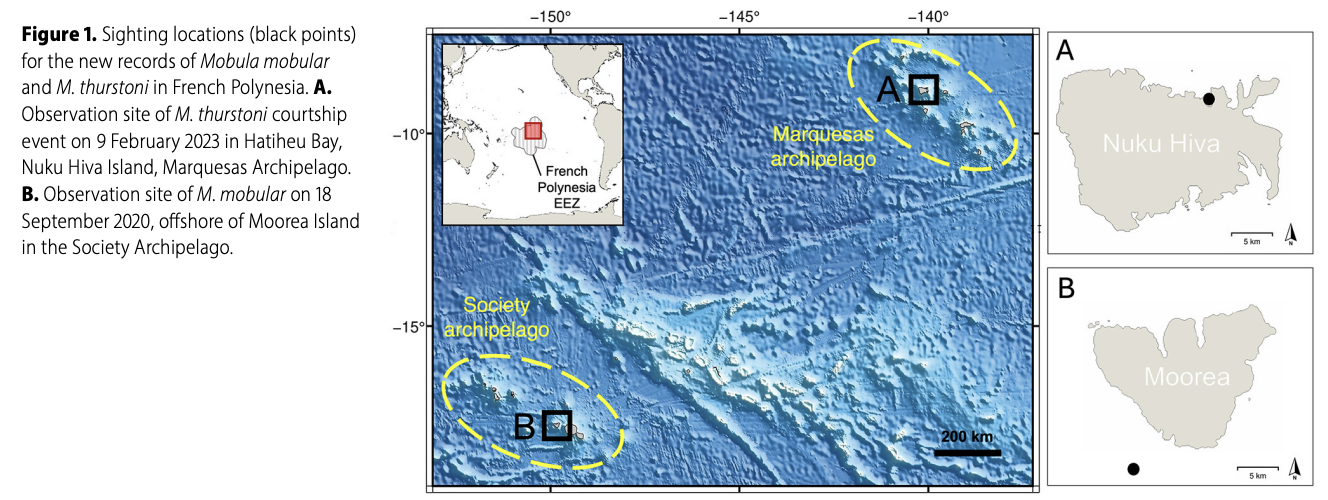
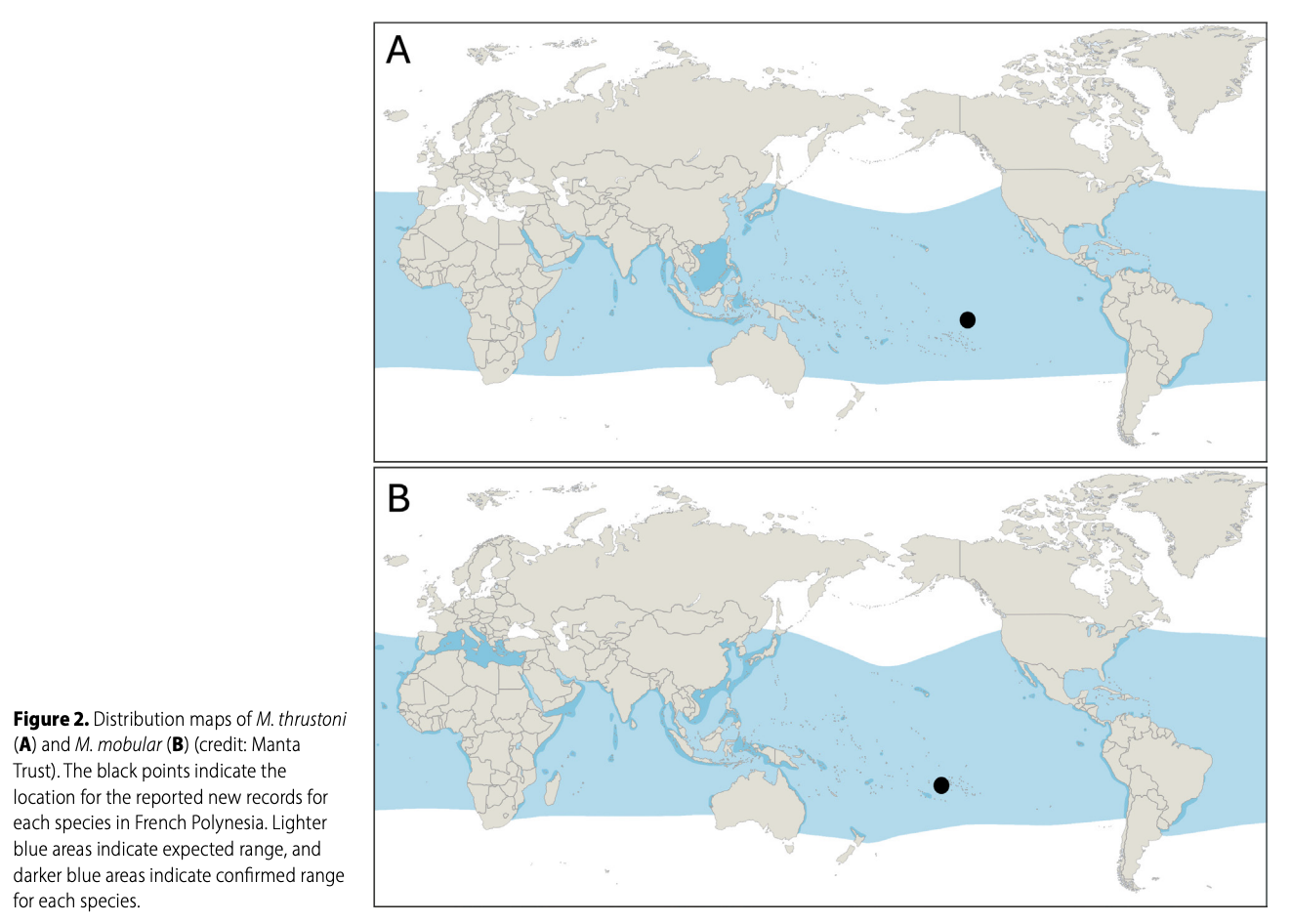
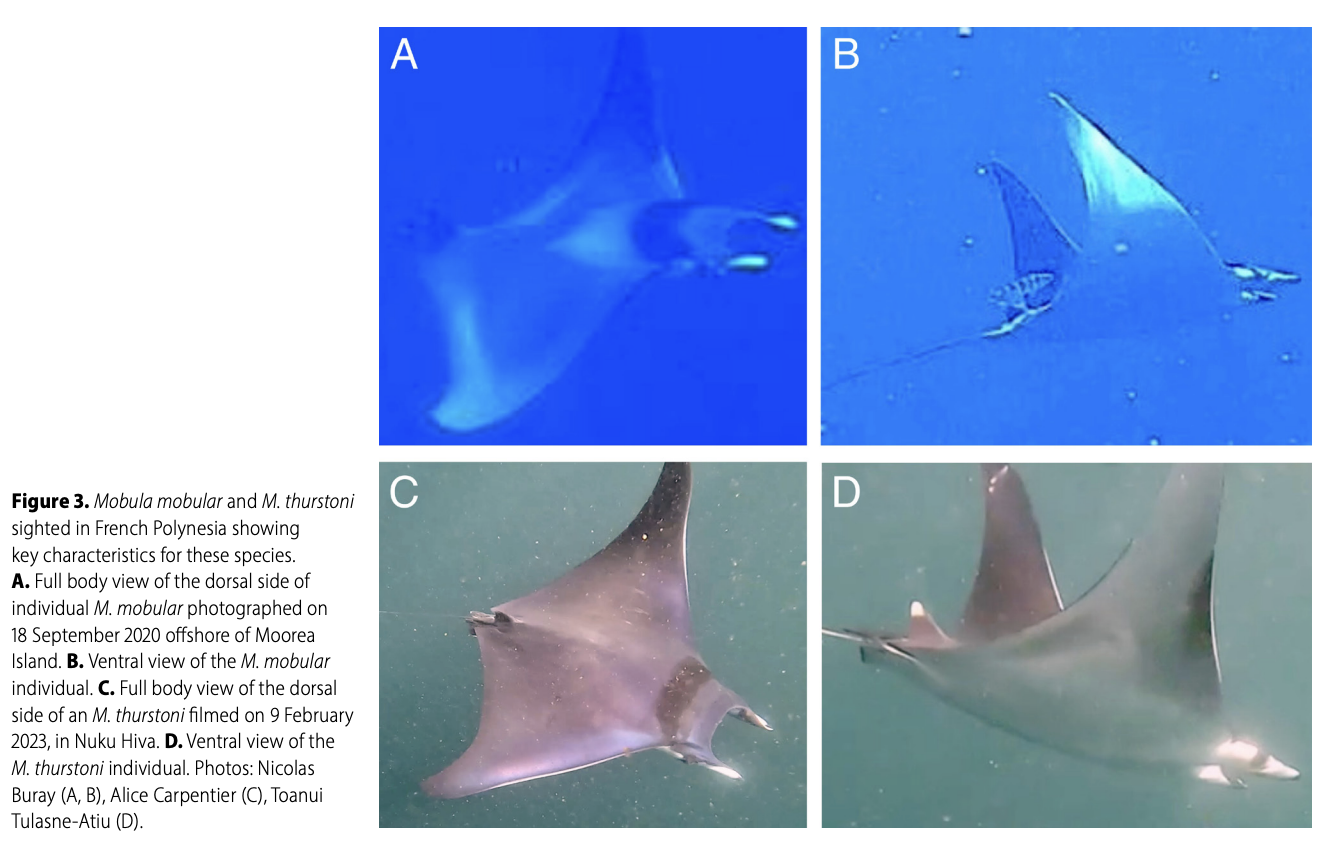
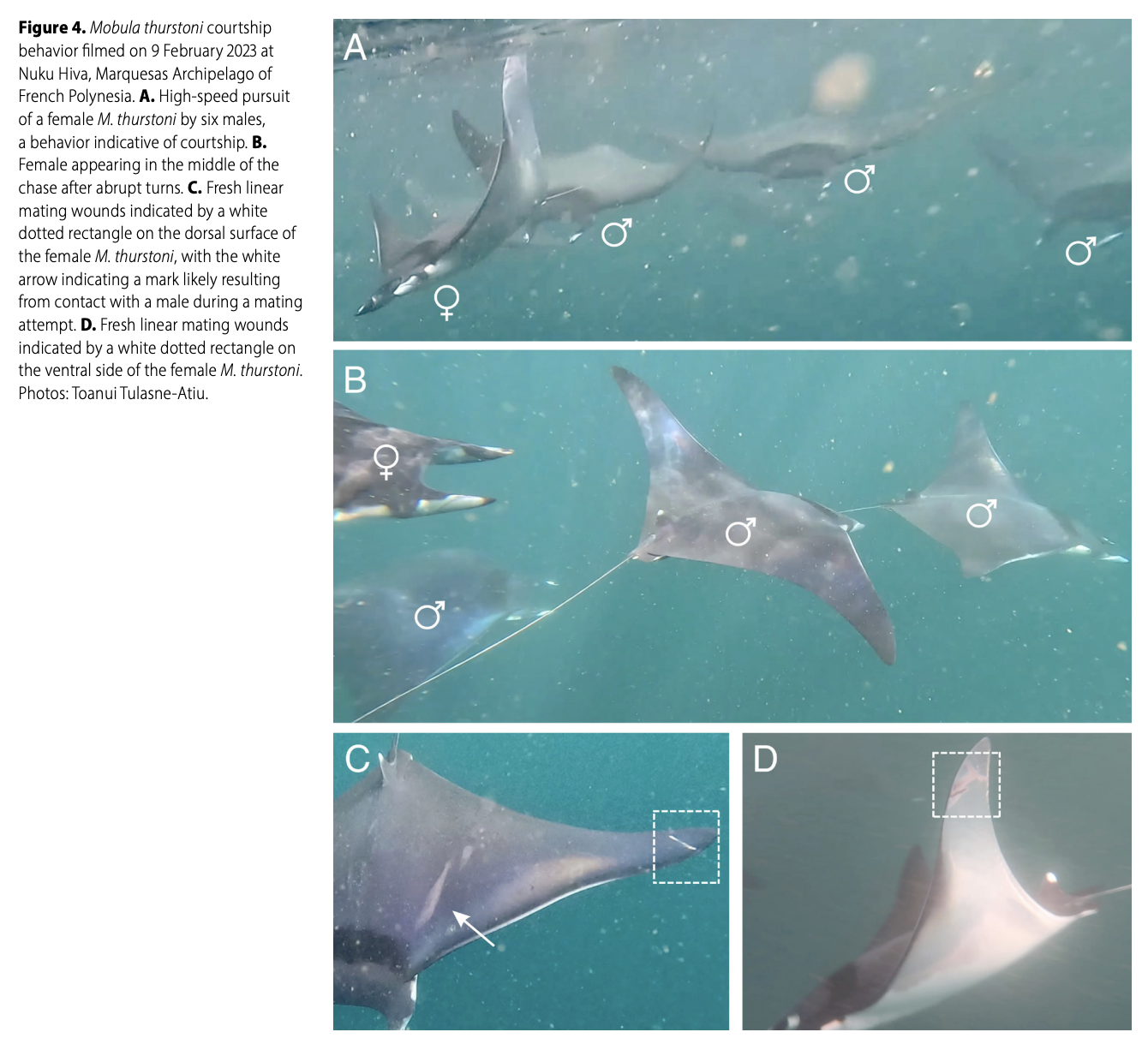
Summary: The spinetail devil ray (Mobula mobular) and bentfin devil ray (Mobula thurstoni) were recorded for the first time in French Polynesia, with one spinetail devil ray observed in the Society Archipelago and seven bentfin devil rays displaying courtship behaviour in the Marquesas Archipelago. These observations were made through the French Polynesia Manta Project, a Manta Trust affiliate project, which was established in 2015 in collaboration with the Observatoire des Requins de Polynésie to study manta and devil ray populations and their ecology across the region. Both devil ray species are currently listed as Critically Endangered on the IUCN Red List and face threats from environmental change and bycatch in industrial fisheries, highlighting the need for further research to support their conservation in the region.
Abstract
“The first confirmed sightings of Spinetail Devil Ray, Mobula mobular (Bonnaterre, 1788), and Bentfin Devil Ray, M. thurstoni (Lloyd, 1908) (Myliobatiformes, Mobulidae), are reported in French Polynesia. An individual of M. mobular was observed in the Society Archipelago, and a group of seven M. thurstoni were observed in a courtship display in the Marquesas Archipelago. Currently listed as Endangered on the IUCN Red List, they face ongoing threats from environmental change and bycatch in industrial fisheries. There is a need for further research in the region to support conservation efforts of these two species.”
Author Affiliations
Observatoire des Requins de Polynésie
The Manta Trust
Direction de l’Environnement de Polynésie française
Funding
Direction of the Environment of French Polynesia
French Biodiversity Office (OFB)
Patrick Firouzian
Contribution towards the Manta Trust's Strategic Plan
Goal 3: Strategic Objective 3.1 – All manta and devil ray species in the regions where we work are fully protected and conserved through species management plans.
Goal 3: Strategic Objective 3.4 – The environmental drivers on manta ray populations are better understood to help determine the impact of the climate crisis and inform conservation measures.
Goal 3: Strategic Objective 3.5: Impact of boat strikes and entanglement are better understood to inform necessary conservation measures.