
Only One Percent of Important Shark and Ray Areas in the Western Indian Ocean Are Fully Protected From Fishing Pressure
January 2026
Jesse E. M. Cochran, Ryan Charles, Andrew J. Temple, Peter M. Kyne, Emiliano García-Rodríguez, Adriana Gonzalez-Pestana, Amanda Batlle-Morera, Théophile L. Mouton, Asia O. Armstrong, Christoph A. Rohner, Darren J. Coker, Royale S. Hardenstine, Alexander Kattan, Ashlie J. McIvor, Viktor Nunes Peinemann, Kaitlyn A. O'Toole, Lea Palm, Eloise B. Richardson, Kalli Valappil Akhilesh, Haleh Ali Abedi, Reem K. Almealla, Dareen Almojil, Samantha Andrzejaczek, Arzucan N. Askin, Avik A. Banerjee, Hamid R. Bargahi, Alissa J. Barnes, Svetlana Barteneva-Vitry, Siamak Behzadi, Aymeric Bein, Rhett H. Bennett, Filippo Bocchi, Ginevra Boldrocchi, Gill T. Braulik, Camrin D. Braun, Eleanor Brighton, Frances K. P. Budd, Robert W. Bullock, Clara Canovas Perez, Aaron B. Carlisle, Michelle Carpenter, Taylor K. Chapple, Isabel Chaúca, Geremy Cliff, Estelle Crochelet, Nakia Cullain, David J. Curnick, Ryan Daly, Leigh de Necker, Stella Diamant, Giulia F. A. Donati, David A. Ebert, Ehab Eid, Igbal S. Elhassa, Chantel Elston, Bernadine I. Everett, Mahmoud M. S. Farrag, Nico Fassbender, Sean T. Fennessy, Stela M. C. Fernando, Brittany Finucci, Anna L. Flam, Peter Gausman, Arnault R. G. Gauthier, Giri Bhavan Sreekanth, Trisha Gupta, Meral Hafeez, Badrú N. Hagy, Jessica L. A. Haines, Joanna L. Harris, Jessica Harvey-Carroll, Tessa N. Hempson, Simon T. Hilbourne, Hua Hsun Hsu, Nor D. Ibrahim, David M. P. Jacoby, Sébastien Jaquemet, Idrees Babu K K, Divya Karnad, Boaz Kaunda-Arara, Shoba J. Kizhakudan, Alison A. Kock, Anna Koester, Bigeyo N. Kuboja, Baraka L. Kuguru, James S. E. Lea, Omar Mahadalle, Hashim Manjebrayakath, Christophe Mason-Parker, Daniel Mateos-Molina, Muktha Menon, Alec B. M. Moore, Johann Mourier, Taryn S. Murra, Ajay D. Nakhawa, Nadeem Nazurally, Lauren E. Nelso, John E. G. Nevill, Jennifer M. Olbers, Raquel L. Ostrovski, Lauren R. Peel, Nathan Perisic, Bradley Peterson, Simon J. Pierce, Simon J. Pittman, Shikha Rahangdale, Joshua Rambahiniarison, Ali Reza Rastgoo, Mohsen Rezaie-Atagholipour, David P. Robinson, Melita A. Samoilys, Tamaryn J. Sawers, Brittney J. Scannell, Jennifer V. Schmidt, Isabel M. Silva, Luis Silva, Jadiyde Solonomenjanahary, Julia L. Y. Spaet, Guy M. W. Stevens, Elspeth M. Strike, Sujitha Thomas, David van Beuningen, Stephanie K. Venables, Lennart Vossgaetter, Ornella C. Weideli, Ivor D. Williams, Collin T. Williams, Andrew J. Willson, Livi Wilson, Irthisham H. Zareer, Kaitlyn M. Zerr, Michael L. Berumen, Rima W. Jabado
Keywords: Biodiversity • Conservation • Fisheries • Global Biodiversity Framework • Marine Spatial Planning • Threatened Species
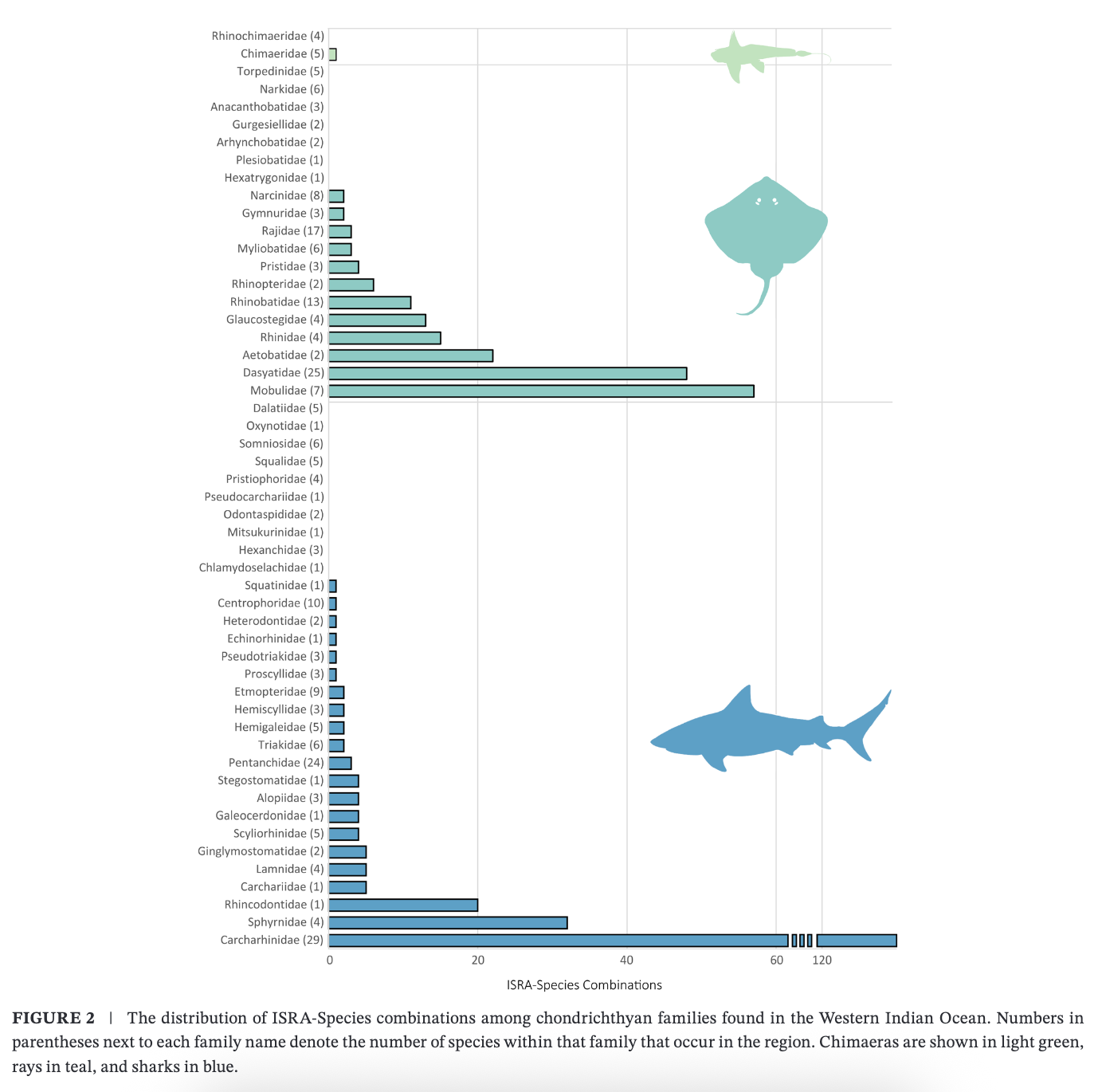
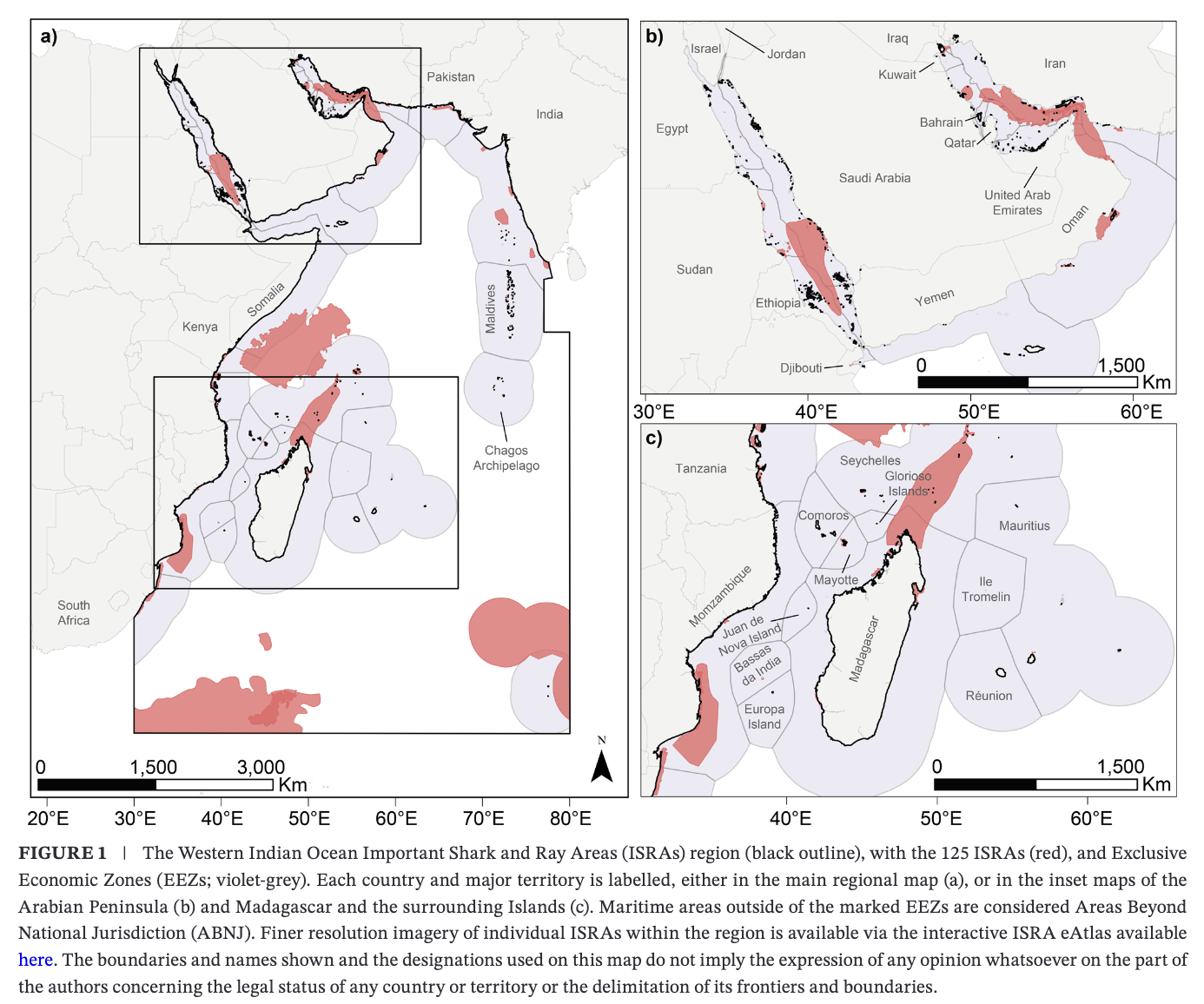
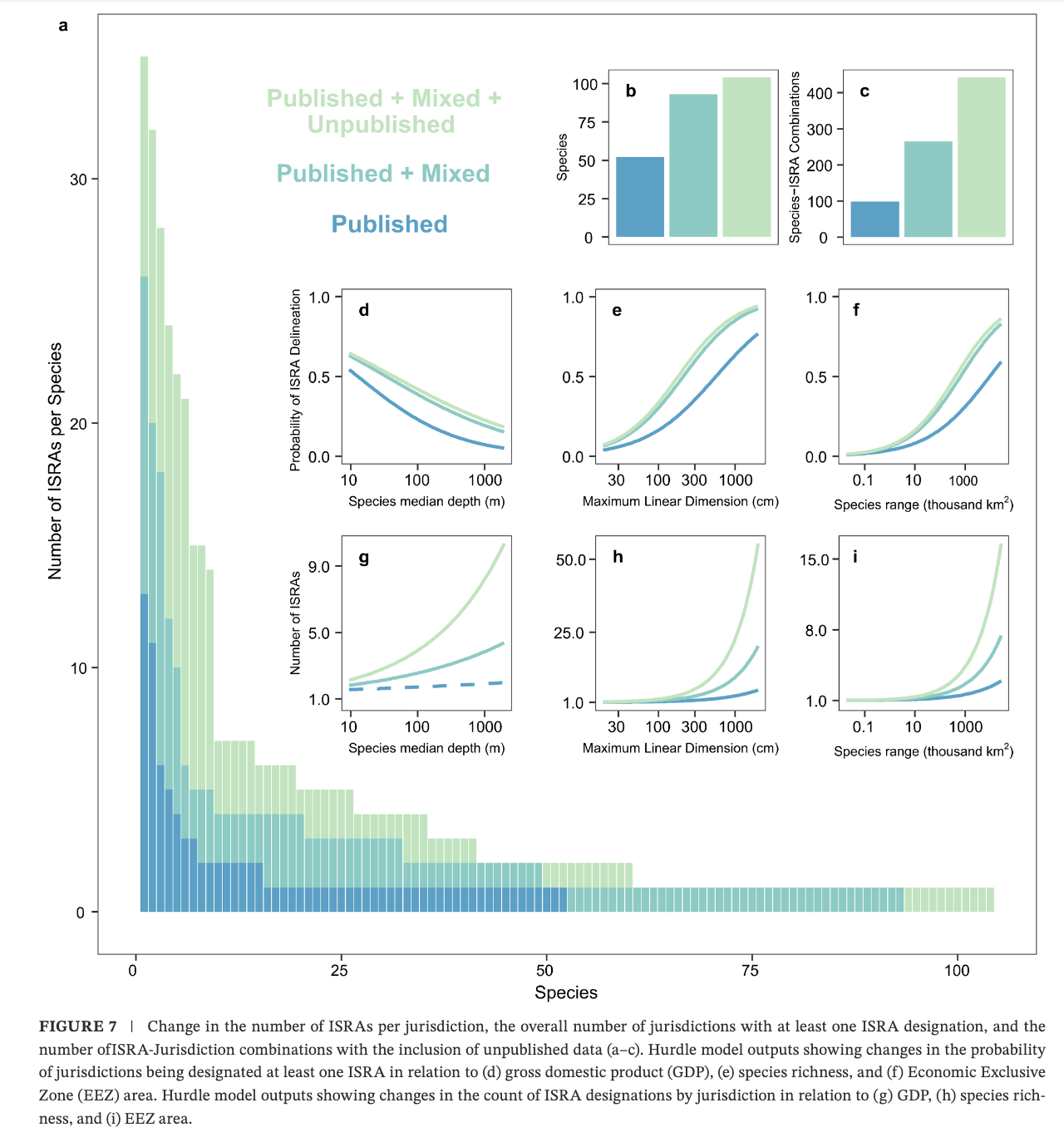
Summary: The Western Indian Ocean hosts a rich diversity of sharks, rays, and chimaeras, yet intense fishing has caused population declines and local extinctions. Using the Important Shark and Ray Area (ISRA) approach, 125 ISRAs covering over 2.8 million km² were identified, representing 39% of regional chondrichthyan species, 76% of which are threatened. Evidence largely came from visual surveys, fish-landings, and citizen science, with unpublished records expanding coverage. Biases favour large, wide-ranging, shallow species. Only 7.1% of ISRAs fall within marine protected areas, 1.2% in fully protected zones. Findings reveal protection gaps but offer opportunities to enhance MPA coverage and fulfil international biodiversity commitments.
Abstract
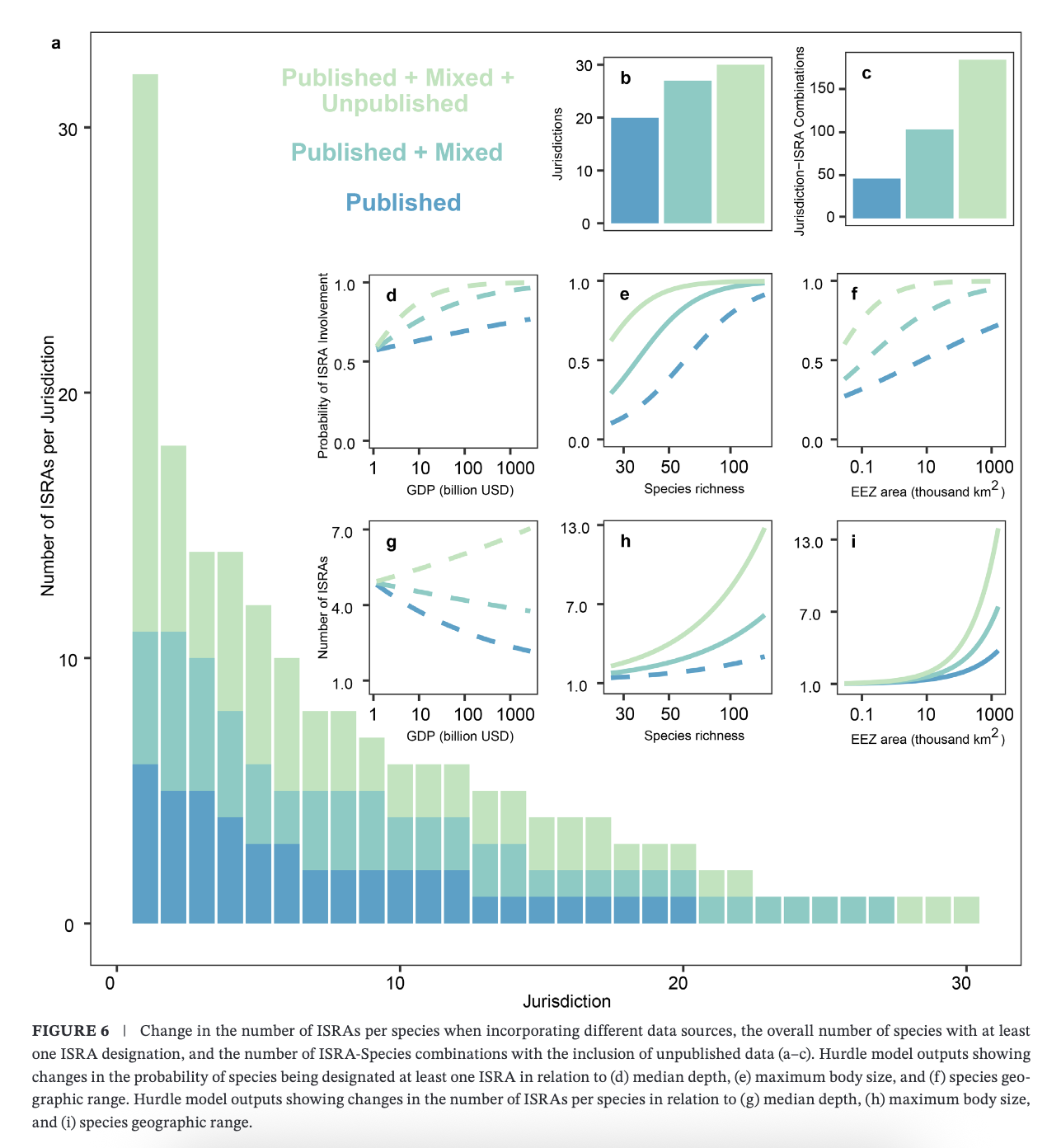
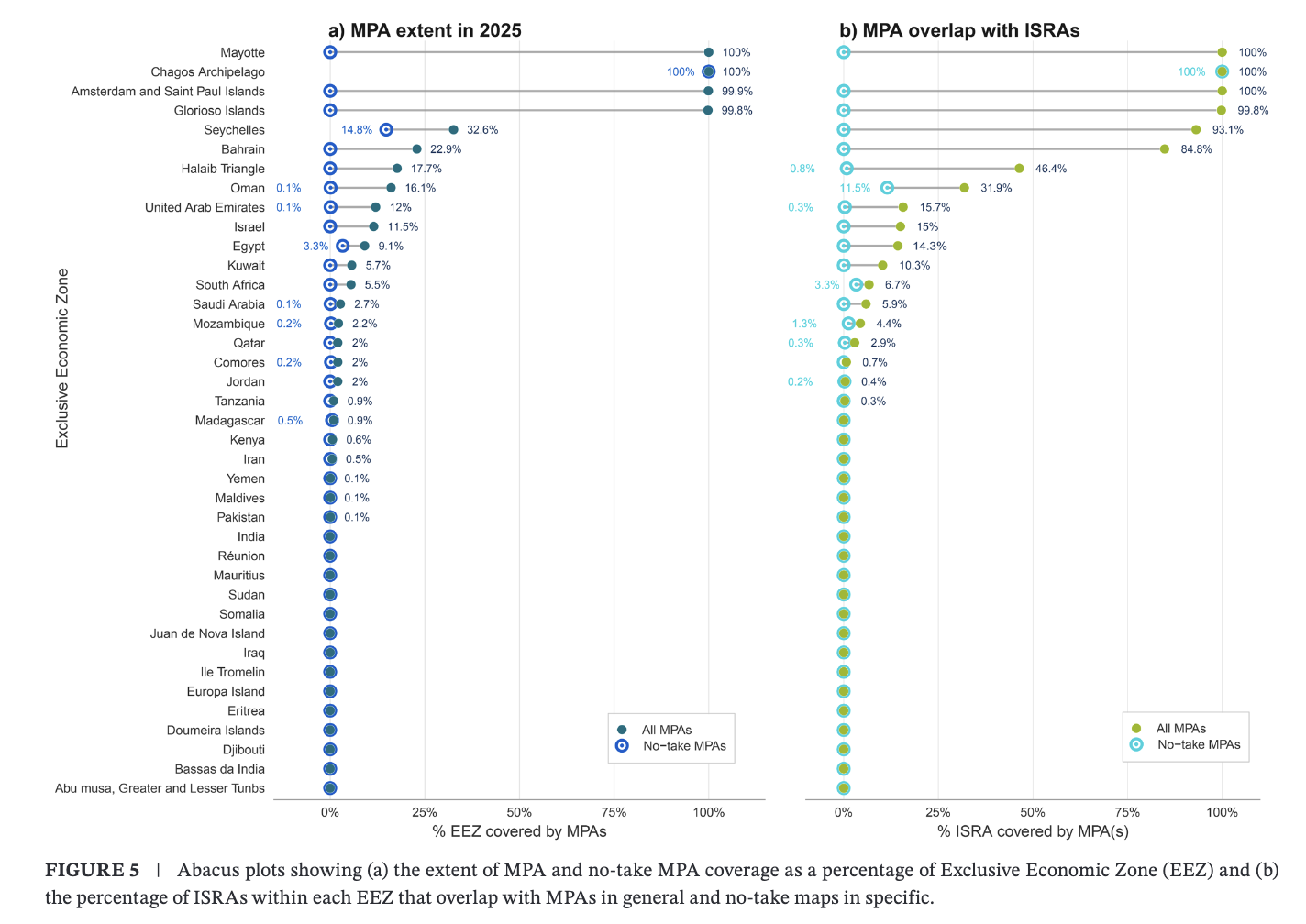
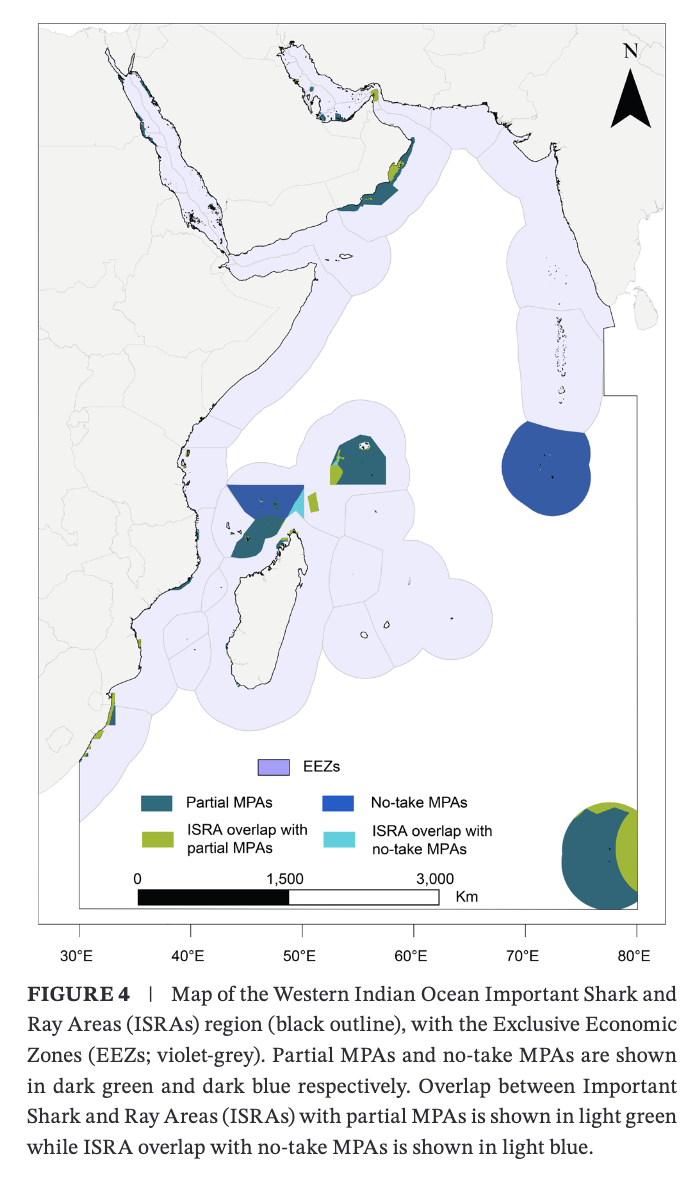
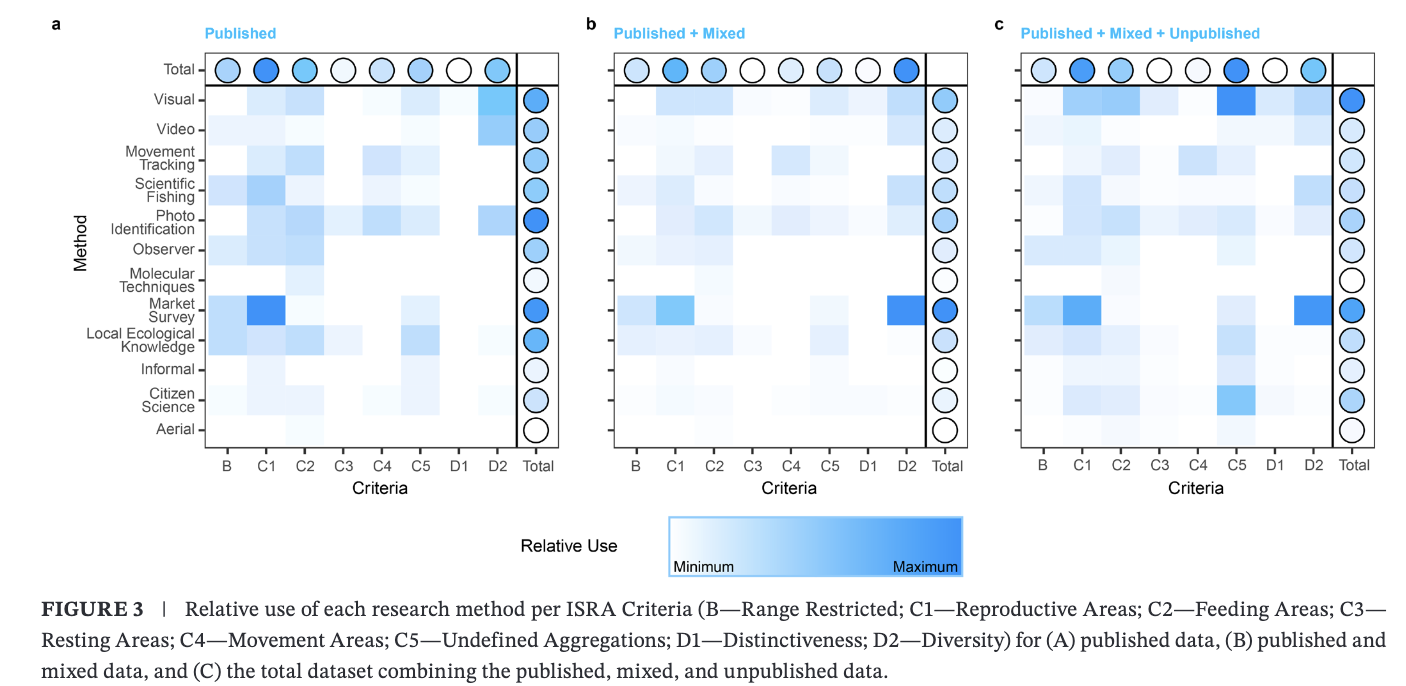
“The Western Indian Ocean (WIO) is known for its high diversity of chondrichthyans (sharks, rays, and chimaeras). However, intense fishing pressure has led to severe population declines and local extinctions of several species. The Important Shark and Ray Area (ISRA) process is a collaborative, evidence-based approach used to identify critical habitat for chondrichthyans. We analysed ISRAs across the WIO to quantify the diversity of research methods used to identify them, evaluate spatial overlap with designated marine protected areas (MPAs), model the influence of several species- and jurisdiction-specific variables on ISRA delineation, and explore the importance of incorporating unpublished data into the delineation process. In total, 125 ISRAs (covering > 2.8 million km2; ~10% of total regional surface area) were identified within the WIO from surface waters to ~2000 m depth. These ISRAs contain over one-third (n = 104, 39%) of the 270 chondrichthyan species reported from the region, with 76% being threatened with extinction according to the IUCN Red List of Threatened Species. The underlying evidence supporting ISRA identification was primarily drawn from relatively inexpensive research methods, such as visual census (25%) or fish-market/landing site surveys (22.6%), as well as citizen science (9.5%). Incorporating unpublished records substantially increased the frequency of ISRA delineation, leading to expanded taxonomic and geographic coverage. Still, the full dataset was influenced by the same biases as the published record, tending to favour large-bodied, wide-ranging, and shallow-dwelling species. Only 7.1% of ISRAs are within designated MPAs, with just 1.2% in fully protected no-take areas. The highest no-take overlap occurs in the Seychelles and Chagos Archipelago. These findings highlight the shortfalls in spatial protection of chondrichthyan habitats, but also present a strategic opportunity for policy-makers and resource managers to improve current MPA coverage and meet their commitments under international agreements, such as the Global Biodiversity Framework.”
Author Affiliations
Reef Ecology Lab, Division of Biological and Environmental Science and Engineering, King Abdullah University of Science and Technology
International Union for Conservation of Nature Species Survival Commission Shark Specialist Group
Research Institute for the Environment and Livelihoods, Charles Darwin University
Universidad Científica del Sur
University of the Sunshine Coast
Marine Megafauna Foundation
KAUST Coral Restoration Initiative (KCRI), King Abdullah University of Science and Technology
Red Sea Global
ICAR–Central Marine Fisheries Research Institute
Midaf Nature Conservation Society
Nuwat for Environmental Research & Education
Evolutionary Genomics Laboratory, New York University Abu Dhabi
Hopkins Marine Station, Stanford University
Miyaru—Shark Programme
Wildlife Conservation Society—India Program
Kish Island Fisheries Office
Marine Megafauna Conservation Organisation (MMCO)
Persian Gulf and Oman Sea Ecology Research Center, Iranian Fisheries Sciences Research Institute (AREEO)
Shark Citizen Association
Wildlife Conservation Society—Western Indian Ocean Shark Program
South African Institute for Aquatic Biodiversity
Nature Friends of Maldives
University of Plymouth
University of Insubria
Sea Mammal Research Unit, University of St Andrews
Marine Mammal Protected Areas Task Force, IUCN SSC and WCPA
Woods Hole Oceanographic Institution
Blue Safari Seychelles
Alphonse Foundation
The Manta Trust
SOSF-D'arros Research Centre (SOSF)
Centre for Sustainable Tropical Fisheries and Aquaculture, James Cook University
Maldives Whale Shark Research Programme
University of Delaware
University of Cape Town
Coastal Oregon Marine Experiment Station, Oregon State University
Oceanographic Institute of Mozambique
Wildtrust
University of KwaZulu-Natal
Mascarene Archipelago Elasmobranch Observatory (MAEO), ARBRE
Marine Megafauna Foundation, Centro de Investigação Científica Megafauna Marinha
Dalhousie University
Institute of Zoology, Zoological Society of London
Oceanographic Research Institute
Madagascar Whale Shark Project Foundation
Eawag
Eidgenössische Forschungsanstalt für Wald, Schnee und Landschaft (WSL)
Pacific Shark Research Center, Moss Landing Marine Laboratories, San Jose State University
Steering Committee, IUCN SSC
University of Bahri
Al-Azhar University
Sea Around Us—Indian Ocean, University of Western Australia
National Institute of Water and Atmospheric Research (NIWA)
University of Tasmania
Ruhr University Bochum
University of Hamburg
GIP—Centre Sécurité Requin
ICAR Central Coastal Agricultural Research Institute
University of Oxford
Zoological Society of London
Maldives Manta Conservation Programme (MMCP)
University of Victoria
University of Exeter
University of Plymouth, School of Biological and Marine Sciences
University of Gothenburg
Mission Blue
ARC Centre of Excellence for Coral Reef Studies, James Cook University
Coastal and Offshore Resources Research Center, Fisheries Research Institute
National Sun Yat-Sen University
Ministry of Fisheries and Blue Economy, Mogadishu
City University of Mogadishu
Lancaster University
Université de La Réunion
Department of Science & Technology, Kavaratti
Lakshadweep Atoll Research Foundation
Ashoka University
University of Eldoret
South African National Parks
Seychelles Islands Foundation
Tanzania Fisheries Research Institute
Save Our Seas Foundation (SOSF)
University of Cambridge
Silliman University
National Museum of Somalia
Centre for Marine Living Resources and Ecology (CMLRE)
Marine Conservation Society Seychelles
Emirates Nature—World Wide Fund for Nature
Universidad de Murcia
Bangor University
Marbec, Univ Montpellier, CNRS, IFREMER, IRD
Rhodes University
University of Mauritius
Hokkaido University
Indian Ocean Tuna Commission (IOTC)
Environment Seychelles
Nelson Mandela University
Save Our Seas Foundation D'arros Research Centre (SOSF-DRC)
Fuvahmulah Dream NGO
Stony Brook University
University of the Sunshine Coast
Oxford University Centre for the Environment
Coastal Oceans Research and Development in the Indian Ocean (CORDIO) East Africa
Department of Environment of Hormozgan Province
University of Manchester
Qeshm Environmental Conservation Institute (QECI)
Sundive Research
Pwani University
Shark Research Institute
Universidade Lúrio
Fundação Quirimbas
Ministry of Fisheries and the Blue Economy, Madagascar
Ministry of Environment and Sustainable Development, Madagascar
University of Cambridge, Evolutionary Ecology Group
Leibniz Centre for Tropical Marine Research (ZMT)
University of Bremen
Private University in the Principality of Liechtenstein (UFL)
Ocean Science and Solutions Applied Research Institute, NEOM
Future Seas Global SPC
James Cook University
Funded by
Shark Conservation Fund
Contribution towards the Manta Trust's Strategic Plan
Goal 3: Strategic Objective 3.1 – All manta and devil ray species in the regions where we work are fully protected and conserved through species management plans.
Goal 3: Strategic Objective 3.2 – Key manta and devil ray aggression sites in the regions where we work fall within protected areas that are effectively managed.
Goal 4: Strategic Objective 4.1 – More people (a diverse range of individuals) local to manta and devil ray conservation initiatives play an active role in their design and implementation.