Drone surveys reveal strong inter- and intra-annual site fidelity of oceanic manta rays Mobula birostris to a turbid coastal bay in Fiji
26 August 2026
Luke Gordon, Amanda K. Ford, Joshua D. Stewart, Devavrat Bishwa, Isabella Sorovakatini, Mark V. Erdmann & Guy M. W. Stevens
Non-invasive techniques • Photographic identification • Marine megafauna • Fiji • Endangered species • Unmanned aerial vehicle • Mobula birostris
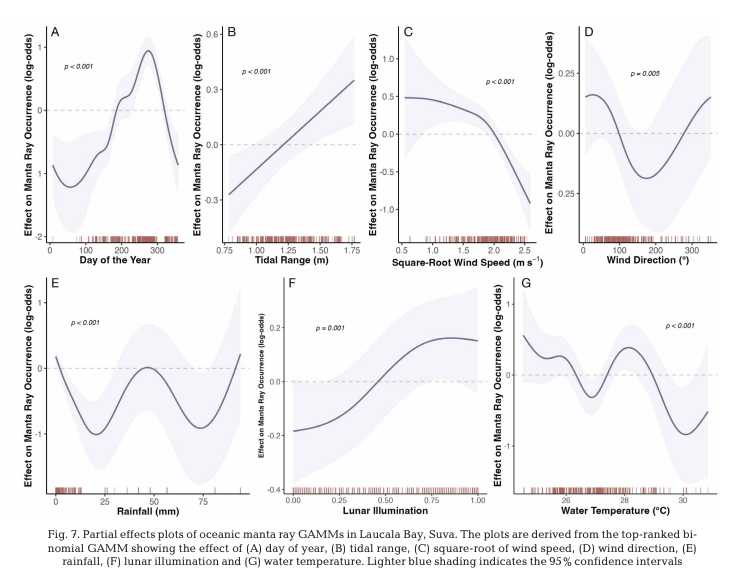
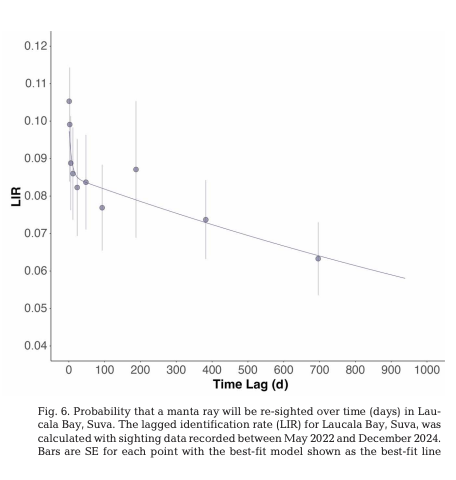
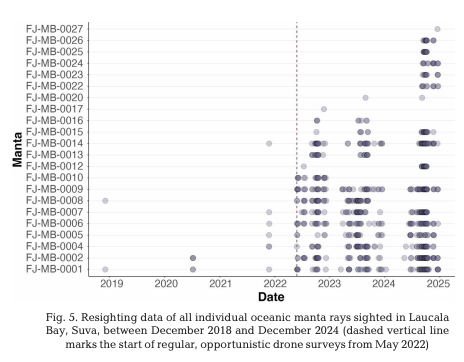
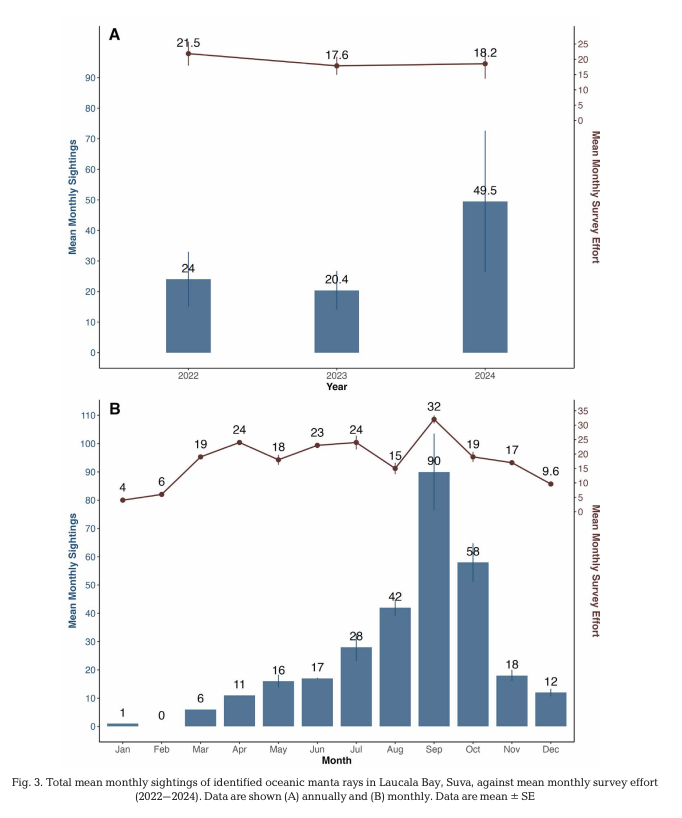
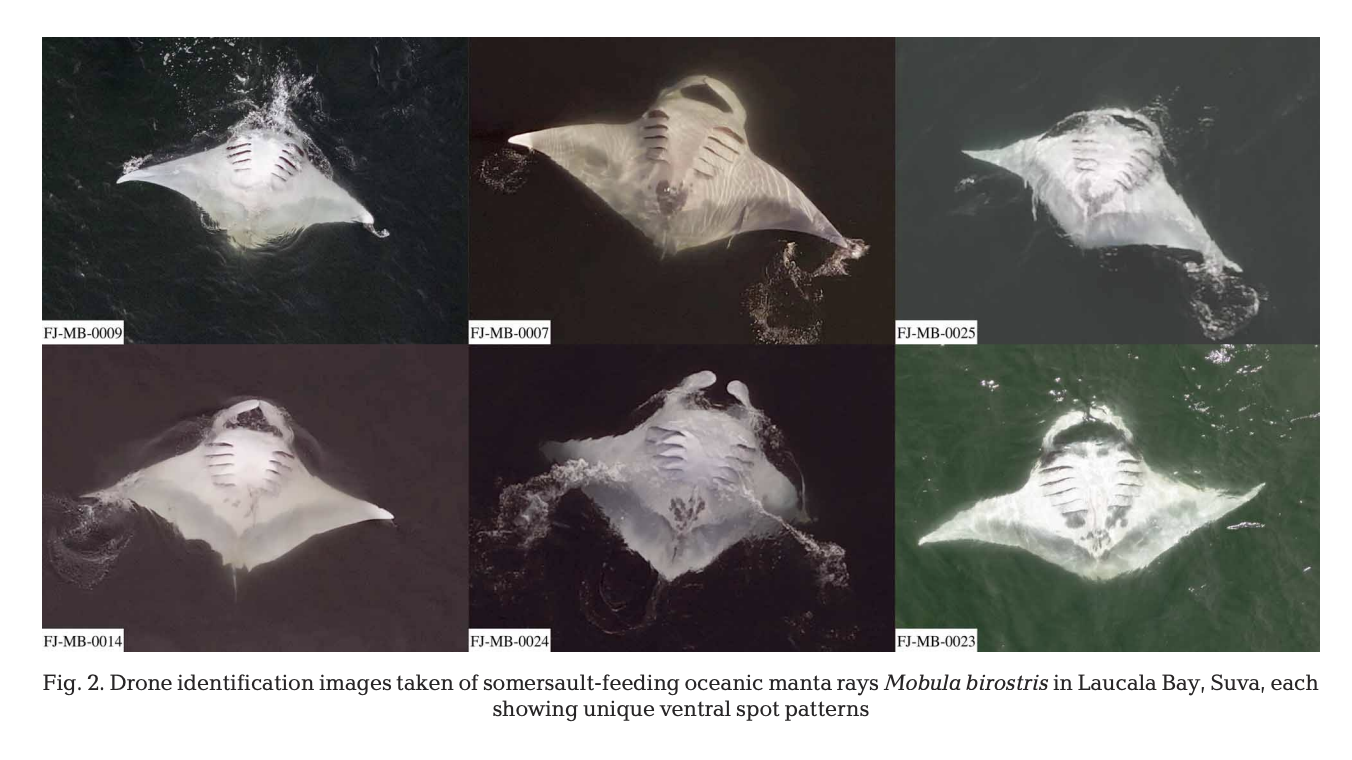
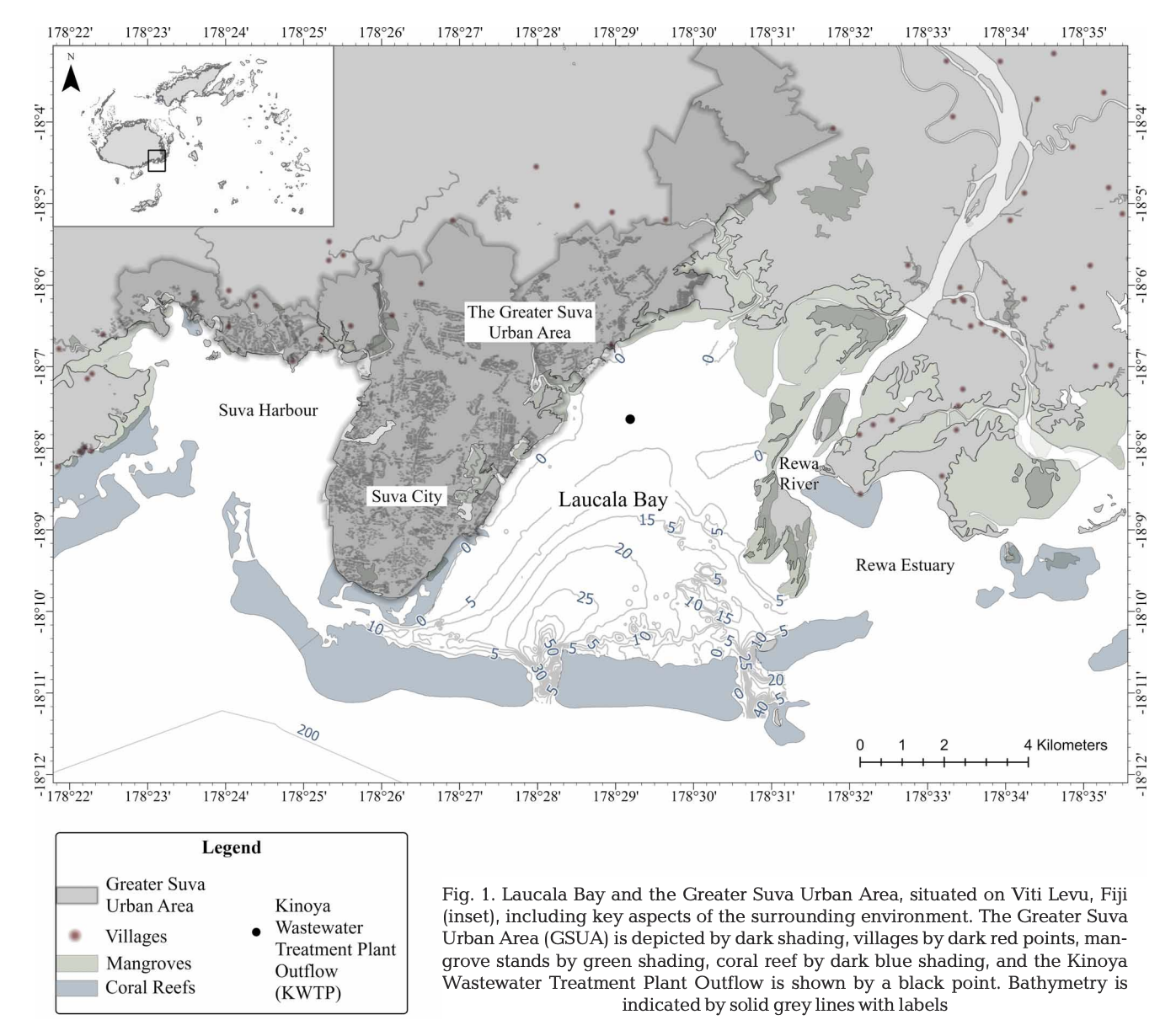
Summary: Drone surveys of Laucala Bay, a shallow, turbid, river-influenced bay beside Suva, Fiji, reveal strong site fidelity among Endangered oceanic manta rays (Mobula birostris), challenging the view that the species favours nutrient-poor offshore waters. Between December 2018 and December 2024, researchers logged 874 sightings of 22 individuals across 414 survey days. Over 90% of sightings occurred between May and November, peaking in September and October. Recapture rates exceeded 85%, with individuals resighted an average of 34 times. Mantas spent roughly 54 days a year in the bay. Coastal riverine habitats therefore matter and belong in conservation planning alongside offshore waters.
Abstract
“Understanding the spatial ecology of the Endangered oceanic manta ray Mobula birostris is critical for robust conservation planning, yet knowledge of its habitat use across the southwest Pacific remains insufficient. Using non-invasive drone surveys, we confirm strong inter- and intra-annual site fidelity of oceanic manta rays to Laucala Bay—a shallow, turbid, riverine-influenced coastal bay adjacent to Fiji’s capital city, Suva. This habitat contrasts with the majority of prevailing research, which typically associates the species with oligotrophic, offshore environments. Between December 2018 and December 2024, we recorded 874 sightings of 22 individual oceanic manta rays from 414 unique sampling dates. Occurrence varied seasonally, with >90% of sightings recorded between May and November, peaking in September and October. Recapture percentages and multi-year recapture percentages were high (>85%) along with a mean recapture frequency per individual of 34.2 ± 4.5 (mean ± SE) recaptures, indicating strong inter- and intra-annual site fidelity. Maximum likelihood residency models indicated that manta rays spent a mean (±SE) of 53.6 ± 44.2 d within the bay annually, while annual residency index (RI) values revealed that individuals were sighted on 13.9 ± 2.0% of detectable days on average across all years in Laucala Bay. These results demonstrate that coastal riverine-influenced habitats may also play an important ecological role for oceanic manta rays and should be incorporated, alongside offshore environments, into management and conservation strategies.”
Author Affiliations
The Manta Trust
The University of the South Pacific
Oregon State University
University of Hawaii at Manoa
Re:wild
ReShark
Contribution towards the Manta Trust's Strategic Plan
Goal 3: Strategic Objective 3.2 – Key manta and devil ray aggregation sites fall within protected areas that are effectively managed.
Goal 3: Strategic Objective 3.4 – The environmental drivers on manta and devil ray populations are better understood to help determine the impact of the climate crisis and inform conservation measures.
Goal 3: Strategic Objective 3.6 – Pollution and natural system modification are better understood to inform necessary conservation measures.