Characterisation of a nursery site for reef manta rays Mobula alfredi at Maamunagau Lagoon, Maldives
26 November 2026
Jessica L. A. Haines, Sam B. Weber, Guy M. W. Stevens, Callum M. Roberts, Niv Froman & Julie P. Hawkins
Critical Habitat • Elasmobranch Nursery • Juvenile Manta Ray • Photo-identification • Stereo-videophotogrammetry • Young-of-the-ear
Summary: Few nursery areas are known for reef manta rays (Mobula alfredi), and none had been described in the Maldives, which has the world’s largest population. Researchers tested whether Raa Atoll’s Maamunagau Lagoon meets three nursery criteria: young mantas are more common there than elsewhere, stay for long periods, and return across years. From 2019 to 2022, photo-identification and stereo-video measurements recorded 2,786 sightings of 354 individuals. Young mantas were more frequent in the inner lagoon than at ten other sites, and they stayed longer there. Most of them (88%) returned in later seasons, some for four consecutive seasons. This makes the inner lagoon the Maldives’ first documented nursery.
Abstract
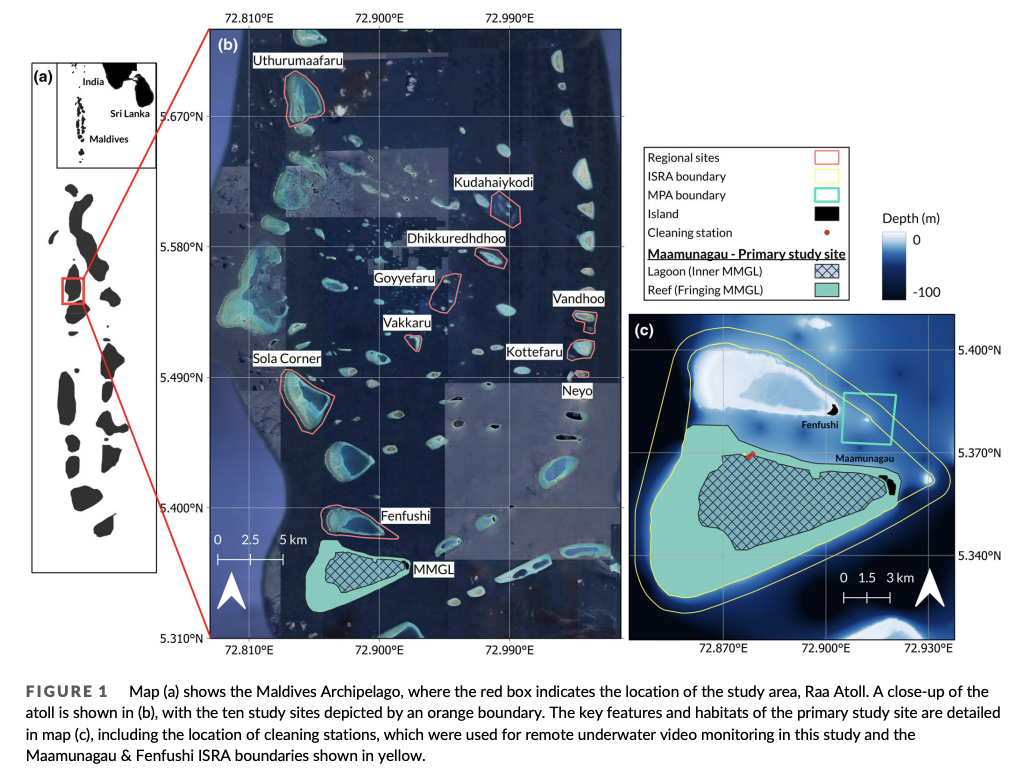
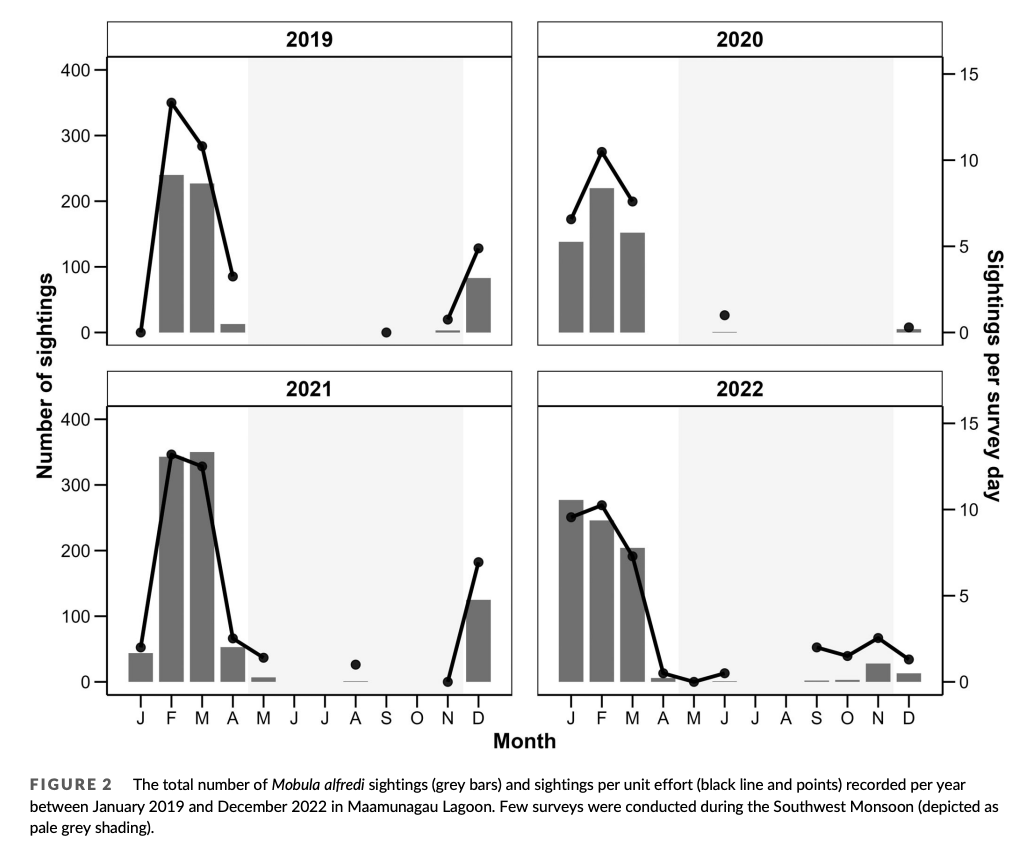
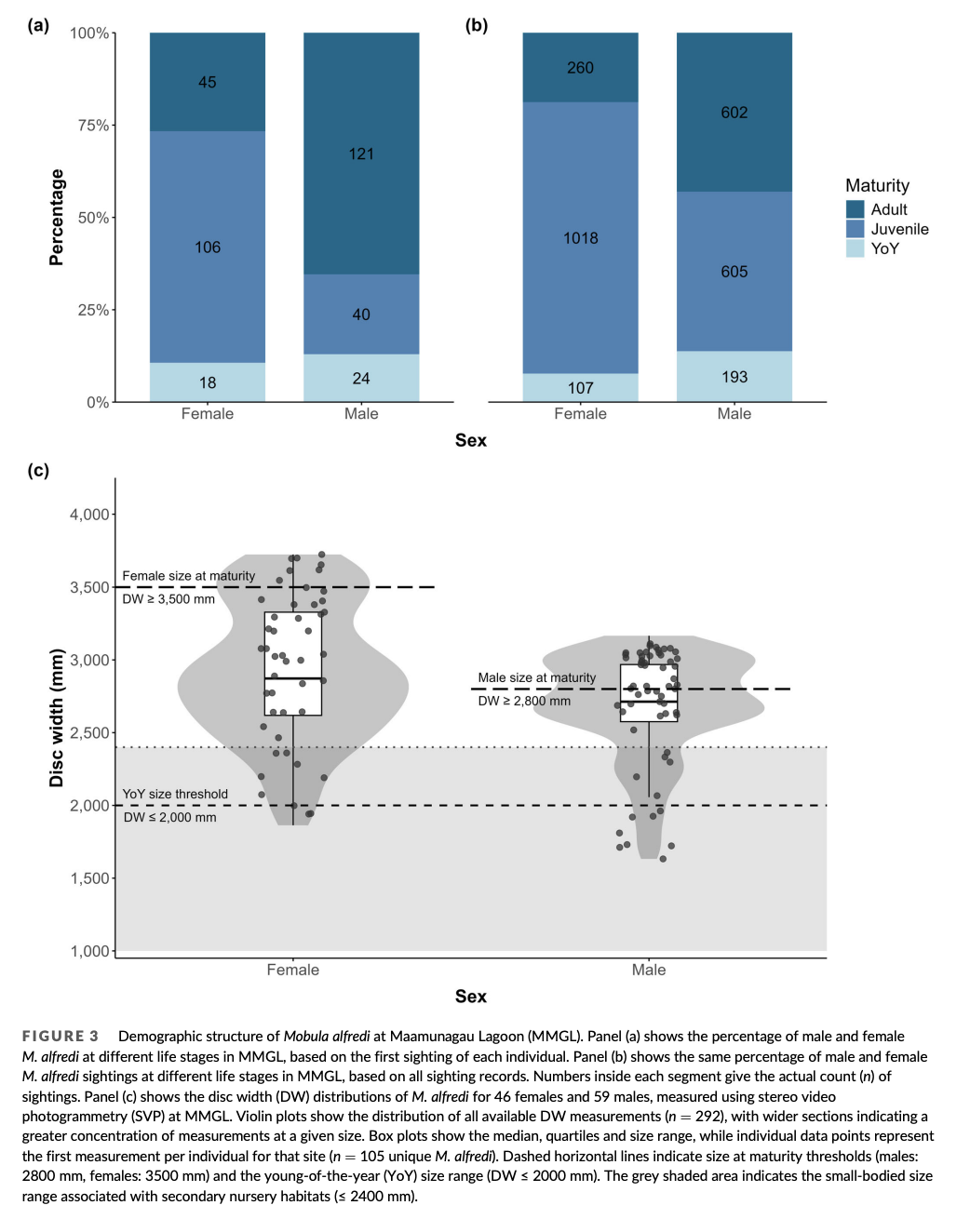
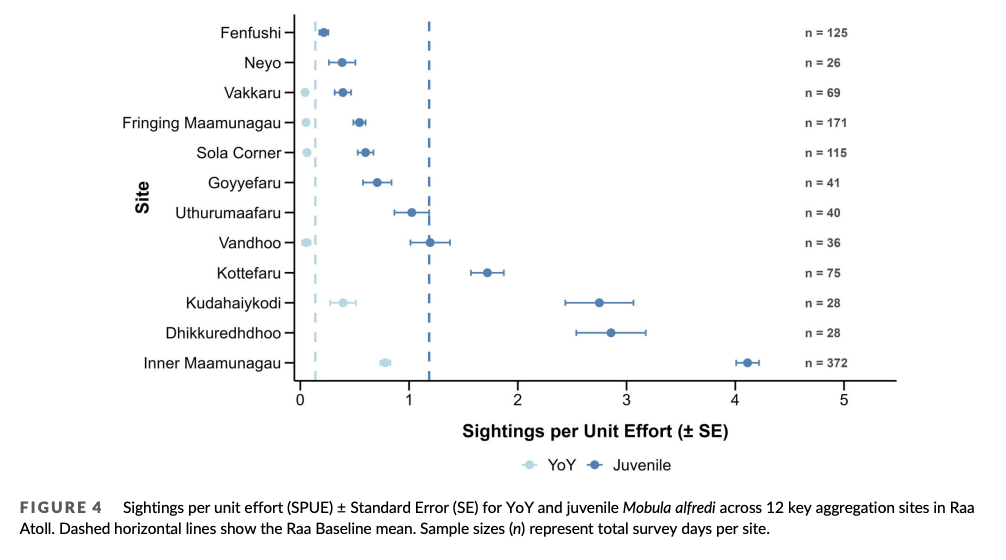
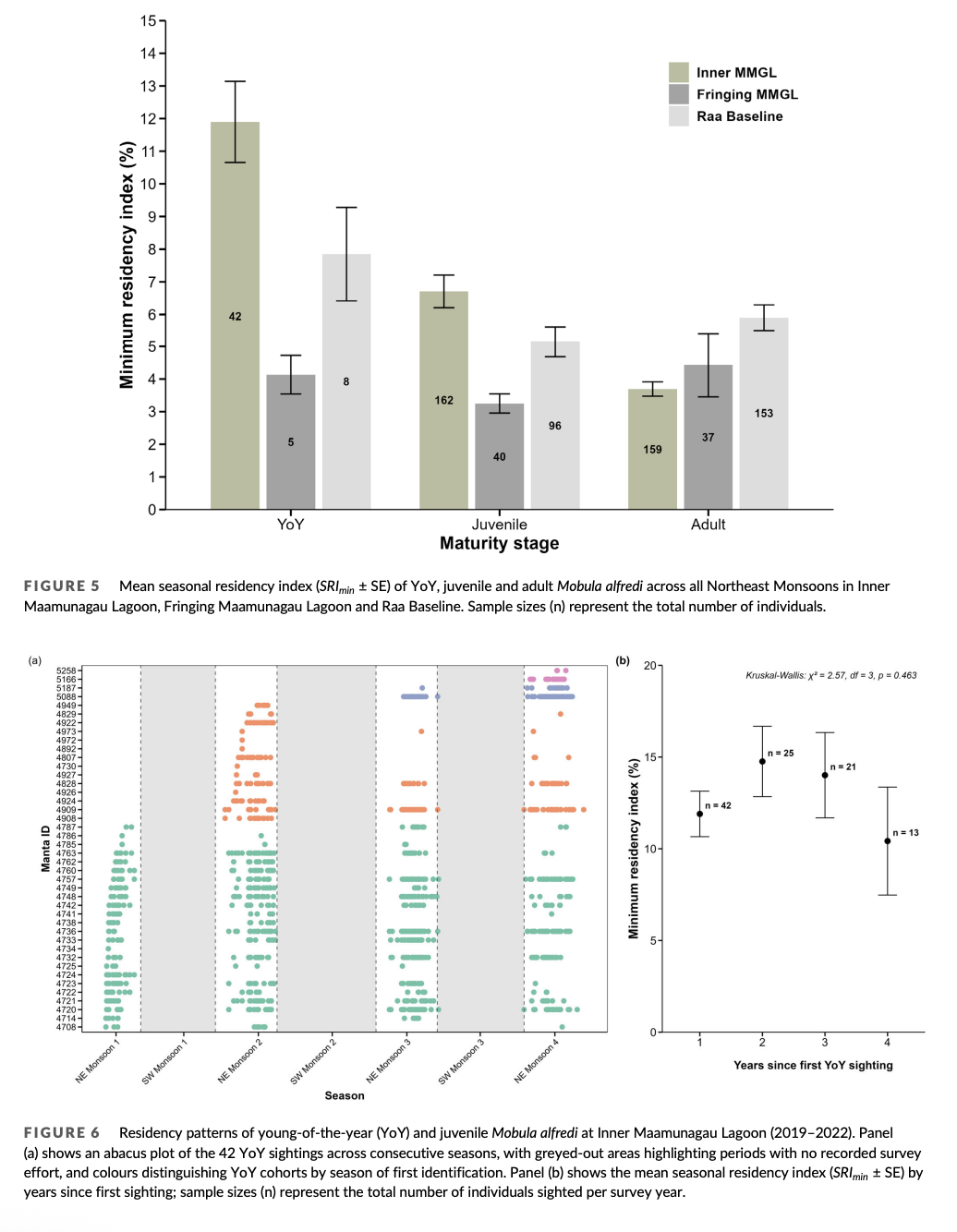
“Nursery areas are critical habitats for early life stages of many marine species, yet few have been identified for reef manta rays Mobula alfredi, despite their vulnerable conservation status. The Maldives Archipelago supports the world's largest known population of M. alfredi, but no nursery area has previously been characterised. We evaluated whether the Maamunagau Lagoon (MMGL), Raa Atoll meets three elasmobranch nursery criteria: (1) young-of-the-year (YoY; disc width ≤2000 mm) and juveniles are encountered more frequently than elsewhere, (2) they remain for extended periods and (3) the area is used repeatedly across years. From 2019 to 2022, photo-identification and stereo-video photogrammetry (SVP) quantified YoY and juvenile relative abundance, residency and site fidelity at MMGL and 10 other aggregation sites in Raa Atoll. Overall, 2786 sightings of 354 individual M. alfredi were documented, and 292 SVP size measurements were obtained from 105 individuals. Sightings per unit effort (SPUE, sightings per survey day) were significantly higher at Inner MMGL for juveniles (4.11 ± 0.11) and YoY (0.78 ± 0.05) than at all other sites (p < 0.001). Across the study period, YoY showed higher seasonal residency indices (𝑆𝑅𝐼𝑚𝑖𝑛) at Inner MMGL (11.9% ± 1.2%) than at Fringing MMGL (4.1 ± 0.6%) and all regional sites (7.9% ± 1.4%). Multi-year site fidelity was evident, with 88.1% of YoY resighted beyond their initial identification season, and some individuals recorded for four consecutive seasons. These findings make Inner MMGL the first documented nursery area for M. alfredi in the Maldives and therefore a priority site for conservation evaluation.”
Author Affiliations
University of Exeter
The Manta Trust
Maldives Manta Conservation Programme
University of Cambridge
Funding
The Manta Trust
InterContinental Maldives Maamunagau Resort
Natural Environment Research Council
UK Research and Innovation
University of Exeter
Contribution towards the Manta Trust's Strategic Plan
Goal 3: Strategic Objective 3.1 – All manta and devil ray species in the regions where we work are fully protected and conserved through species management plans.
Goal 3: Strategic Objective 3.2 – Key manta and devil ray aggregation sites fall within protected areas that are effectively managed.
Goal 3: Strategic Objective 3.4 – The environmental drivers on manta and devil ray populations are better understood to help determine the impact of the climate crisis and inform conservation measures.