
The Mascarene Archipelago, a Data-Poor Region for Mobulid Rays: First Records, Seasonal Patterns and Conservation Implications
June 2026
Joanna L. Harris, Estelle Crochelet, Prashant Mohesh & Guy M. W. Stevens
Summary: This study presents the first species-level assessment of manta and devil rays across the Mascarene Archipelago using citizen science observations collected between 2014 and 2026. Researchers documented 107 sightings representing four identified species, with most records concentrated along the west coast of La Réunion and seasonal peaks occurring during late austral spring and early summer. The study reports the first confirmed records of the oceanic manta ray (Mobula birostris) in Mauritian waters and the sicklefin devil ray (M. tarapacana) in La Réunion, alongside rare courtship observations of the bentfin devil ray (M. thurstoni). The findings indicate that the archipelago forms an important seasonal habitat network, highlighting the value of citizen science for monitoring and conservation in data-poor regions.
Abstract
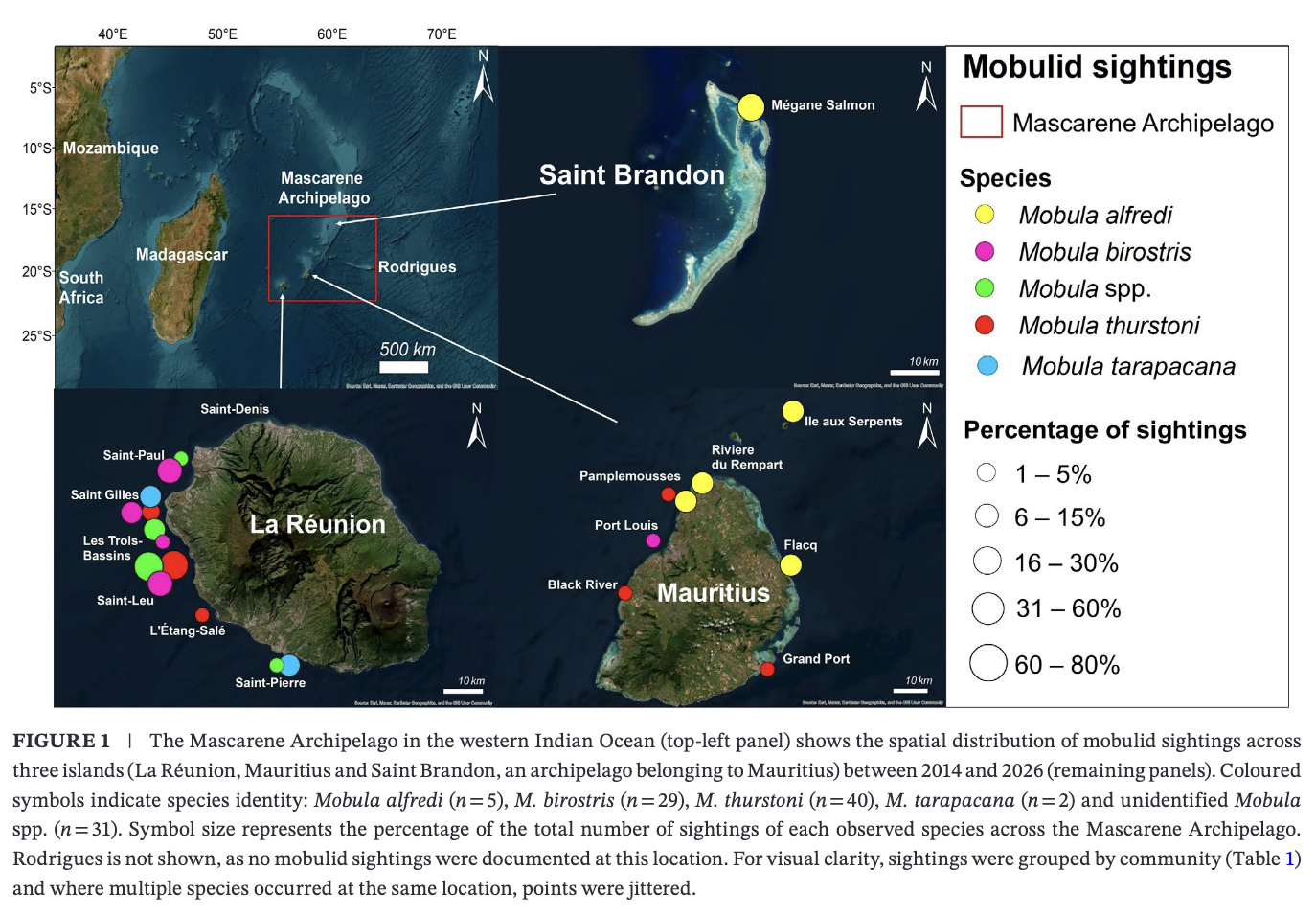
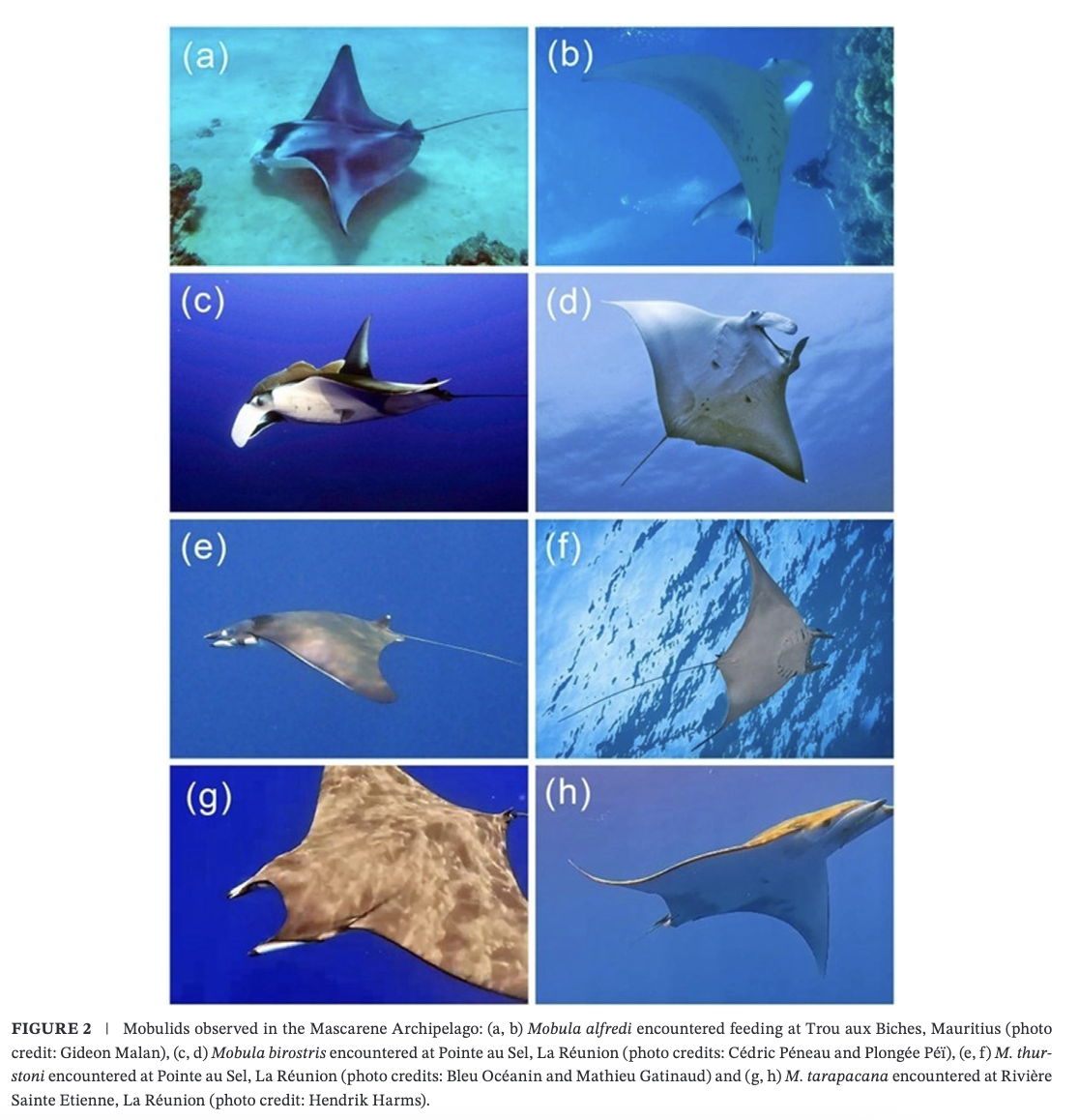
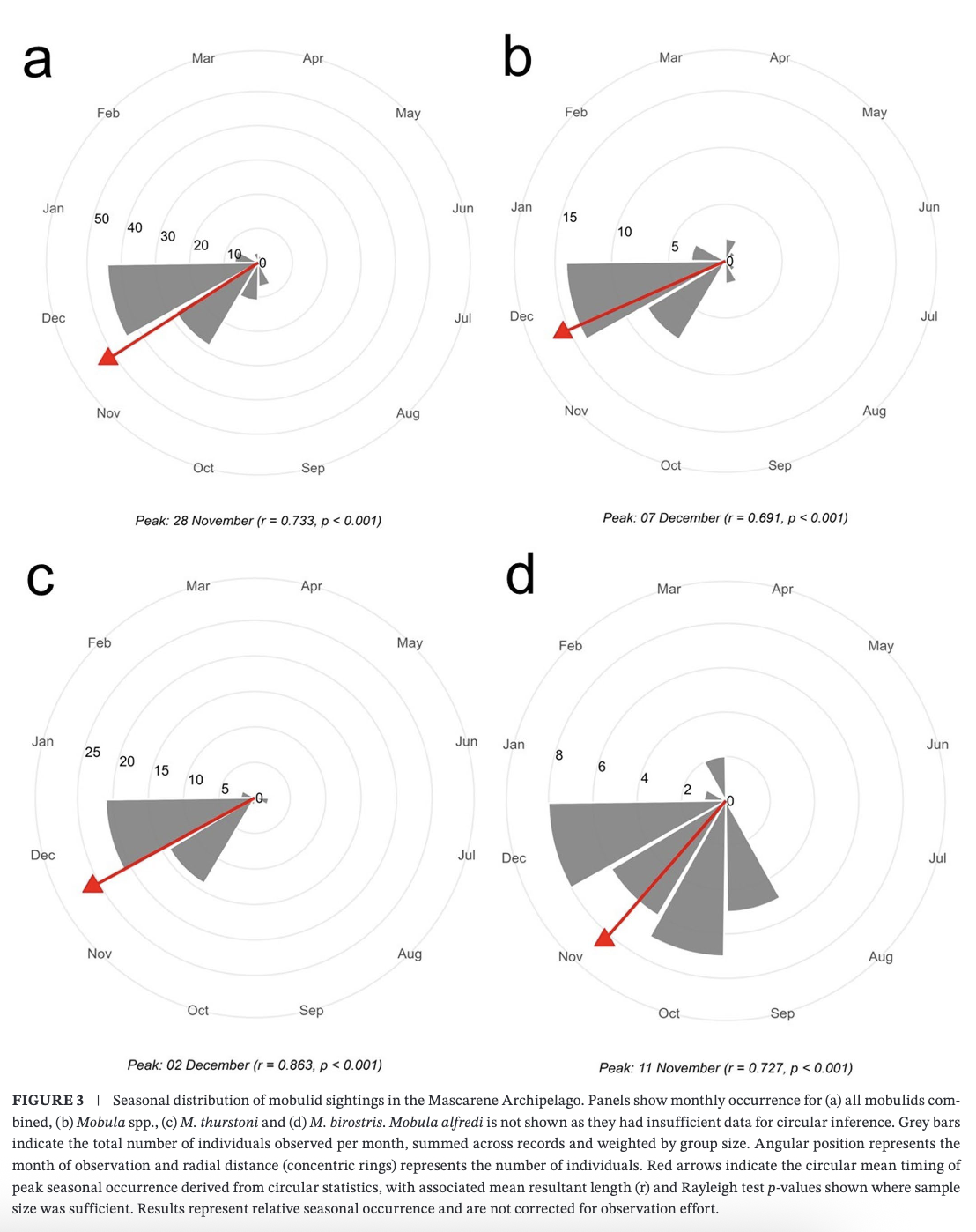
“The distribution and seasonal occurrence of manta and devil rays (mobulids) remain poorly understood across much of the Western Indian Ocean, particularly within remote island systems. Here, we present the first synthesis of species-level mobulid records for the Mascarene Archipelago (La Réunion, Mauritius and Rodrigues) using a combination of direct and passive citizen-science observations collected between 2014 and 2026. A total of 107 sightings were documented from 75 sighting events, comprising Mobula birostris (n = 29), M. thurstoni (n = 40), M. alfredi (n = 5), M. tarapacana (n = 2) and unidentified Mobula spp. (n = 31). One M. birostris was re-sighted almost 4 years after it was first recorded (October 2019 to September 2023). Records were strongly concentrated along the west–south-west coast of La Réunion, accounting for 90% of all sightings, whereas confirmed sightings in Mauritius were fewer, and no records were obtained for Rodrigues. We report the first confirmed records of M. birostris and M. tarapacana in Mauritian and La Réunion waters, respectively. Circular analyses revealed seasonal occurrences for the most frequently recorded species, with peak occurrence during late austral spring to early summer. Courtship behaviour for M. thurstoni is rarely observed globally; thus, these findings demonstrate that the Mascarene Archipelago supports multiple mobulid species and is used for ecologically important activities, suggesting that the region forms part of a broader, seasonally structured habitat network associated with the Mascarene Plateau. In the context of the recent transfer of all mobulids to CITES Appendix I and ongoing regional fisheries interactions, this baseline highlights the value of citizen-science data for identifying mobulid presence in data-poor regions and provides a foundation for targeted monitoring and conservation planning in the Western Indian Ocean.”
Author Affiliations
The Manta Trust
University of Plymouth,
Biodiversity Research Agency of Reunion Island, Mascarene Archipelago Elasmobranch Observatory
The National Geographic Society (Mauritius)
Contribution towards the Manta Trust's Strategic Plan
Goal 3: Strategic Objective 3.1 – All manta and devil ray species in the regions where we work are fully protected and conserved through species management plans.
Goal 3: Strategic Objective 3.2 – Key aggregation sites fall within protected areas that are effectively managed
Goal 3: Strategic Objective 3.4 – The environmental drivers on manta ray populations are better understood to help determine the impact of the climate crisis and inform conservation measures.
Goal 2: Strategic Objective 2.2 – Regulations and effective enforcement exist to reduce manta and devil ray capture and bycatch mortality.