Movement, residency, and behavioral plasticity of reef manta rays in the Samarai Islands of Papua New Guinea
May 2026
Anna M. Knochel, Joanna L. Harris, Shannon E. Murphy, Annie Murray, Guy M.W. Stevens & Mark V. Erdmann
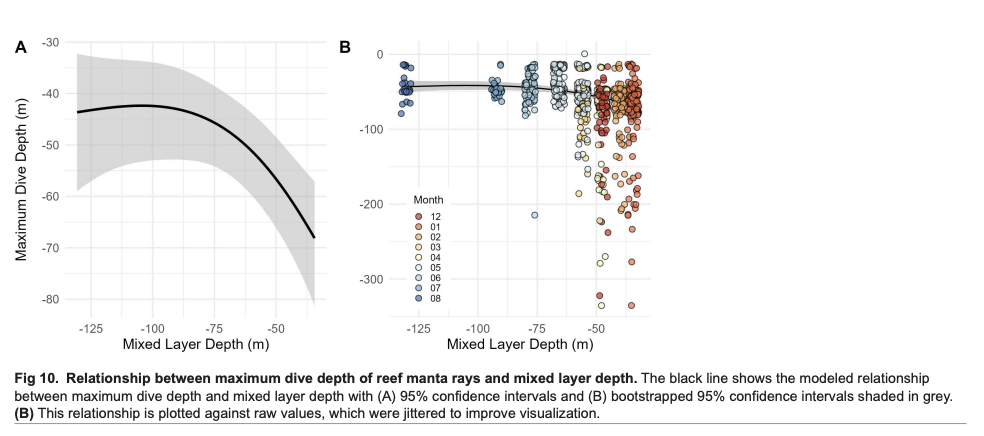
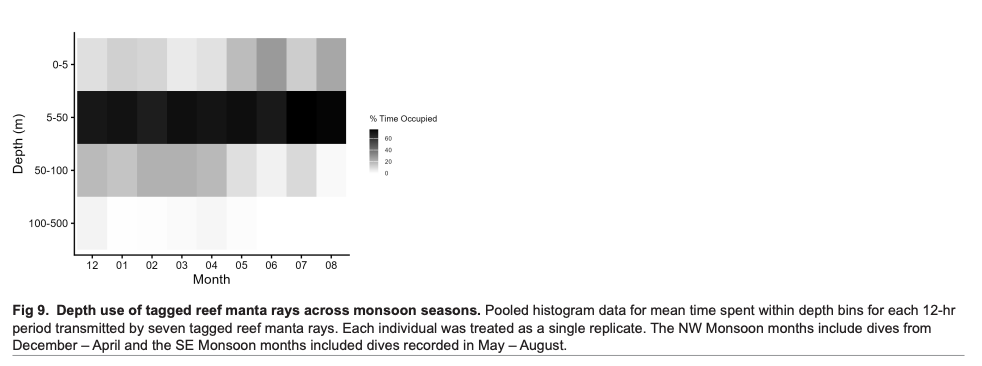
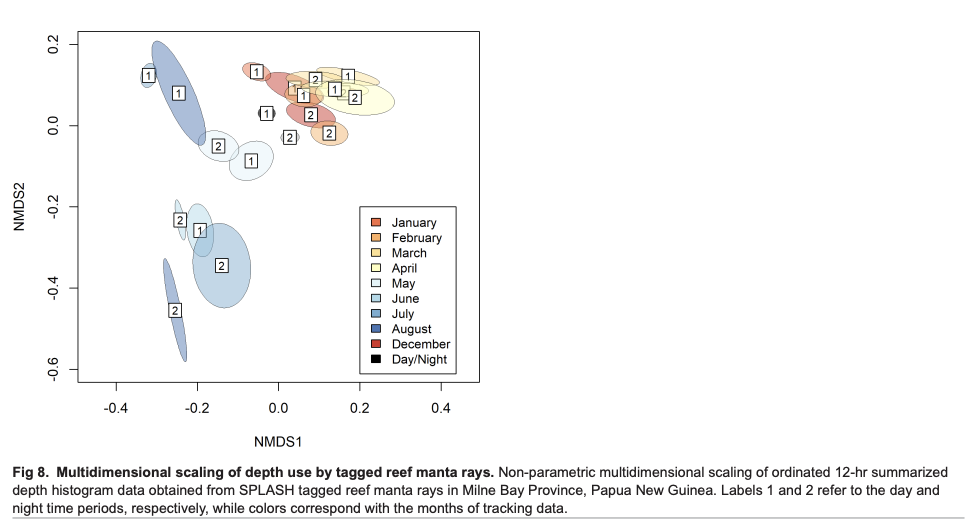
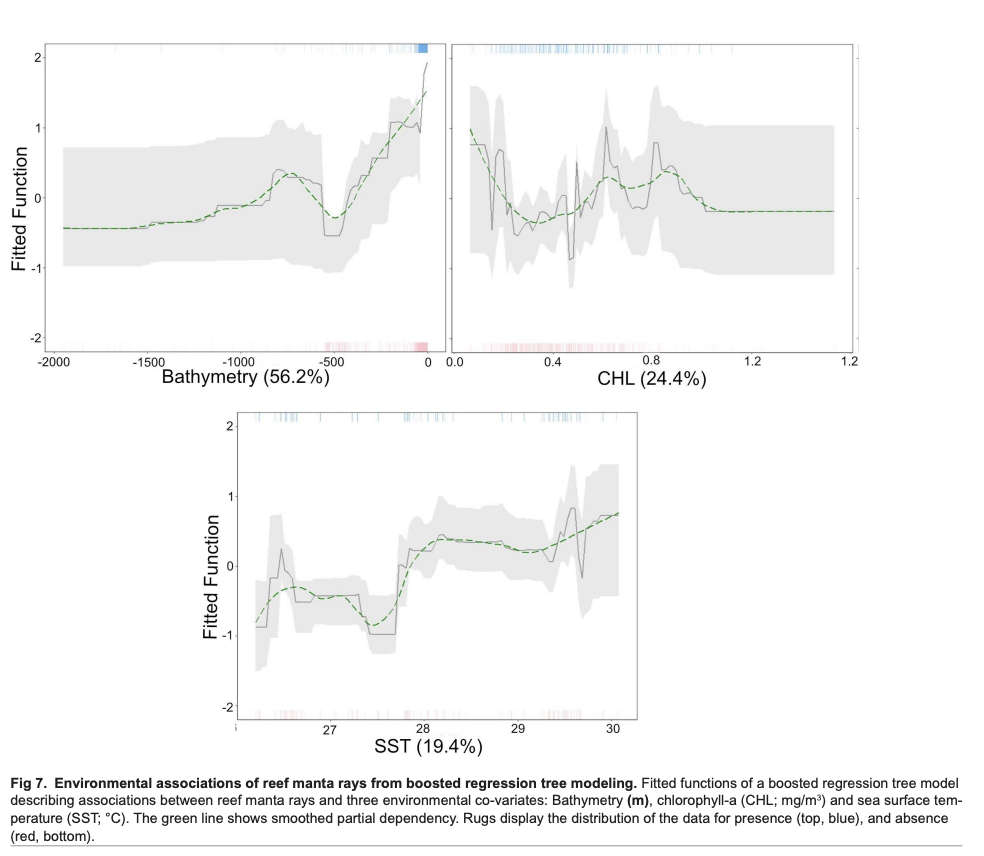
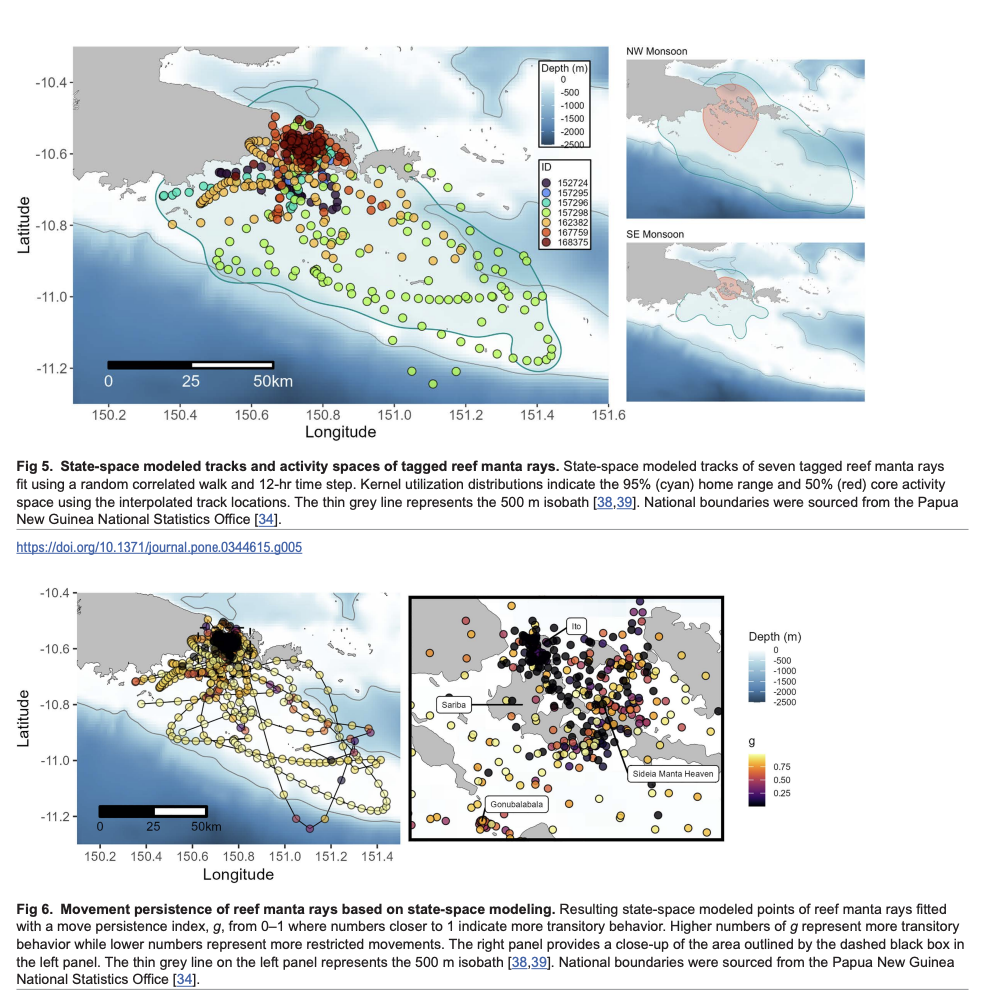
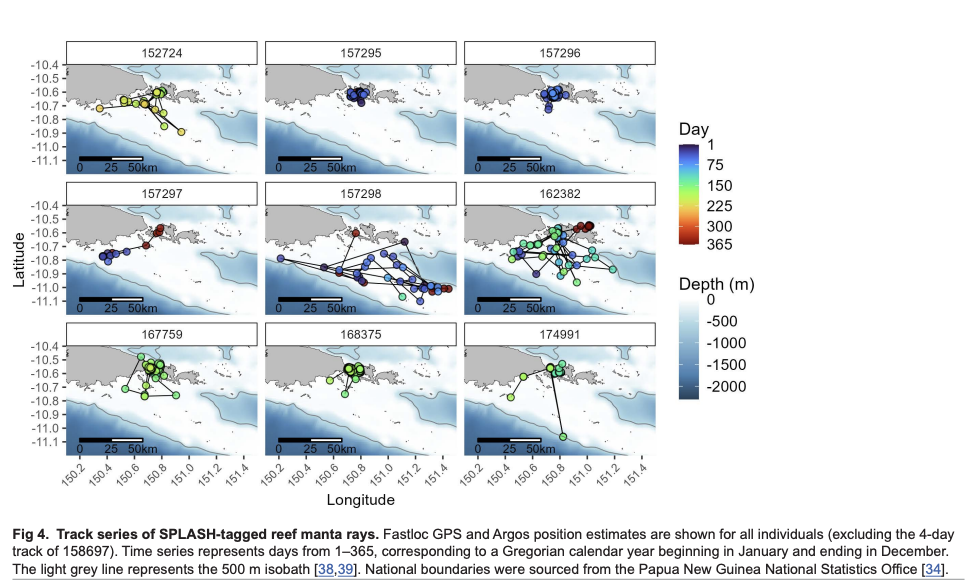
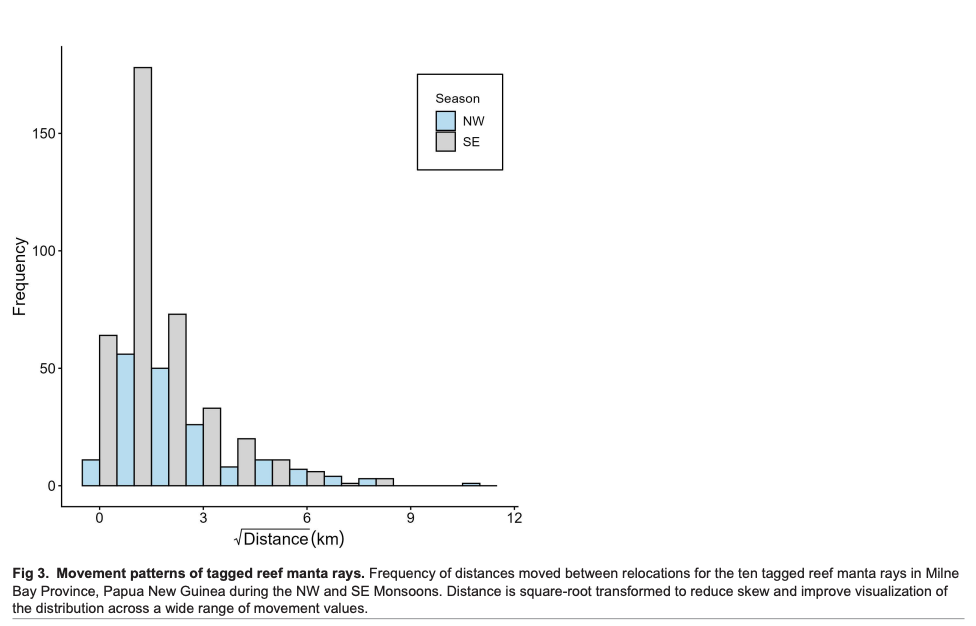
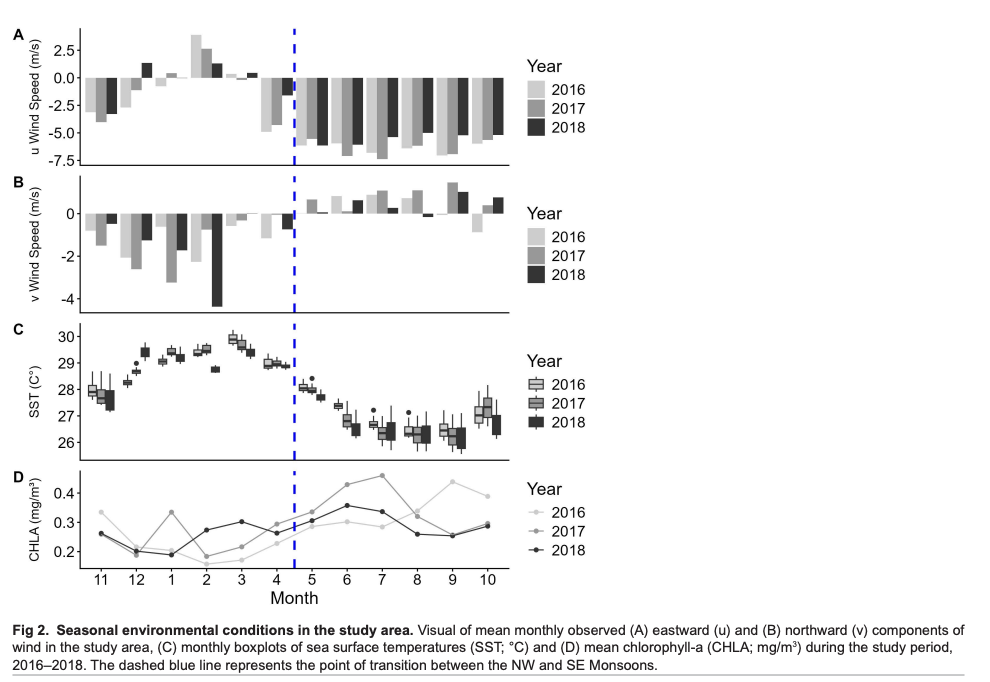
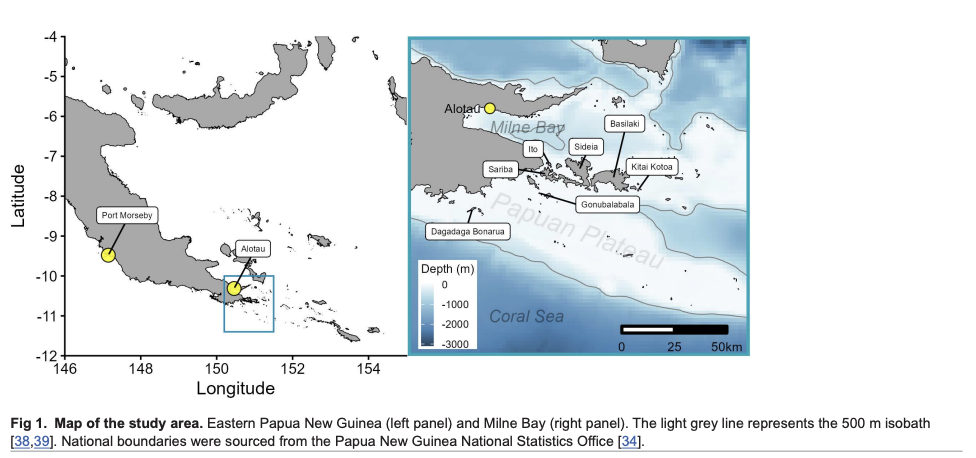
Summary: Researchers tracked ten adult reef manta rays (Mobula alfredi) in Papua New Guinea’s Samarai Islands from 2016–2018 using satellite tags to study movement and habitat use. Results showed strong site fidelity, with 75% of movements occurring within 10 km of tagging sites and maximum displacement limited to 86.9 km. Rays consistently preferred the Samarai Islands and Papuan Plateau, particularly shallow, chlorophyll-rich waters. Seasonal differences in horizontal movement were minimal, but vertical movements varied with oceanographic conditions: rays dived deeper when the mixed layer was shallow, indicating behavioural adaptability. This first ecological assessment supports sustainable manta ray tourism development and informed conservation management in the region.
Abstract
“The reef manta ray (Mobula alfredi) is a highly mobile pelagic marine ray found throughout the tropical and subtropical waters of the Indo-Pacific, but investigation into their behavior and ecology within Papua New Guinea has not been previously undertaken. Furthermore, the home range, dispersal characteristics, and inter-seasonal fine-scale habitat use of this species is limited. To address these data gaps and investigate the vertical and horizontal habitat use of a previously unstudied population, SPLASH10-F-321A pop-off archival satellite tags were used to track ten adult individuals from 4–181 days between 2016–2018 across two distinct monsoonal periods in the Samarai Islands of Milne Bay, southeastern Papua New Guinea. Our findings indicate strong site-attached movement patterns for reef manta rays in this region, with 75% of relocations occurring within ten kilometers of the tagging site. While occasional movements beyond this range were observed, the maximum displacement distance was 86.9 km, and no consistent seasonal differences in horizontal displacement distance were detected. Tagged rays displayed a clear preference for the Samarai Islands and the Papuan Plateau across both monsoons, with shallow bathymetry and elevated chlorophyll-a values driving observed habitat preferences. We found evidence for shifts in vertical occupancy of the water column that corresponded with the mixed layer depth; dives were deeper when the mixed layer depth was shallow, suggesting that reef manta rays can exhibit behaviorally plastic responses to seasonal variations in oceanographic conditions. These findings provide the first insight into the movement ecology of this reef manta ray population that can be used to inform the development of economically valuable manta ray tourism practices and a sustainable management plan in the region.”
Infographic
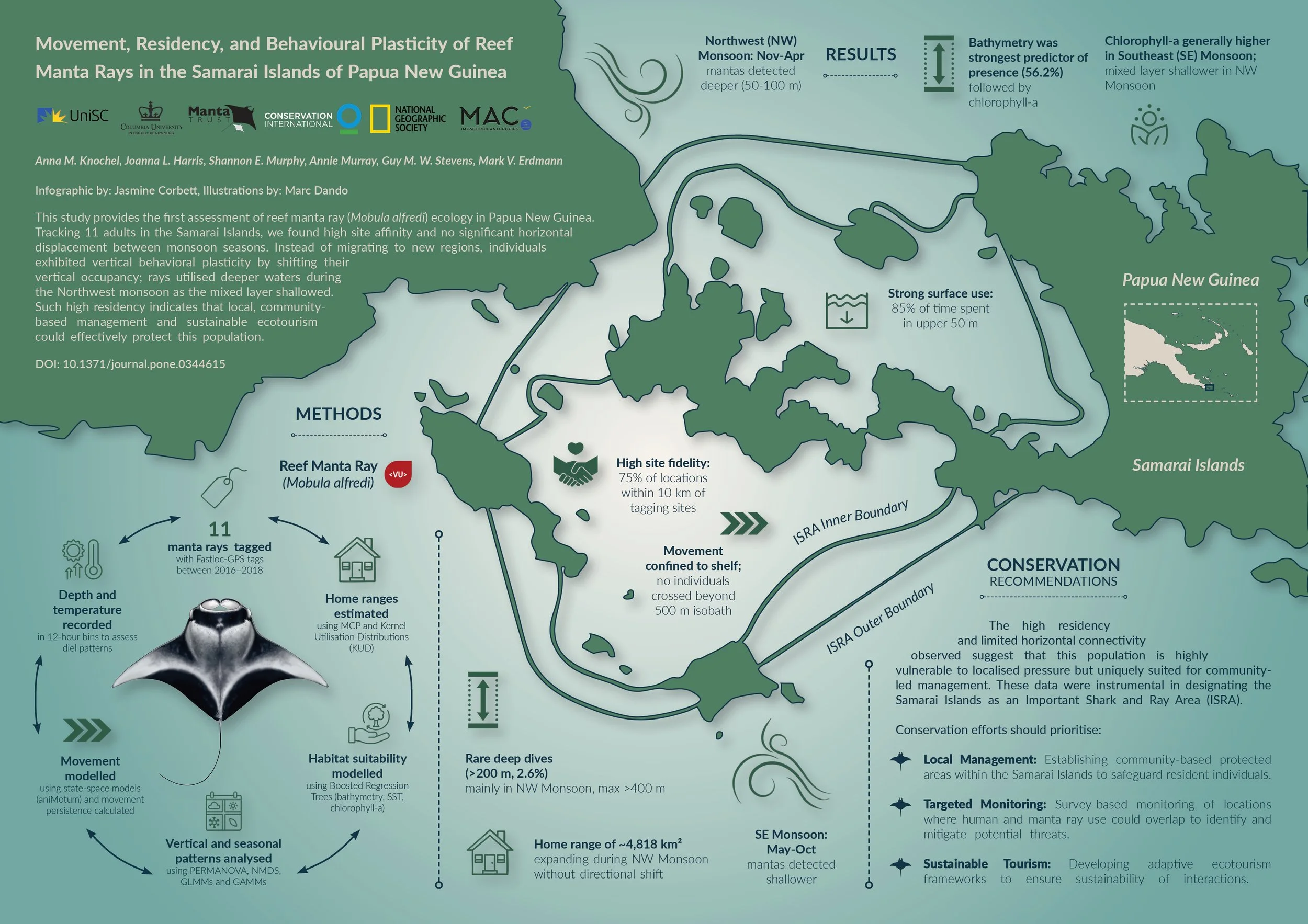
Infographic by Jasmine Corbett
Author Affiliations
The University of the Sunshine Coast
The Manta Trust
University of Plymouth
Columbia University
Conservation International Asia-Pacific Field Division
Re:wild
Funding
Conservation International
National Geographic
The Earth Institute
Columbia University
Contribution towards the Manta Trust's Strategic Plan
Goal 1: Strategic Objective 1.1 – Scientific research and monitoring priorities are identified and addressed to improve understanding of manta and devil ray populations, ecology, habitat use, threats, and conservation needs.
Goal 3: Strategic Objective 3.4 – Environmental drivers on manta and devil ray populations are better understood to help determine the impact of the climate crisis and inform conservation measures.
Goal 3: Strategic Objective 3.2 – Key manta and devil ray aggregation sites fall within protected areas that are effectively managed.
Goal 3: Strategic Objective 3.3 – Best-practice guidelines for tourism and human interaction with manta and devil rays are informed by scientific evidence to reduce disturbance.
Goal 3: Strategic Objective 3.5 – Spatial and temporal overlap between manta and devil ray habitat use and anthropogenic threats (e.g., fisheries, shipping, entanglement) is identified to inform mitigation and conservation measures.