Shining a light on Cameroon's elasmobranch fisheries: insights from citizen science and market surveys highlight a conservation priority
December 2025
Ghofrane Labyedh, Betty Laglbauer, Cedrick Fogwan, Cedric Biankeu, Guy Mengoue, Guy M. W. Stevens, Laurent Sanchez & Aristide Takoukam Kamla
Keywords: Siren App • Data-Poor Fisheries • Threatened Elasmobranch Species • Management Needs • West Coast of Africa
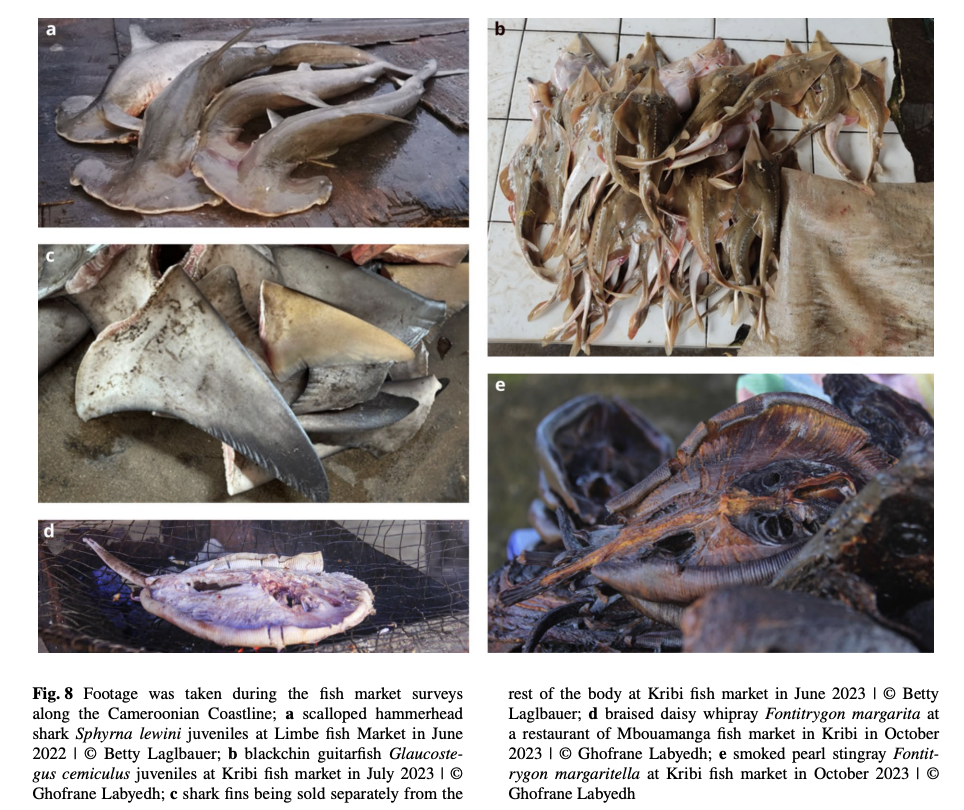
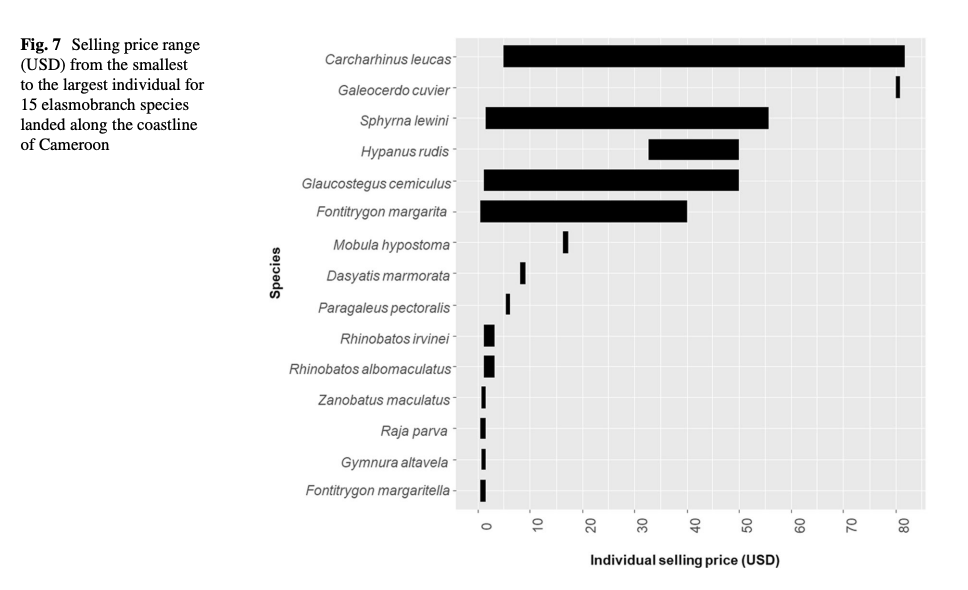
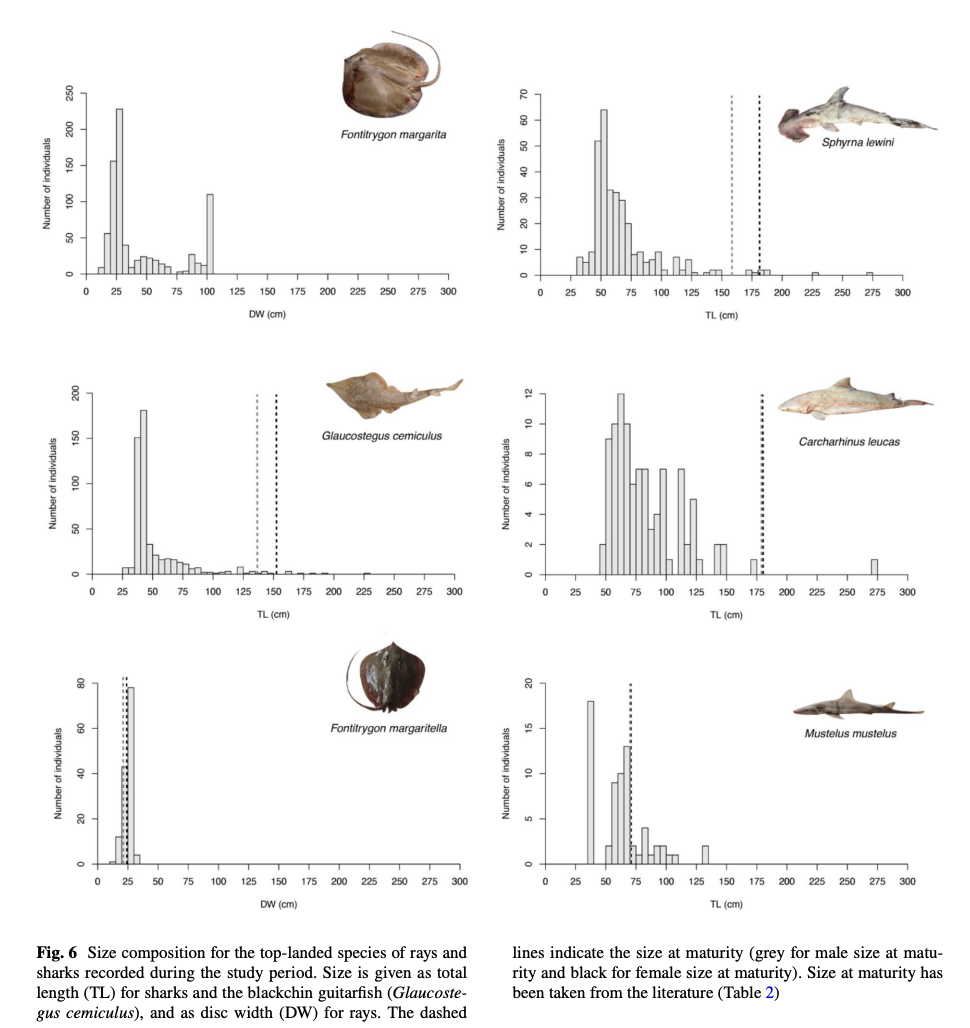
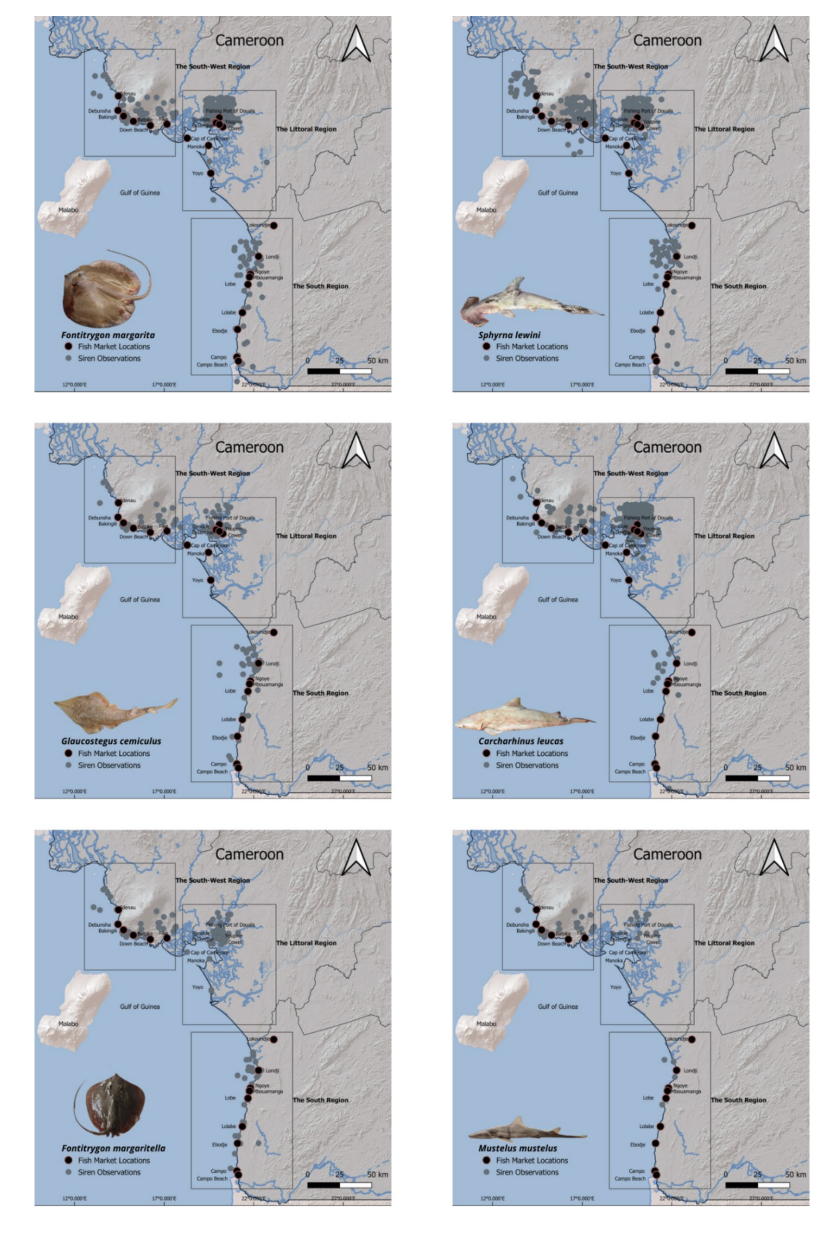

Summary: The conservation of Cameroon’s marine biodiversity faces challenges from knowledge gaps and weak management, threatening both ecosystems and dependent communities. High costs and limited regional expertise hinder research on marine megafauna. Since 2015, a citizen science project engaged over 80 fishers to record species observations via the Siren app, with elasmobranchs (sharks and rays) predominating. Between 2015 and 2023, 93% of 4,077 megafauna records were threatened elasmobranchs. Complementary fish market surveys documented 7,093 specimens across 45 species, including 13 Critically Endangered. Endemic and rare species were also recorded, emphasising urgent conservation needs. Integrating citizen science and market surveys effectively addresses data gaps in small-scale fisheries.
Abstract
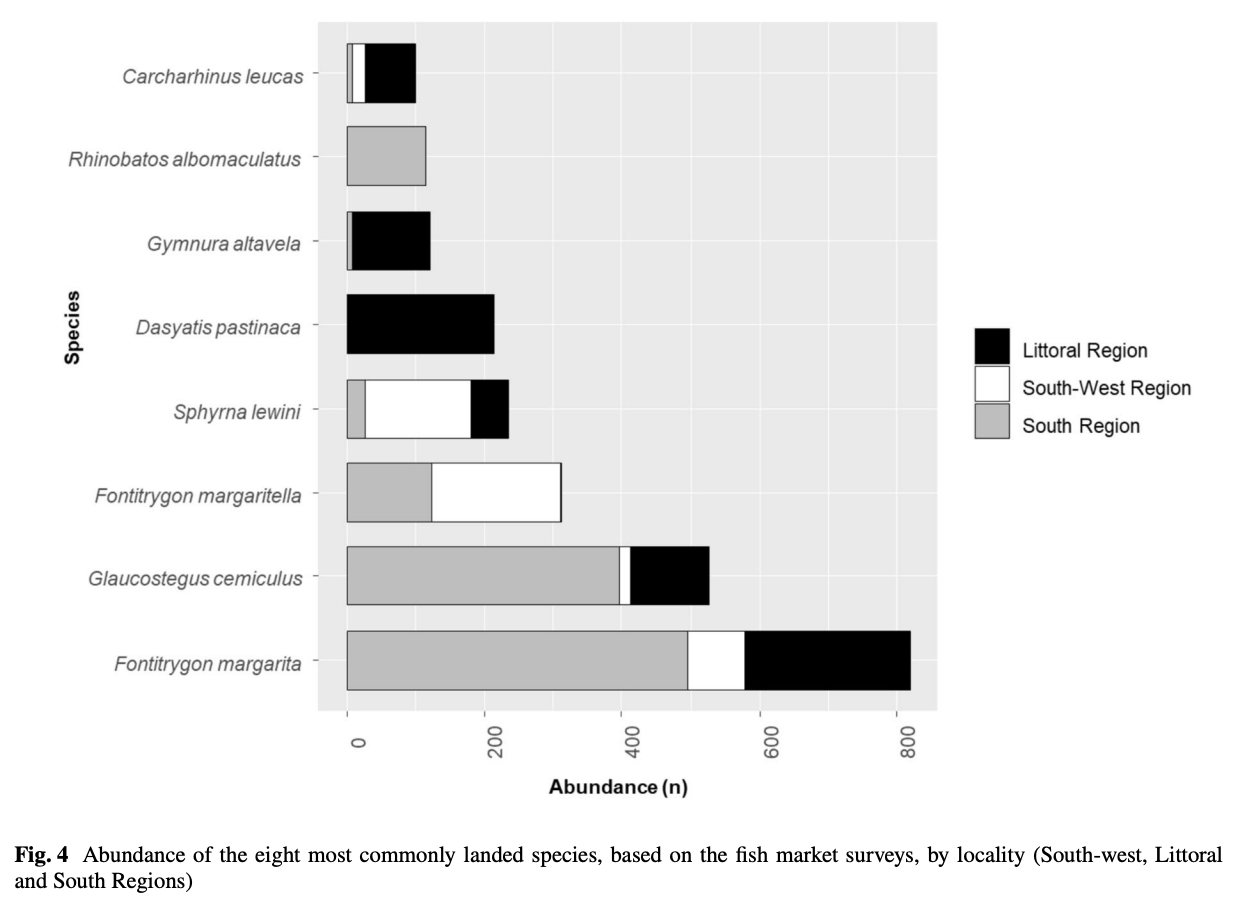
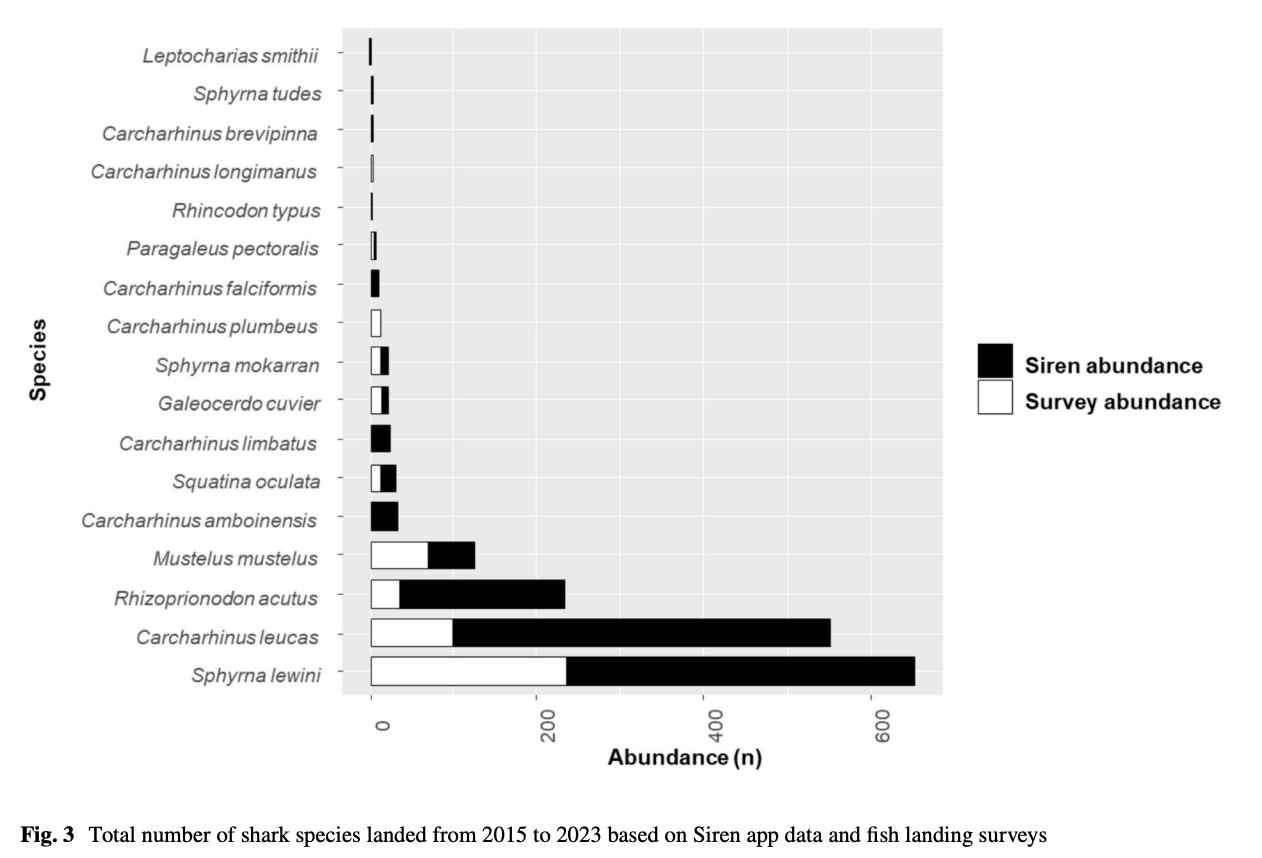
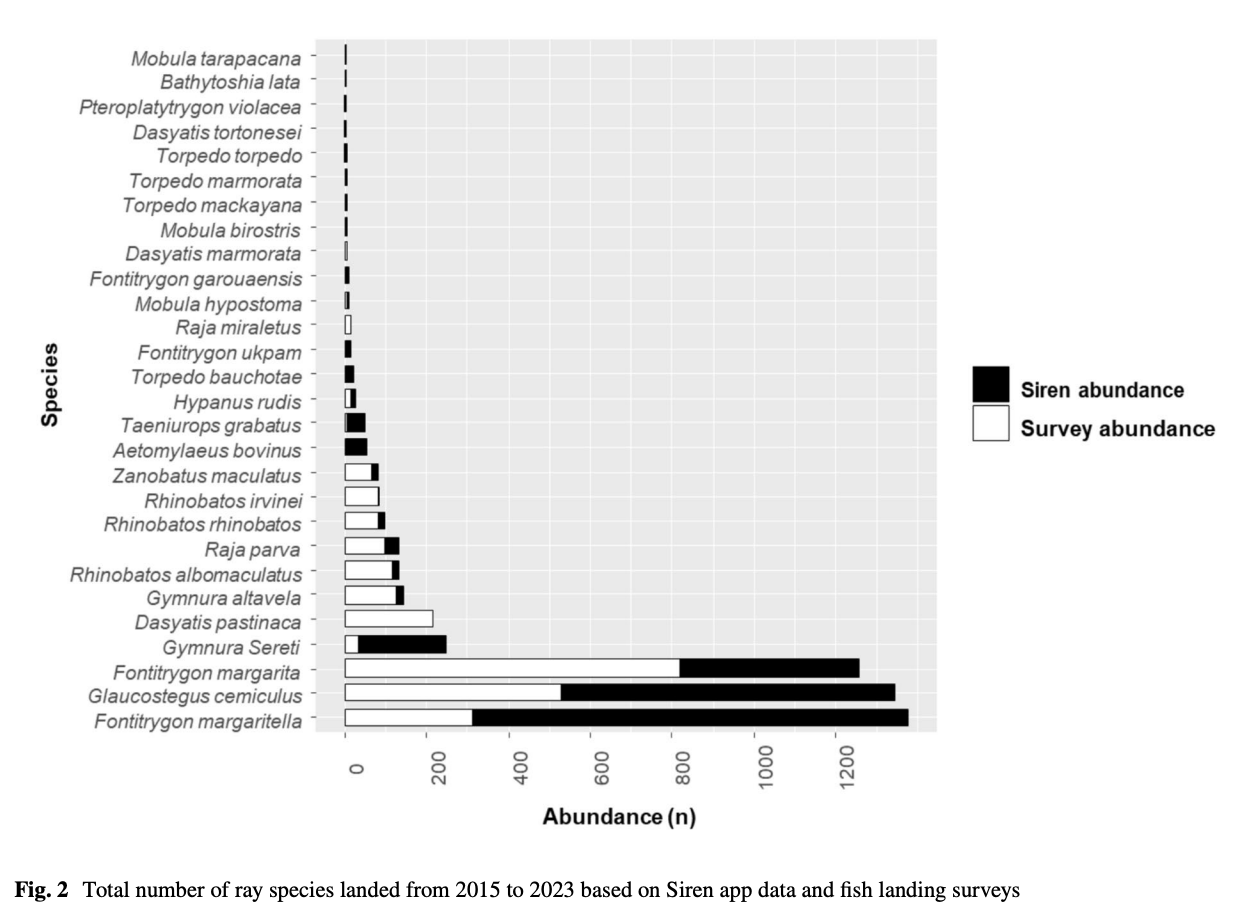
“The conservation of Cameroon’s marine biodiversity is hindered by knowledge gaps and ineffective management, endangering both marine ecosystems and their human-dependent communities. Moreover, conducting research on marine megafauna off the West Coast of Africa is hindered by high costs and reduced expertise capacity regionally. To address these concerns, a citizen science project was initiated along the Cameroon coastline in 2015, with over 80 fishers recording observations of aquatic species in their landings and during their fishing activities using the Siren app. Elasmobranchs (sharks and rays), which are caught both as targeted and as incidental catch in Cameroon’s predominantly small-scale, artisanal fisheries, emerged as a primary focus of these records. Between 2015 and 2023, Siren data showed that threatened elasmobranchs are the most commonly landed megafauna off Cameroon, representing about 93% of the total aquatic megafauna sightings and landings records (n = 4077 records) through the Siren app (n = 4401). To complement these data, dedicated fish market surveys (n = 205 days) were conducted at key landing sites (n = 23) in Cameroon from 2019 to the end of 2023. Through fish market surveys and the Siren dataset, a total of 7093 elasmobranch specimens were recorded, comprising 45 species, 13 of which are categorised as Critically Endangered on the IUCN’s Red List of Threatened Species. Of most concern are the scalloped hammerhead shark Sphyrna lewini (37.5% of total shark landings) and the blackchin guitarfish Glaucostegus cemiculus (25.1% of total ray landings). Additionally, a number of endemic species (i.e. the daisy whipray Fontitrygon margarita and the pearl whipray Fontitrygon margaritella) or potentially restricted populations of rare species (i.e. the Atlantic pygmy devil ray Mobula hypostoma) were recorded, highlighting urgent conservation needs. This study shows that combining citizen science with dedicated fish market surveys can play an essential role in filling knowledge gaps for data-poor small-scale fisheries, and to identify effective management strategies in low-income countries.”
Photos from the Field
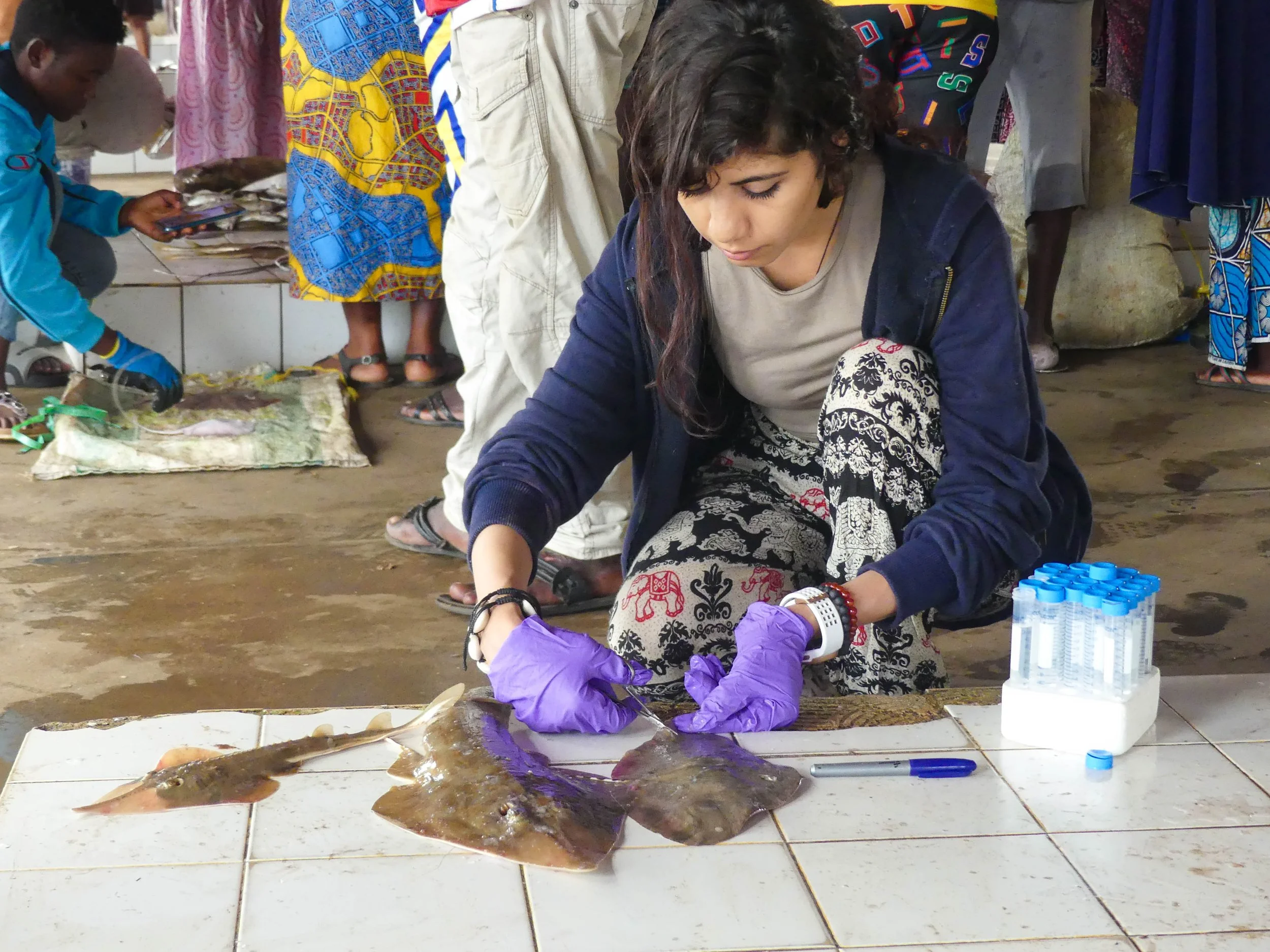
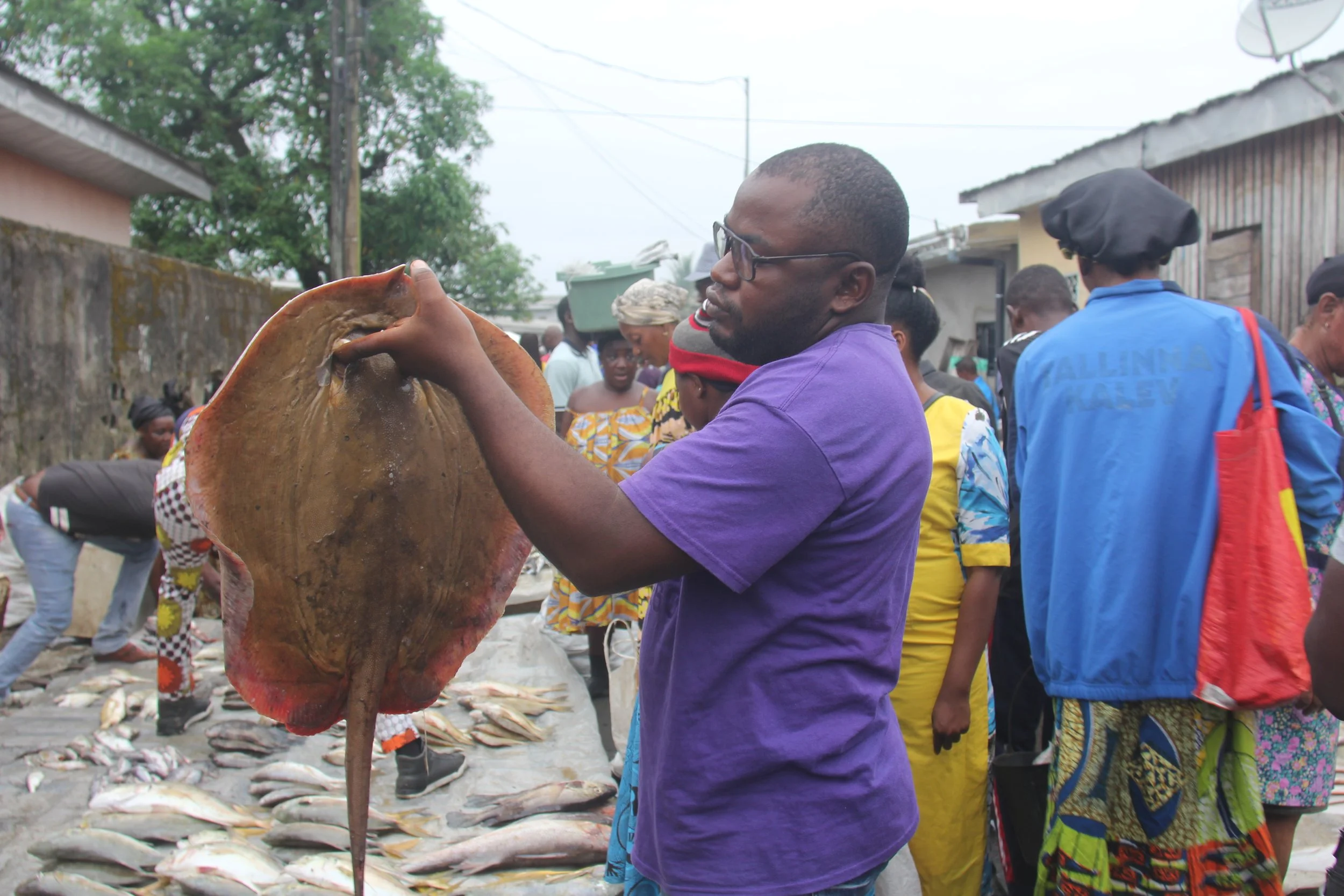


Author Affiliations
African Marine Conservation Organization (AMCO)
The Manta Trust
Faculty of Sciences at Sfax
Funding
Save Our Seas Foundation
National Geographic Society
PADI Foundation
Rufford Foundation
British Ecological Society
Contribution towards the Manta Trust's Strategic Plan
Goal 1: Strategic Objective 1.1: More protective policies exist to support manta and devil ray conservation for geographical focus areas.
Goal 2: Strategic Objective 2.1 – Fishers within focus areas are working towards measures to reduce capture and bycatch mortality.
Goal 2: Strategic Objective 2.2 – Regulations and effective enforcement exist to reduce manta and devil ray capture and bycatch mortality.
Goal 3: Strategic Objective 3.1 – All manta and devil ray species in the regions where we work are fully protected and conserved through species management plans.
Goal 4: Strategic Objective 4.1 – More people (a diverse range of individuals) local to manta and devil ray conservation initiatives play an active role in their design and implementation.