Spatial Ecology of the Population of Reef Manta Rays (Mobula alfredi) in New Caledonia Using Satellite Telemetry 2—Vertical Behaviour
October 2025
Hugo Lassauce, Olivier Chateau & Laurent Wantiez
Keywords: Tagging • Dive Profile • Deep Diving • Movement Ecology • Biologging
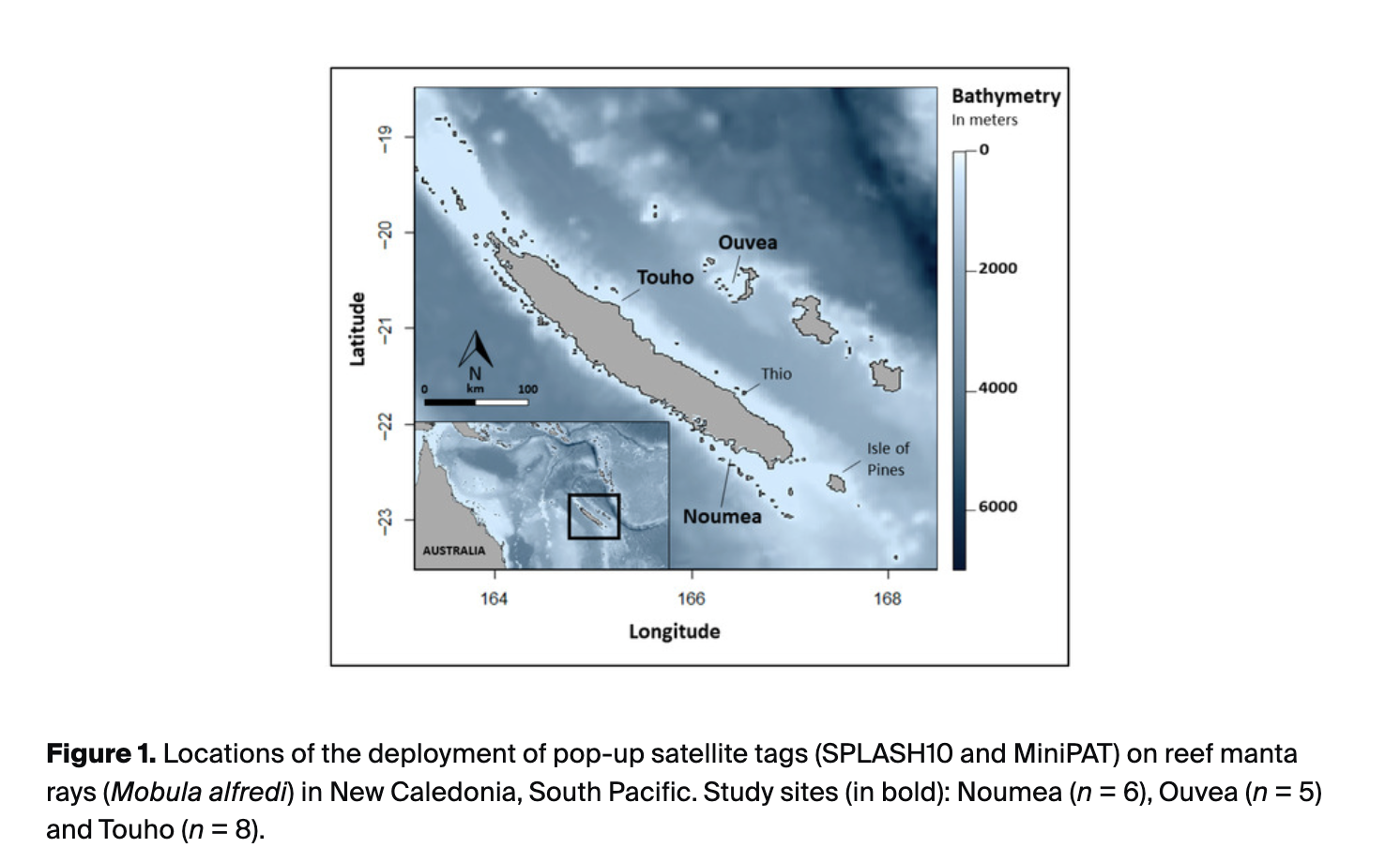
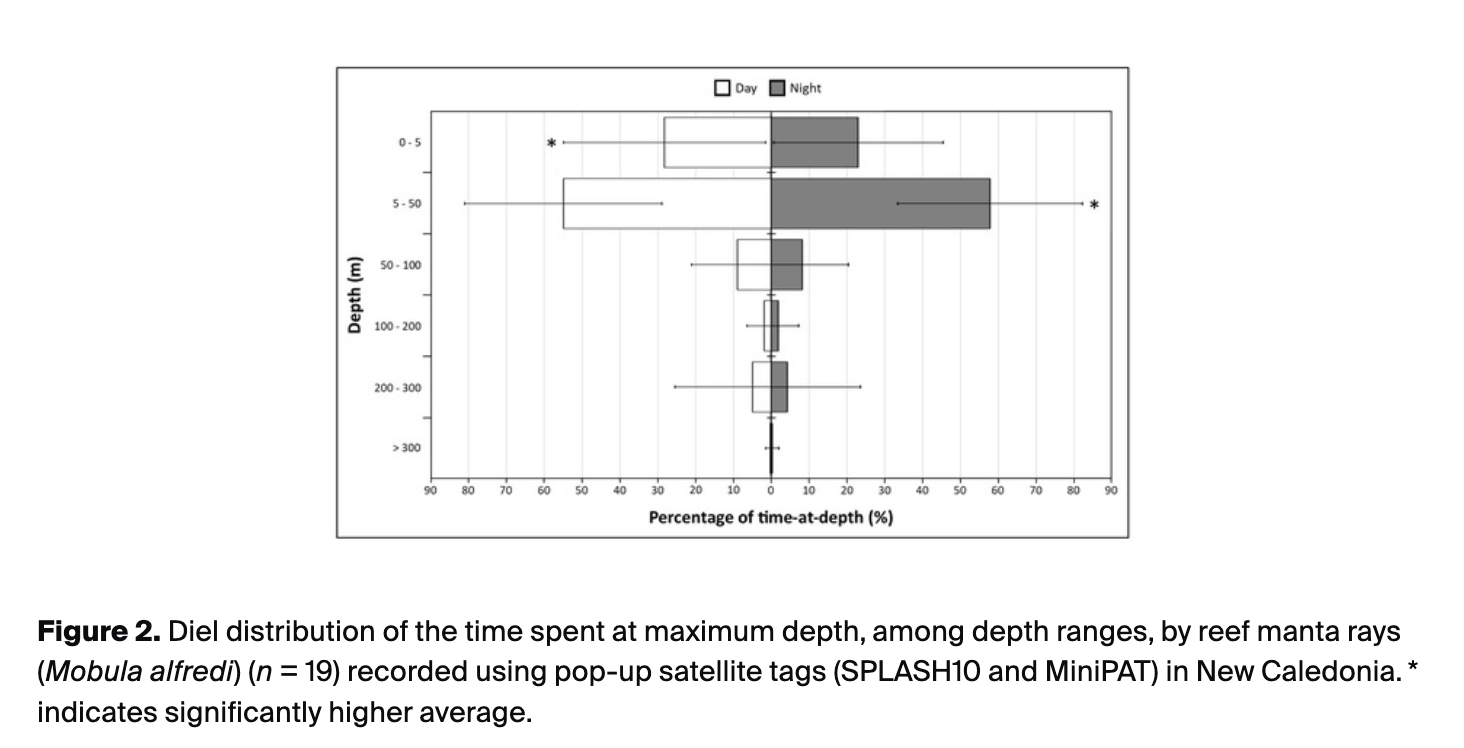
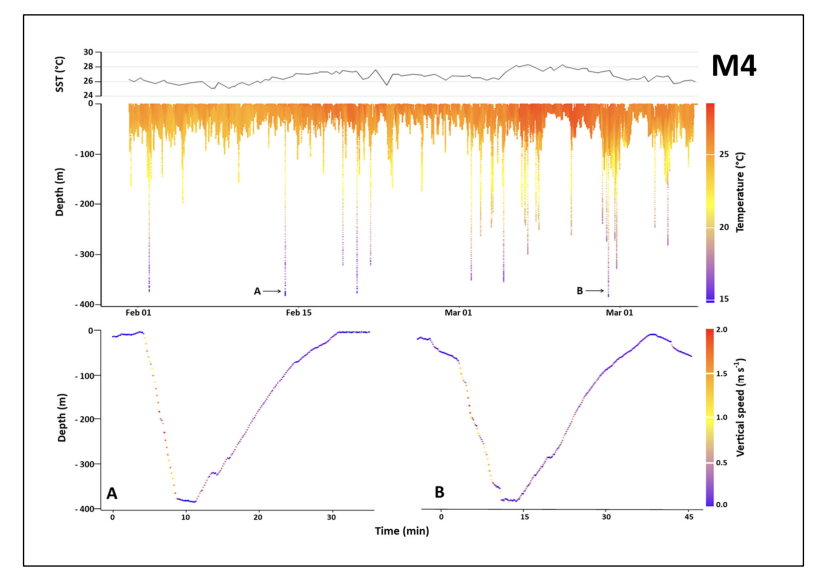
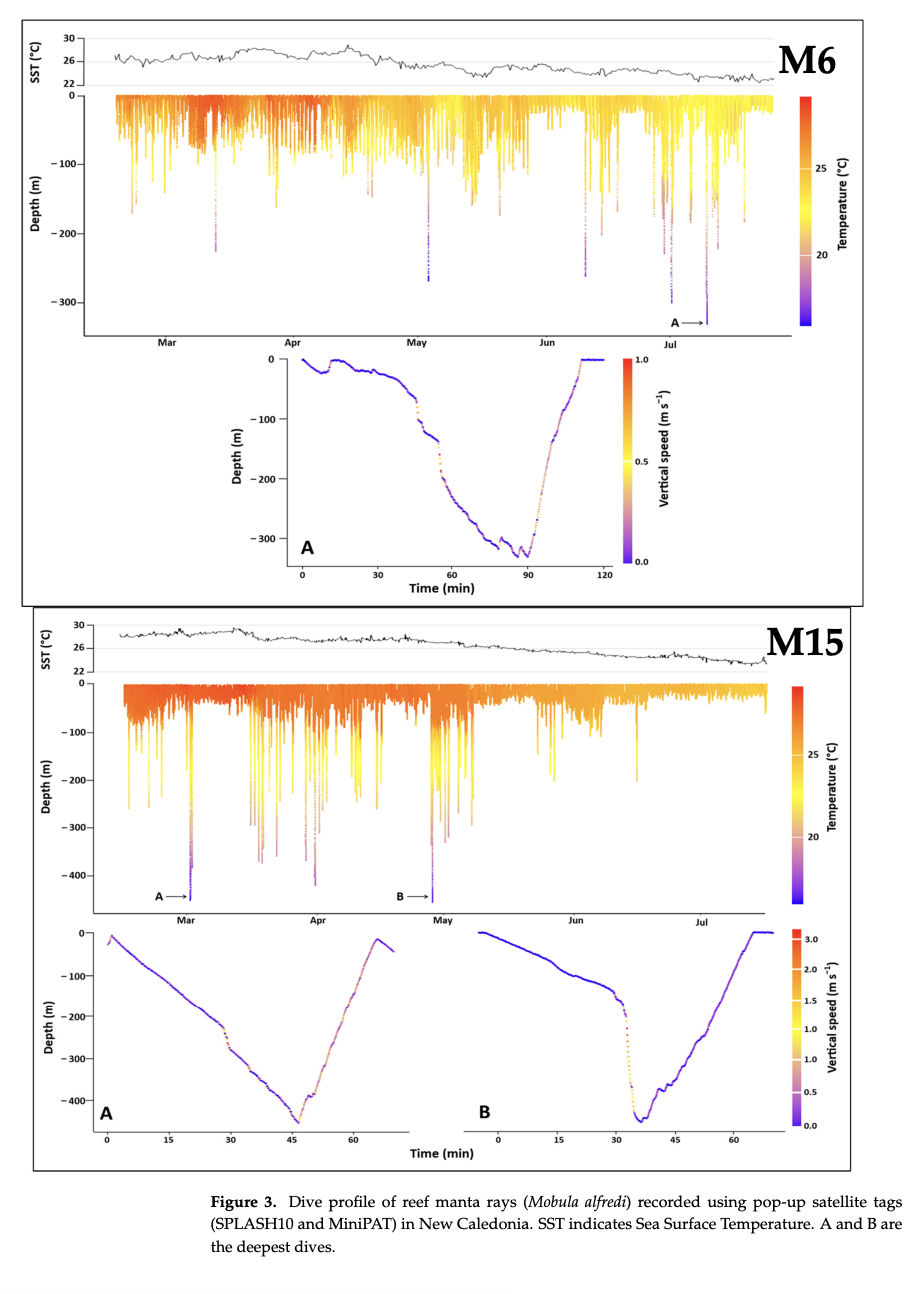
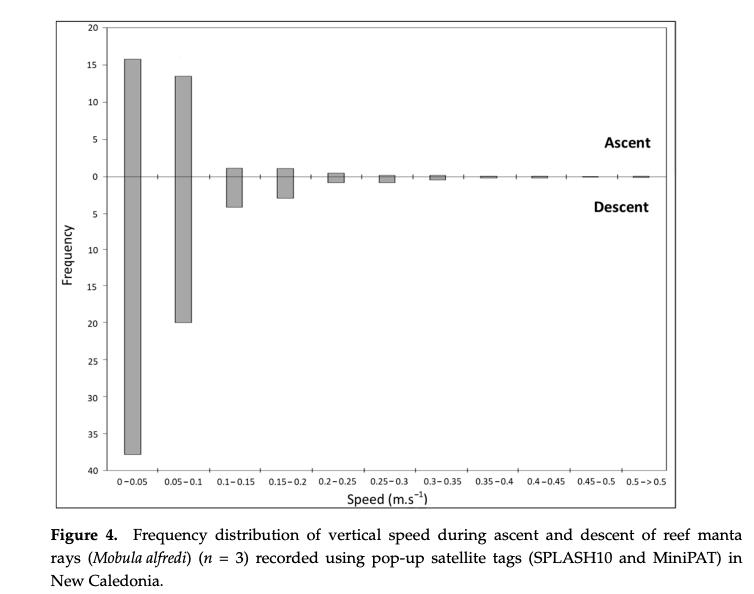
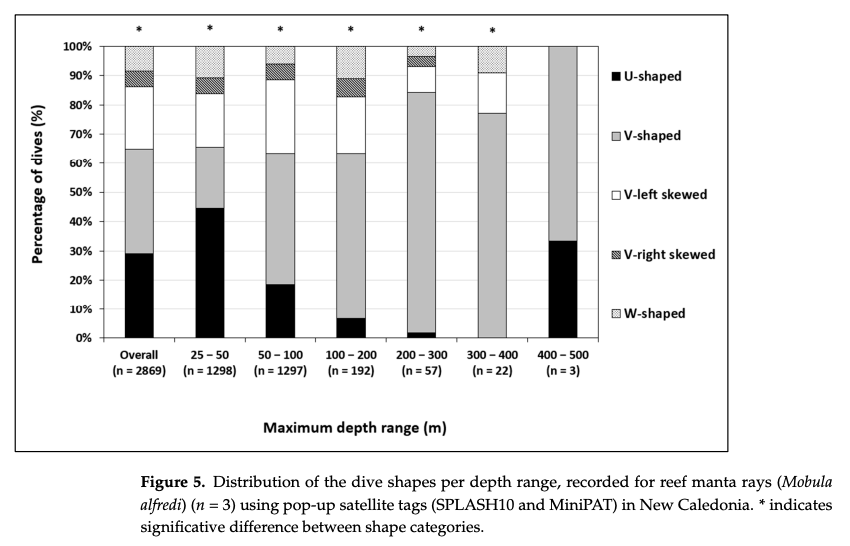
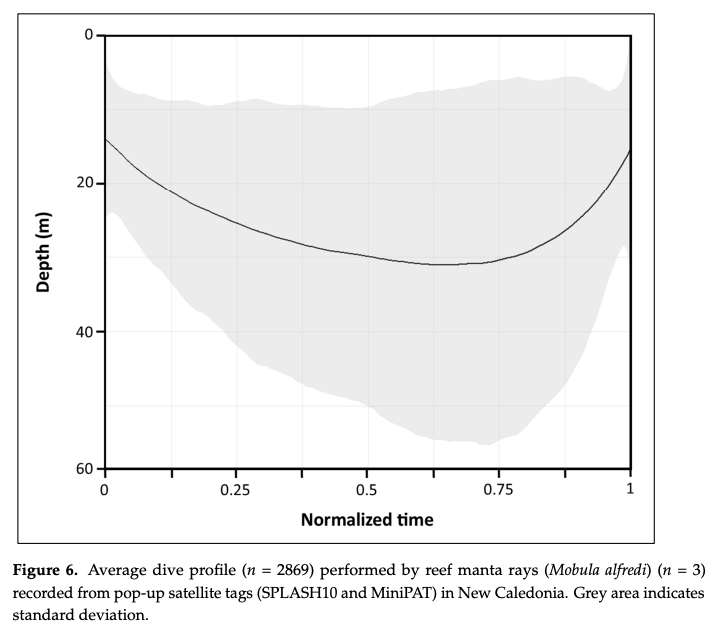
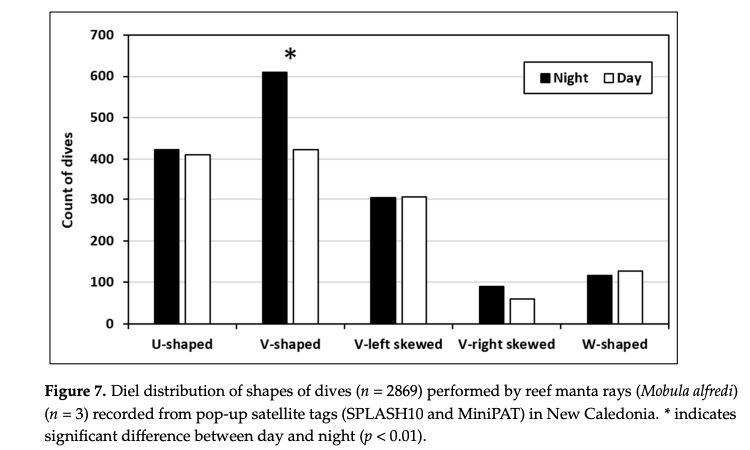
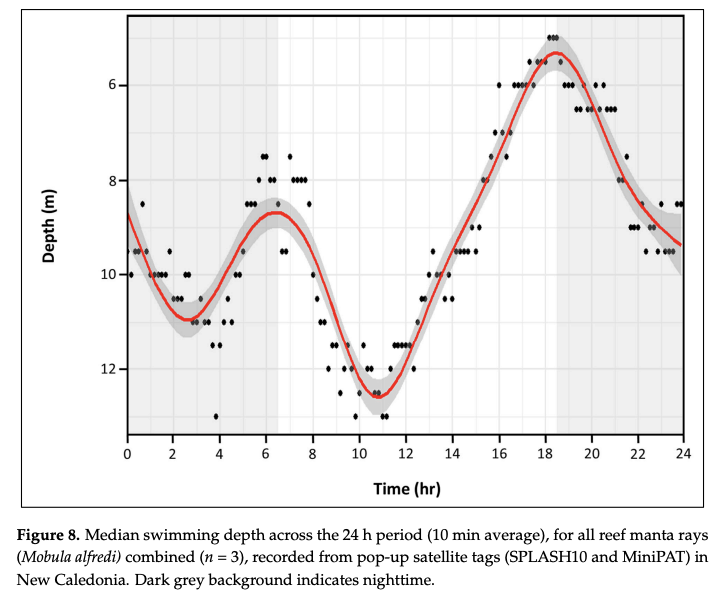
Summary: Understanding how reef manta rays (Mobula alfredi) use their environment is vital for effective conservation planning. Despite their reputation as a coastal, shallow-water species, individuals from New Caledonia were shown to occupy a much broader vertical range. Using satellite tracking from 19 animals, with detailed dive data from three, the study documented frequent and extreme deep dives. All rays descended below 300 m, with a maximum depth of 672 m, and such dives occurred regularly. Dive shapes indicated both exploratory and feeding activity, likely linked to deeper prey layers. These results reveal considerable behavioural flexibility and have important implications for marine spatial management.
Abstract
“In the dynamic and increasingly threatened marine environment, understanding the full spatial ecology of species like the reef manta ray (Mobula alfredi) is crucial for effective conservation. While typically considered a shallow-water species, reef manta rays in New Caledonia were investigated to explore their vertical habitat use. This study utilized satellite telemetry data from 19 tagged individuals, with three tags providing sufficiently high-resolution information on dive behaviour, to describe and quantify three-dimensional movements. We found that New Caledonian reef manta rays exhibit outstanding deep-diving capabilities, with all individuals diving below 300 m and one reaching 672 m. These deep dives occurred regularly, averaging one every 4.8 days, which is notably more frequent than in other studied populations. Dive profile analysis revealed a mixture of foraging and exploratory behaviors, supporting the hypothesis that these deep excursions are driven by the search for demersal or mesopelagic food resources. Our findings highlight the ecological plasticity of M. alfredi and demonstrate that their habitat use extends far beyond the coastal, shallow waters previously assumed, a critical consideration for developing comprehensive and effective marine protected areas.”
Author Affiliations
University of the Sunshine Coast
University of New Caledonia
Conservation International
The Manta Trust
Laboratory of Marine Biology and Ecology, Aquarium des Lagons
Funding
Keidanren Nature Conservation Fund
Southern Province of New Caledonia
MAC3 Impact Philanthropies, William Brooks, Pam Rorke Levy, Audrey and Shannon Wong, Daniel Roozen and Kris Norvig
OceanMax
Conservation International