
Moonrise Sonata: Passive acoustic monitoring reveals chorusing behaviour at Maldivian coral reef cleaning stations
2025
Sam Johns (MRes - University of Bristol)
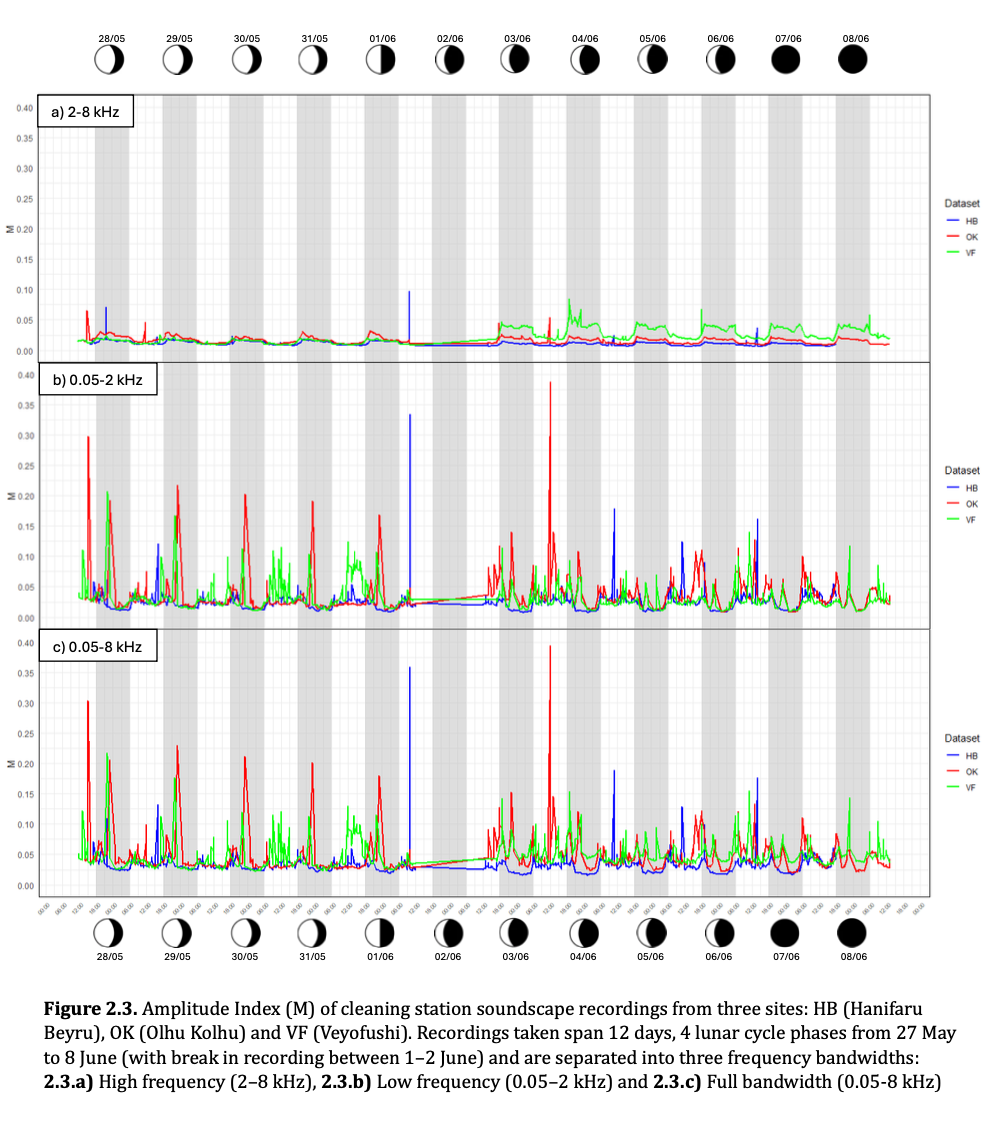
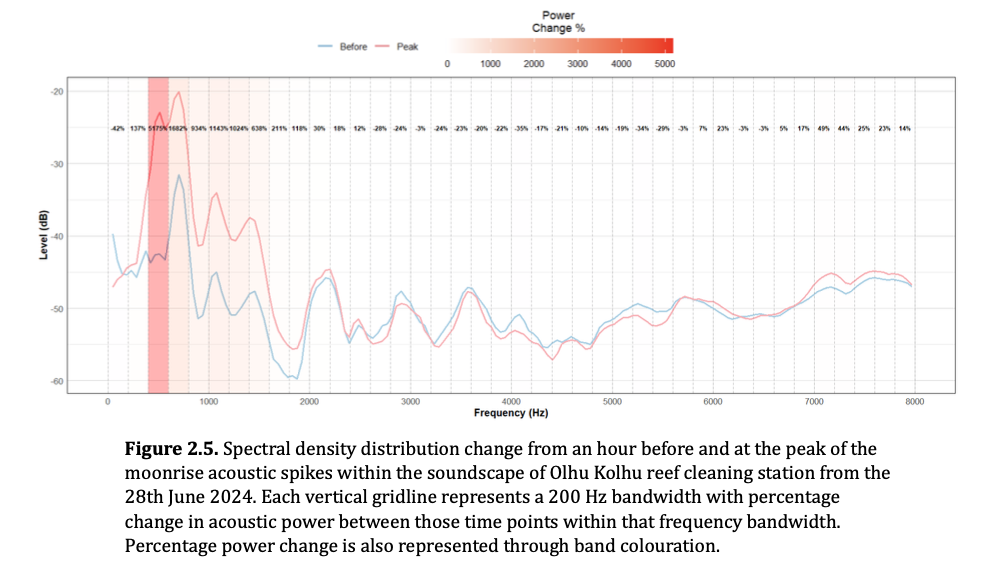
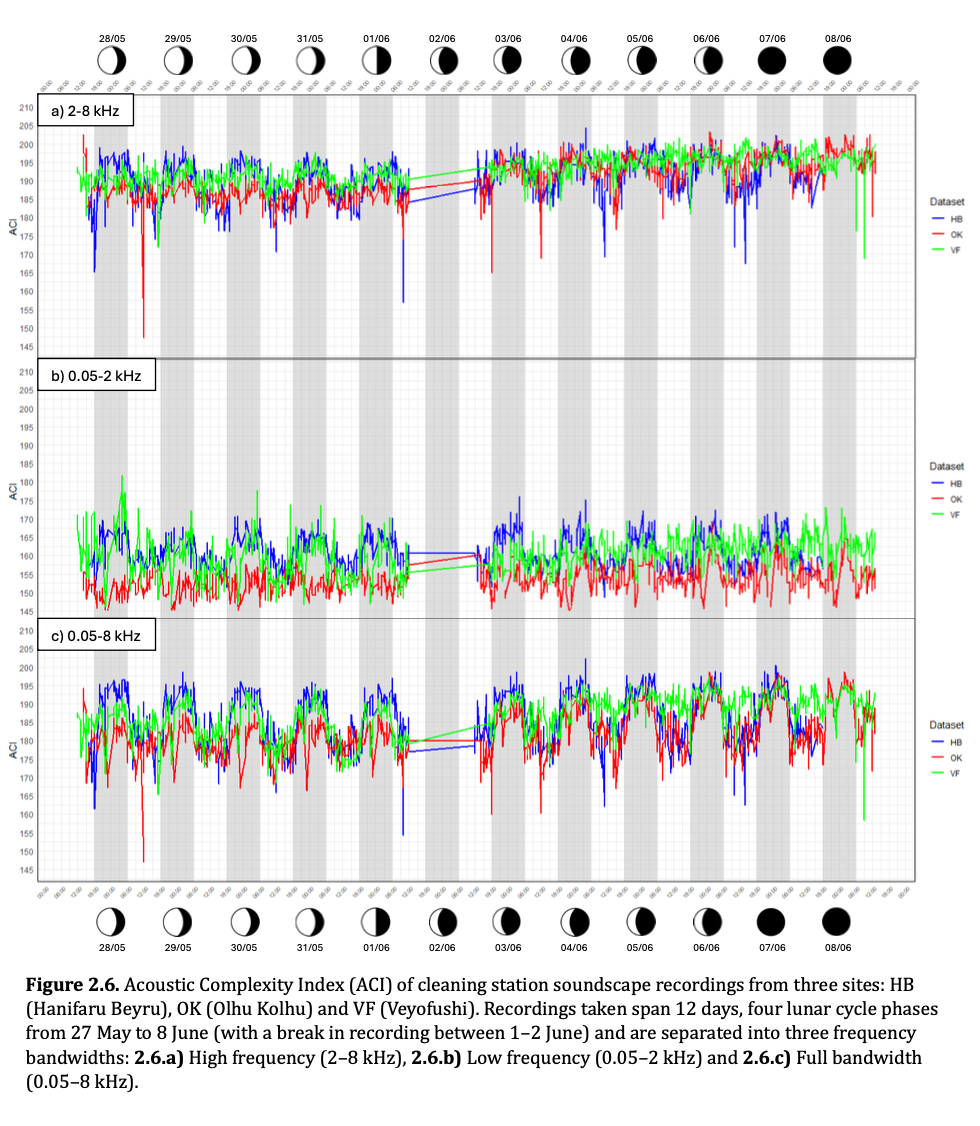
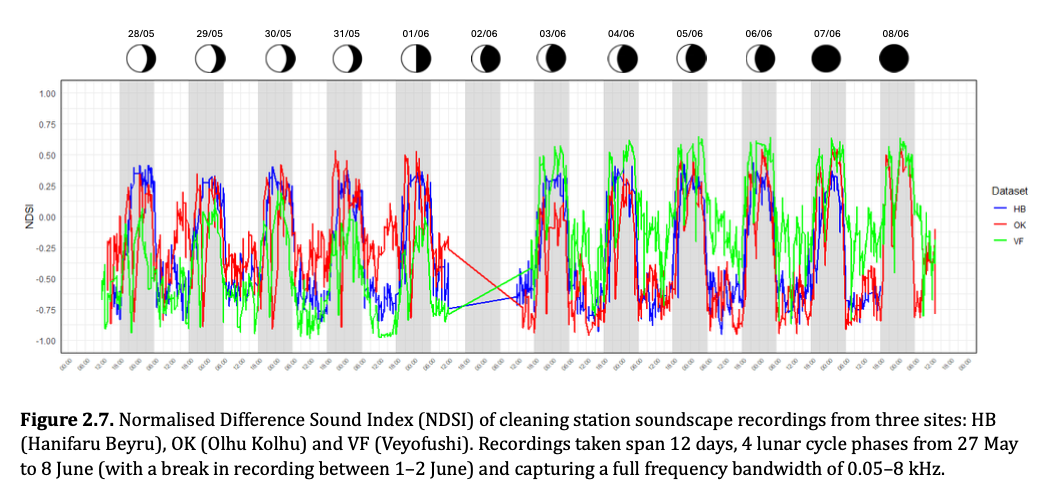
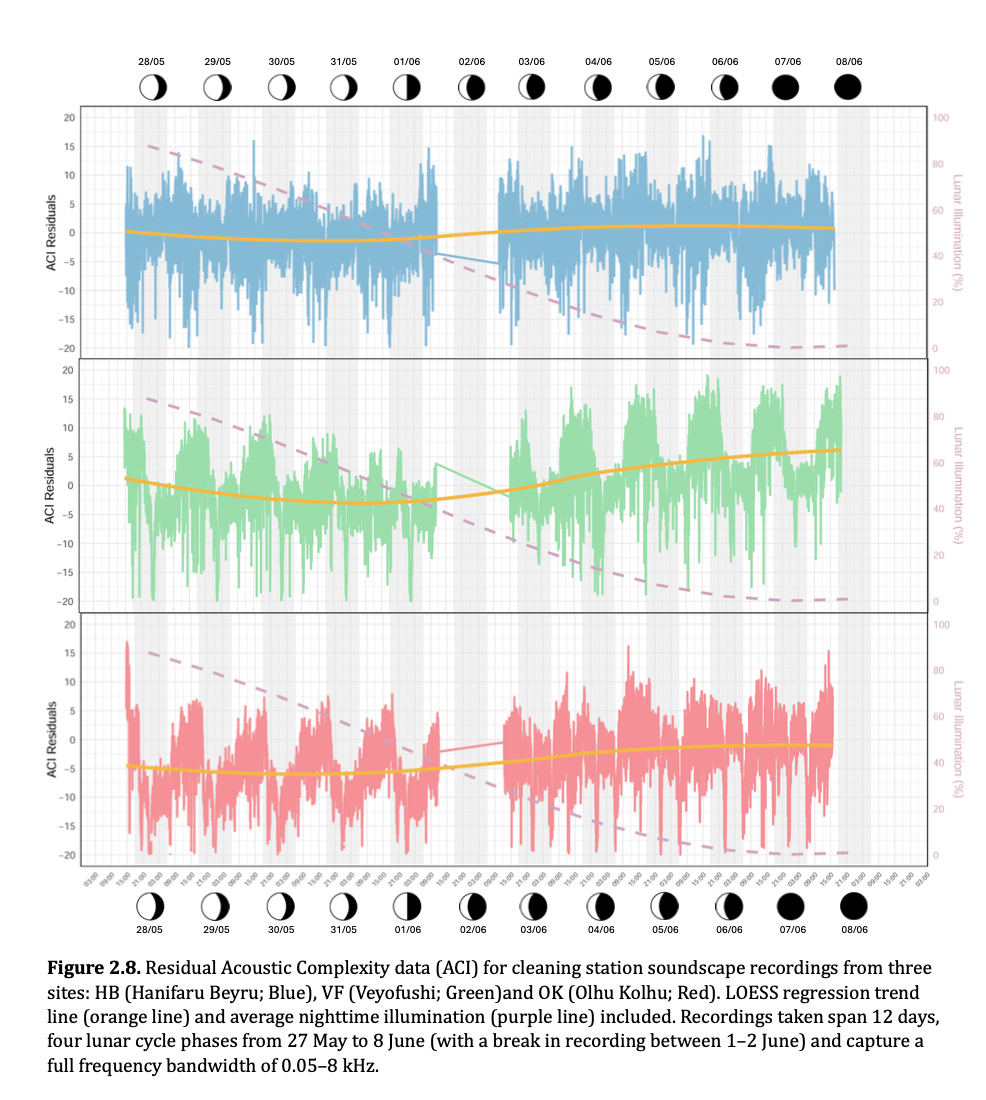
Summary: Coral reefs face growing threats, and conservation depends on good monitoring. This thesis looks at ecoacoustics, where a reef's soundscape stands in for its biological activity. It argues that most studies rely on short recordings that miss cyclic patterns. The second chapter used continuous passive acoustic monitoring at manta ray cleaning stations in Baa Atoll, Maldives. Sound peaked at dawn and dusk. With that daily cycle removed, lunar patterns emerged, including a previously undocumented "moonrise chorus" that suggests light-driven changes in species behaviour. The study shows that full-time recording can reveal behaviour that short or daytime-only surveys miss, which strengthens reef monitoring and protection.
Abstract
“Coral reefs support exceptional biodiversity, deliver critical ecosystem services, and underpin the livelihoods of millions. Yet they face escalating global and local threats, including overfishing, sedimentation and anthropogenic noise. Effective conservation depends on robust monitoring methods capable of detecting changes in biodiversity and ecological function. The first chapter of this thesis reviews the ecological value of reefs, the threats compromising their resilience, and the history of coral reef monitoring and conservation. It outlines the limitations of traditional approaches and introduces contemporary acoustic principles whereby the ambient acoustic environment functions as an integrated proxy for biological activity, encoding interactions and community composition. Although ecoacoustic approaches have advanced capacity to characterise marine soundscapes, many studies remain temporally myopic, relying on short snapshots that obscure cyclic acoustic drivers.
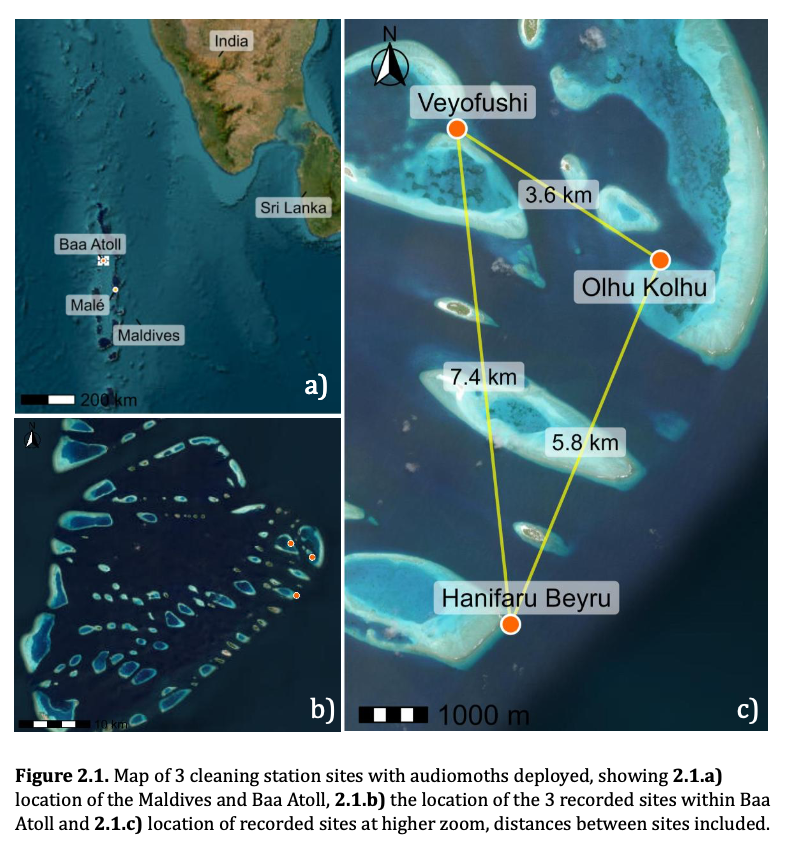
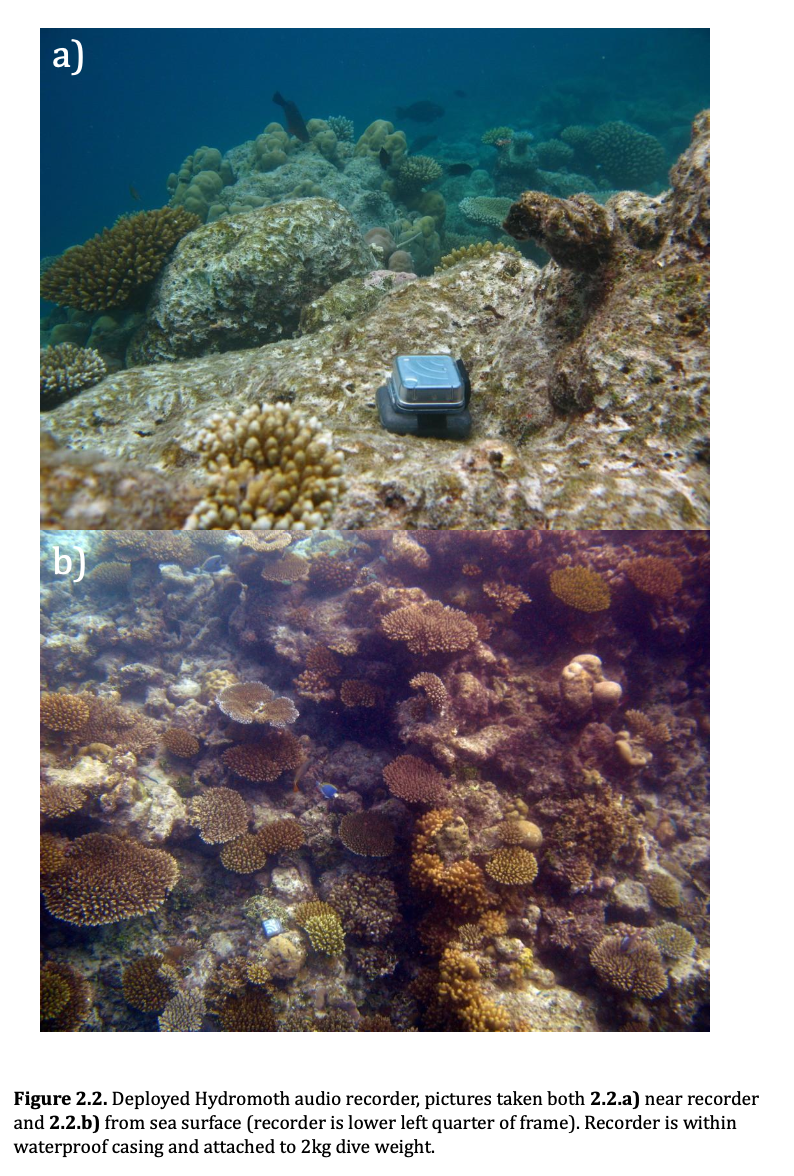
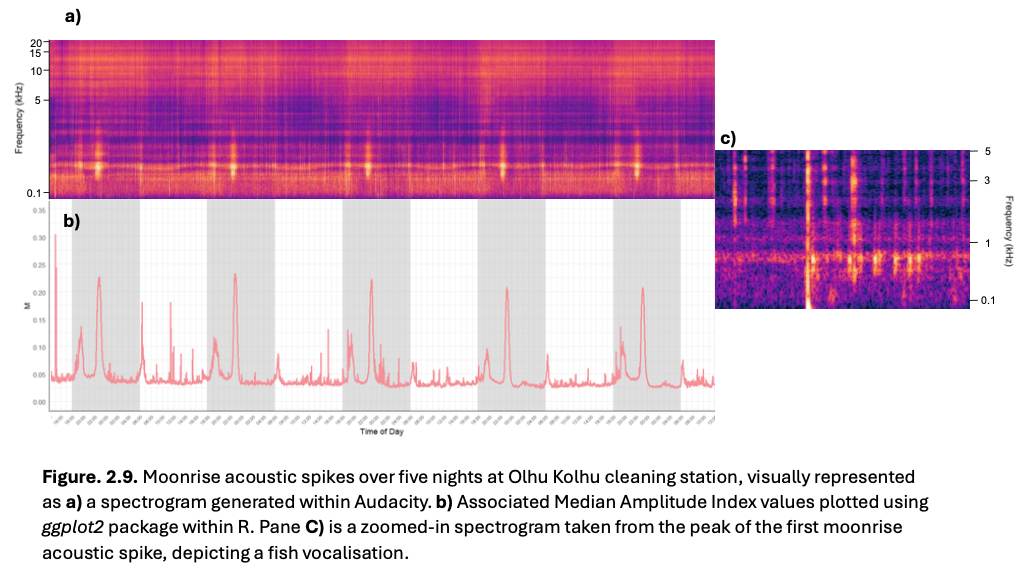
The second chapter applies these principles to investigate reef soundscapes at manta ray (Mobula spp.) cleaning stations in Baa Atoll, Maldives, and to resolve temporal structure in community-level sound. Using passive acoustic monitoring (PAM), we analysed acoustic indices derived from continuous recordings to partition variance across temporal scales. Clear crepuscular peaks defined the diel rhythm, reflecting heightened acoustic activity at dawn and dusk. After removing the dominant diel component, residual variation revealed lunar-linked patterns, including a previously undocumented moonrise chorus. The coincidence of these acoustic shifts with changing nocturnal illumination implicates substantial, light-mediated alterations in species behaviour and assemblage contributions to the soundscape. These results demonstrate that incorporating full temporal coverage into PAM designs can reveal behavioural phenomena otherwise masked by short-term or daylight-only surveys. Such temporal sensitivity enhances the utility of acoustic indices for biodiversity monitoring and for assessing behavioural responses to anthropogenic stressors and climate change. Recognising and integrating cyclic temporal structures into ecoacoustic monitoring offers a powerful means to inform conservation strategies and enhance protection of vulnerable reef ecosystems.”
Author Affiliations
University of Bristol
The Manta Trust
The Maldives Manta Conservation Programme