
Habitat Connectivity of Reef Manta Rays (Mobula alfredi) between Baa and Raa Atolls, Maldives
2025
Elizabeth Dolling (MSc - University of Exeter)
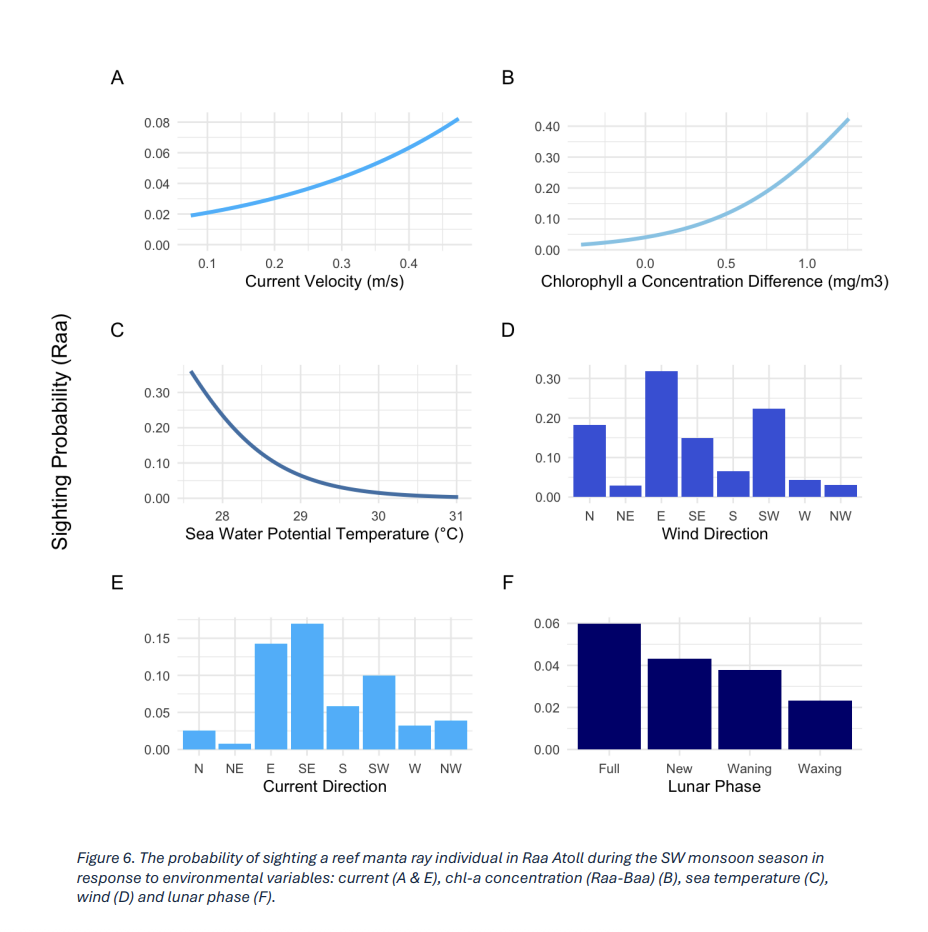
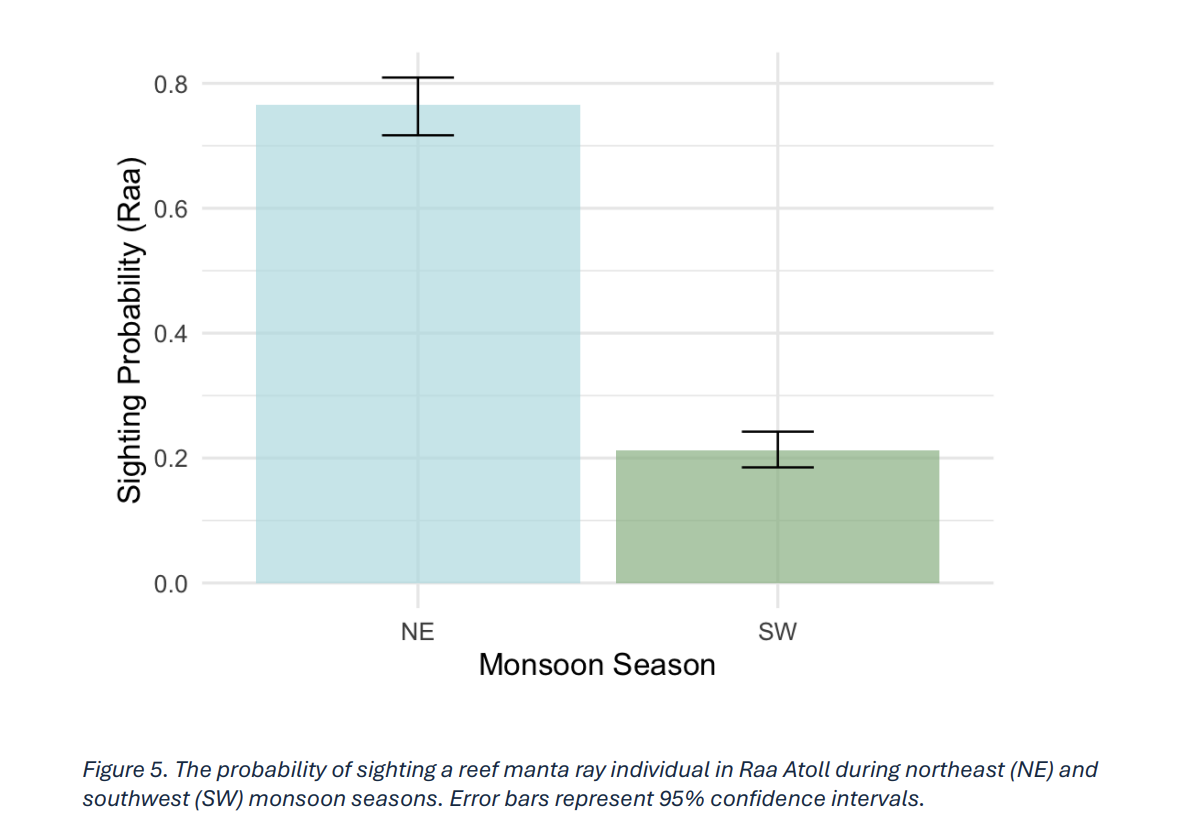
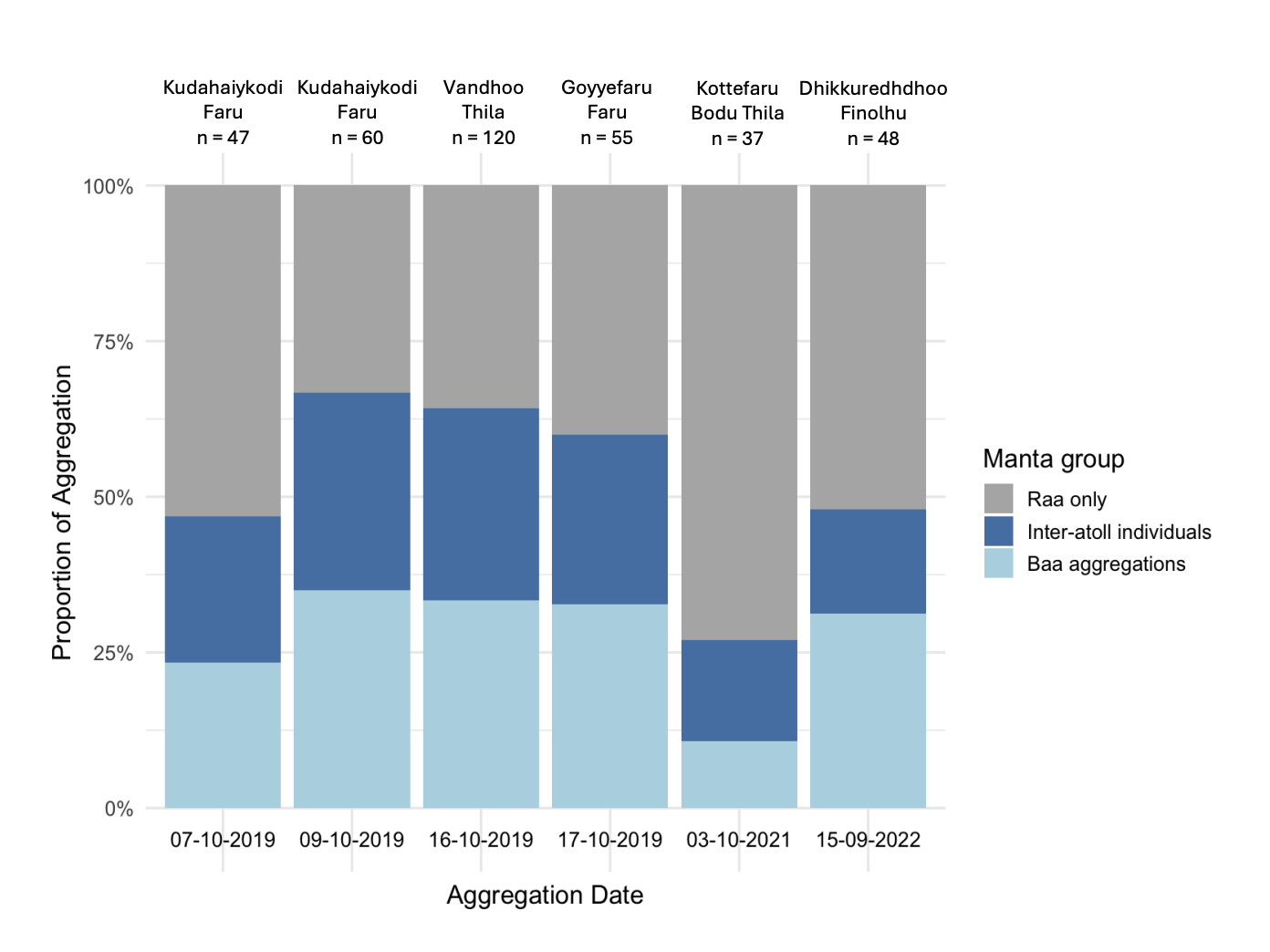
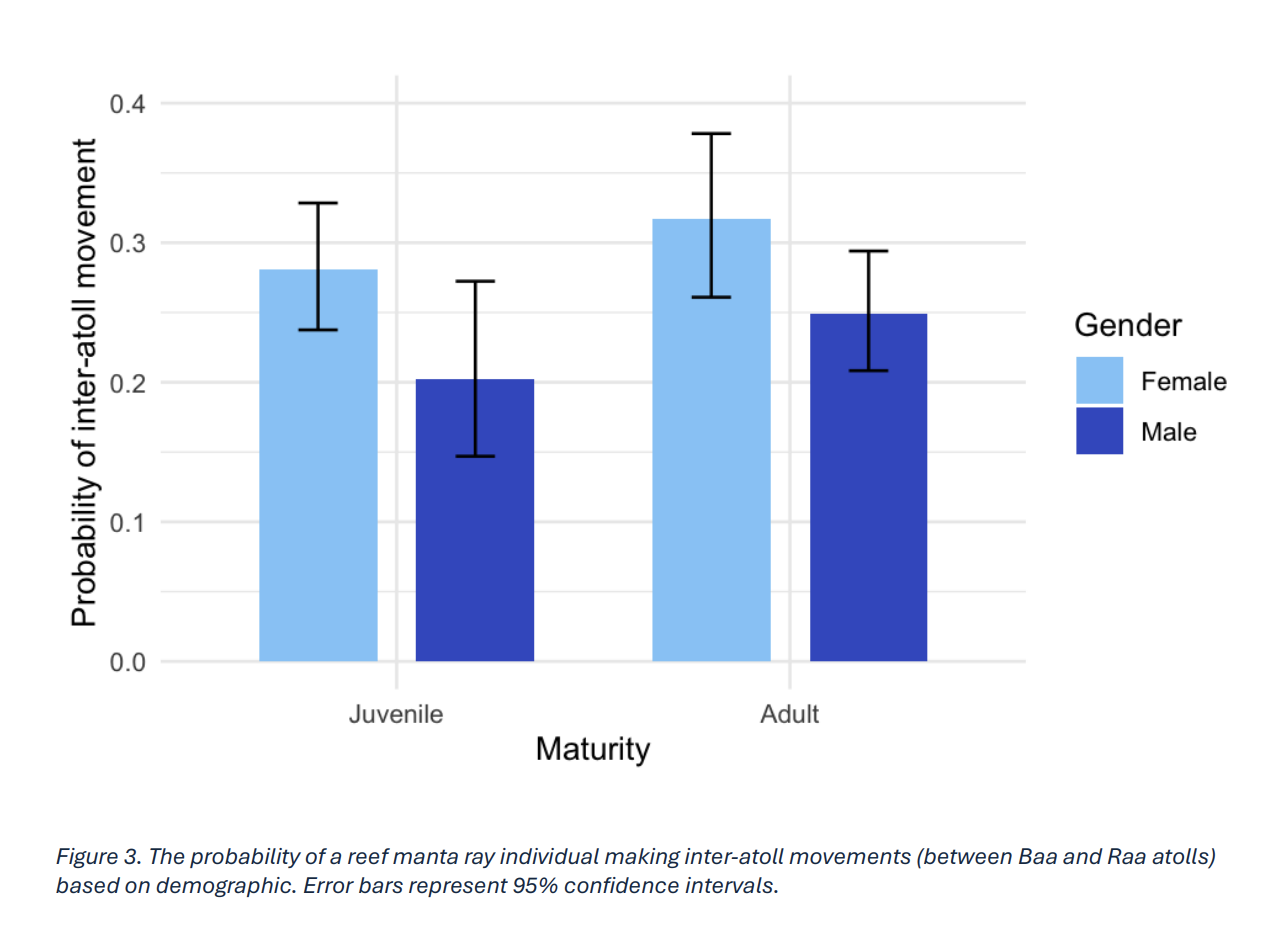
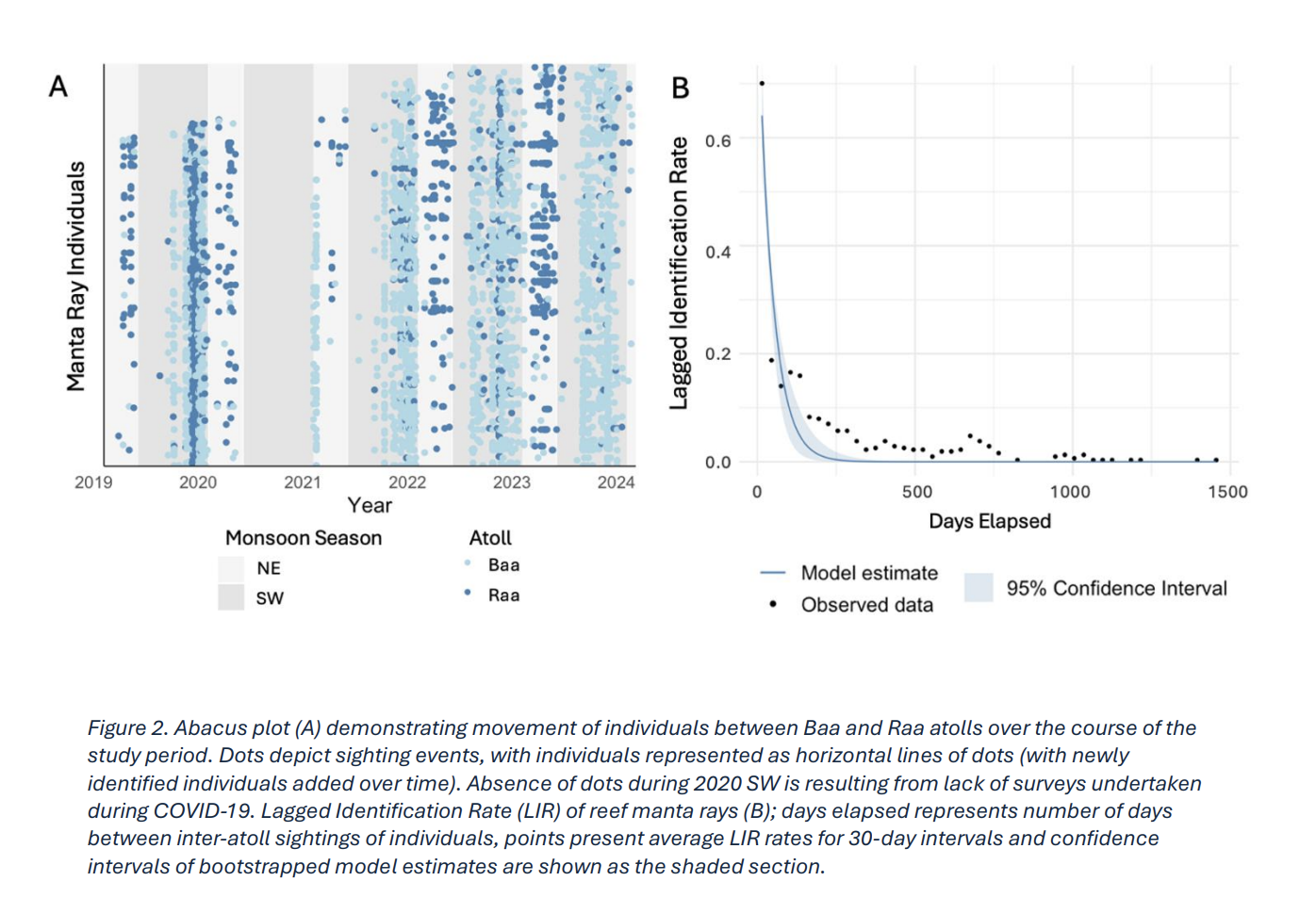
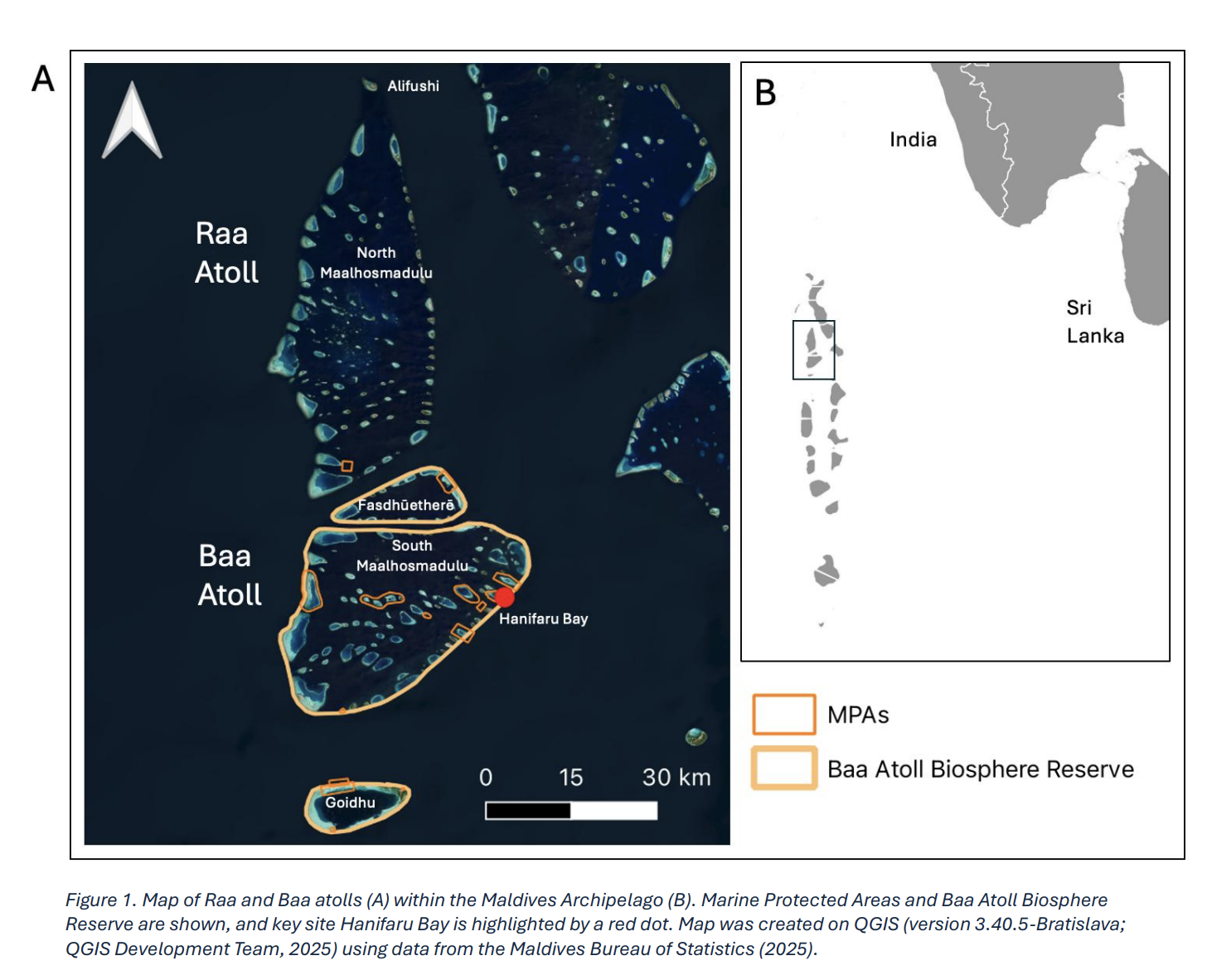
Summary: Reef manta rays migrate with the seasons, but we know little about their fine-scale movements, which effective protection depends on. This study used photo-ID records from 2019 to 2023 to track movements between heavily protected Baa Atoll and unprotected Raa Atoll in the Maldives. A quarter of individuals moved between the two atolls, most within 30 days, and this didn't differ by age or sex. During the southwest monsoon, Raa hosted aggregations of up to 120 mantas linked to those in Baa. Monsoon winds shaped movement between seasons. Within seasons, it was driven by currents, chlorophyll, water temperature and lunar phase. The findings point to priority areas for protection.
Abstract
“Connectivity of ocean habitats and consequent ecosystem function is facilitated by mobile marine megafauna, yet challenges associated with protecting their range can subject species to varying levels of protection and exposure to anthropogenic threats. Reef manta rays are migratory elasmobranchs whose movements are associated with seasonal environmental change, although an understanding of their migratory connectivity on a fine spatiotemporal scale required for effective conservation of this threatened species is lacking. We use photo-ID records obtained during 2019-2023 to investigate reef manta ray movement patterns between adjacent, heavily protected Baa Atoll and unprotected Raa Atoll in the Maldives. Twenty-five percent of individuals made inter-atoll movements during the study, with the majority of re-sightings occurring within 30 days, and were not affected by demographic group. Mass aggregations reached 120 individuals in Raa Atoll during the southwest monsoon season and demonstrated connectivity of individuals with mass aggregations in Baa Atoll. Monsoonal season and associated prevailing winds influenced inter-atoll movement of individuals inter-seasonally. In addition, winds, currents, chlorophyll-a concentrations, sea water potential temperatures and lunar phases each influenced inter-atoll movement of individuals intra-seasonally. With climate change progression and growing anthropogenic threats to this species, an increased understanding of these fine scale temporal and spatial changes in habitat use by reef manta rays identifies priority areas for protection, to enable more effective conservation of the species.”
Author Affiliations
University of Exeter
The Manta Trust
The Maldives Manta Conservation Programme