
Defining the Reproductive Patterns of Reef Manta Rays (Mobula alfredi) in Baa Atoll, Maldives, 2005-2021
2025
Bethany Lewis (MSc - University of Exeter)
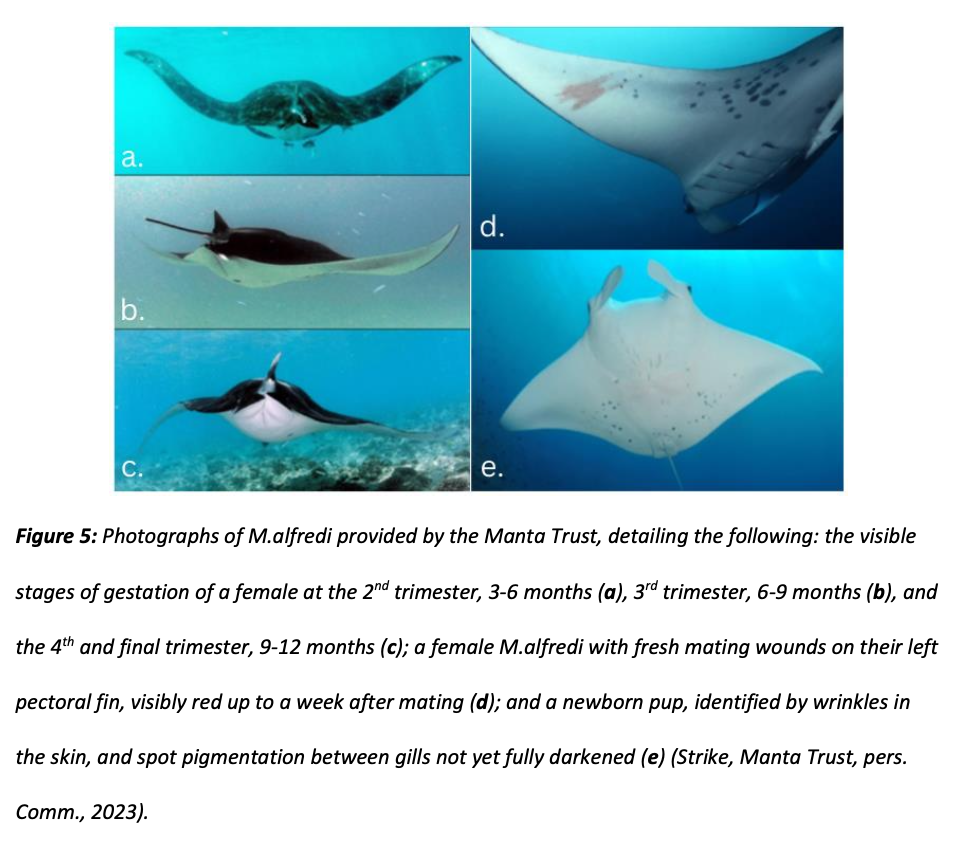
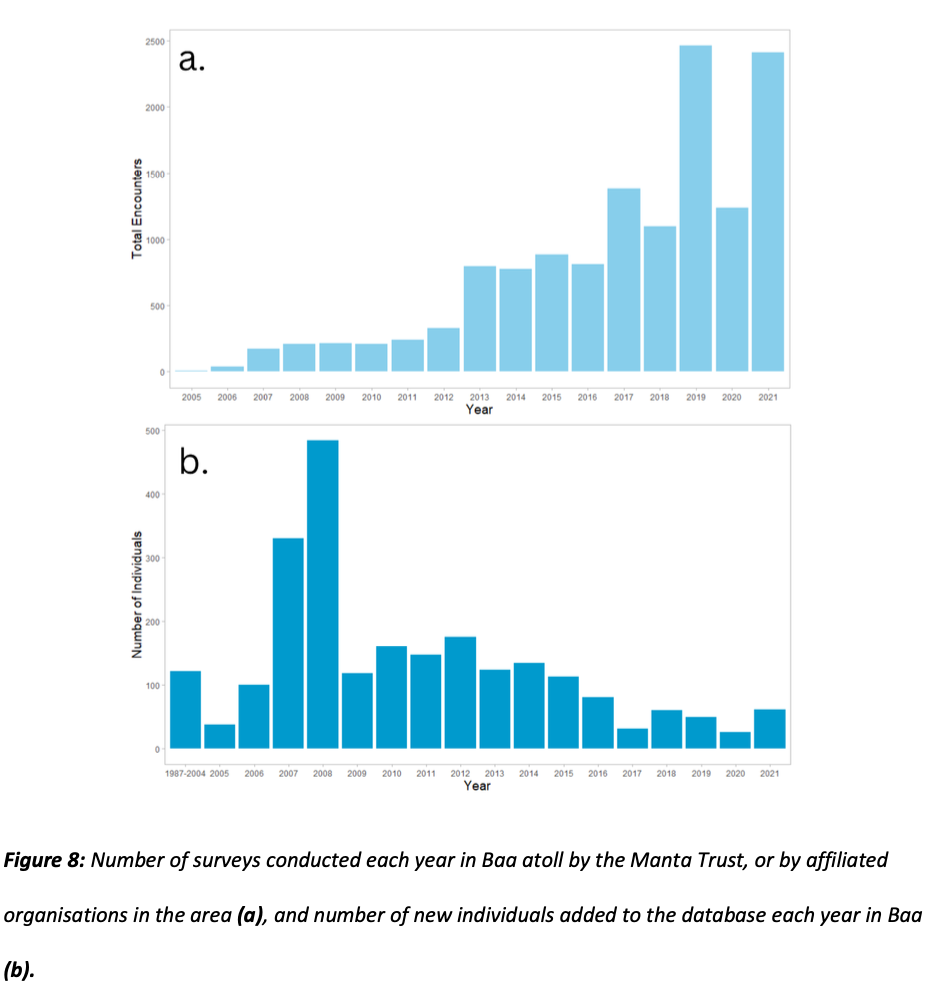
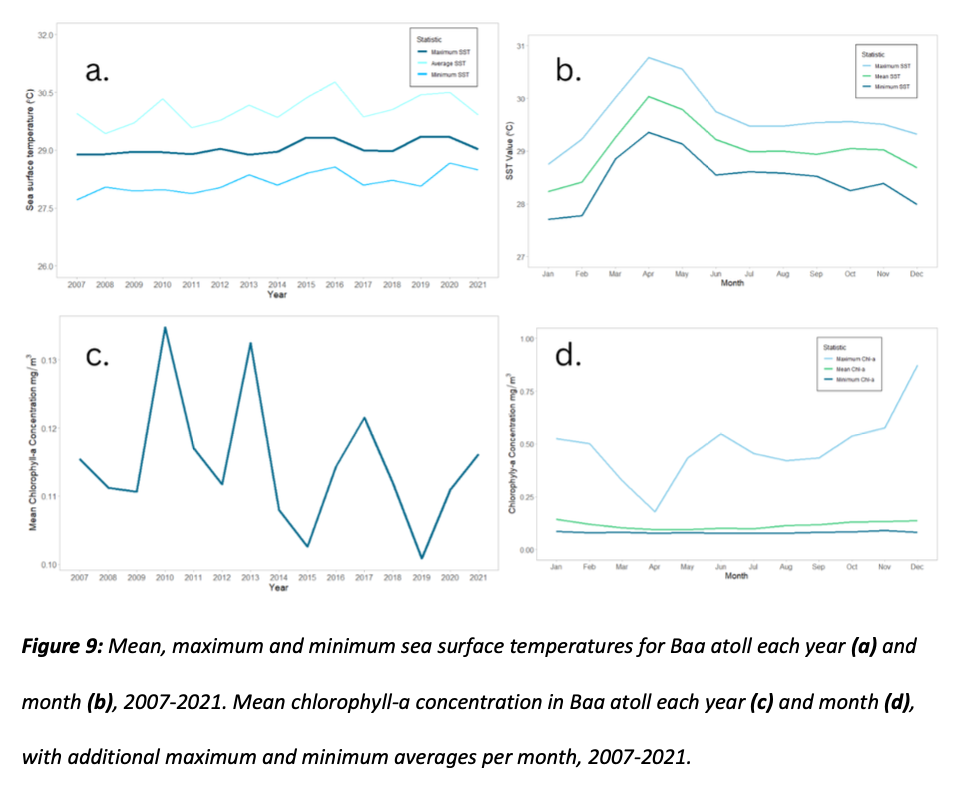
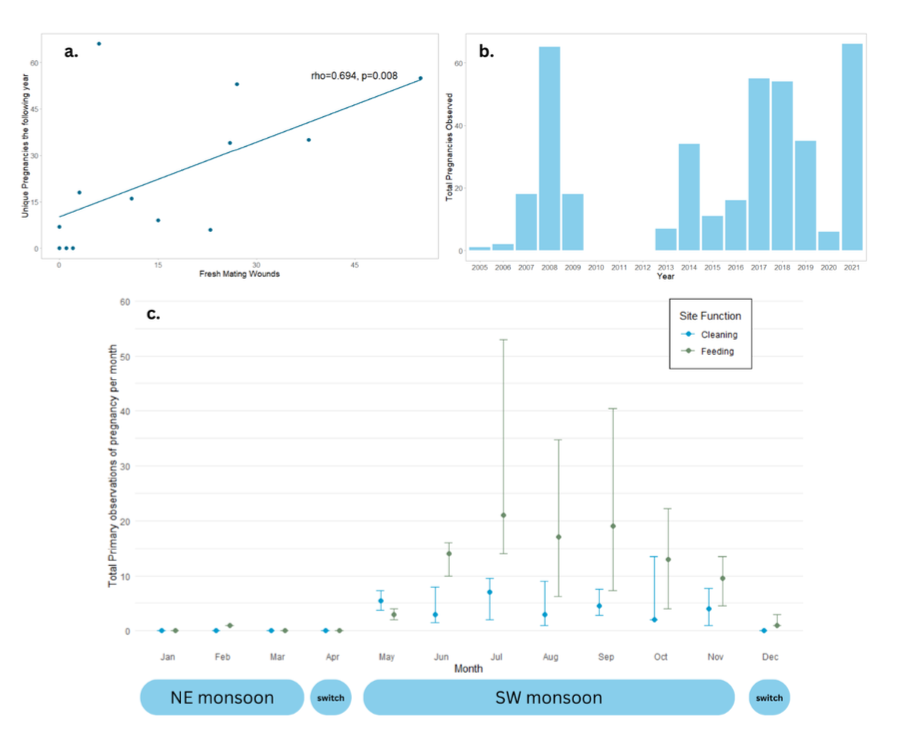
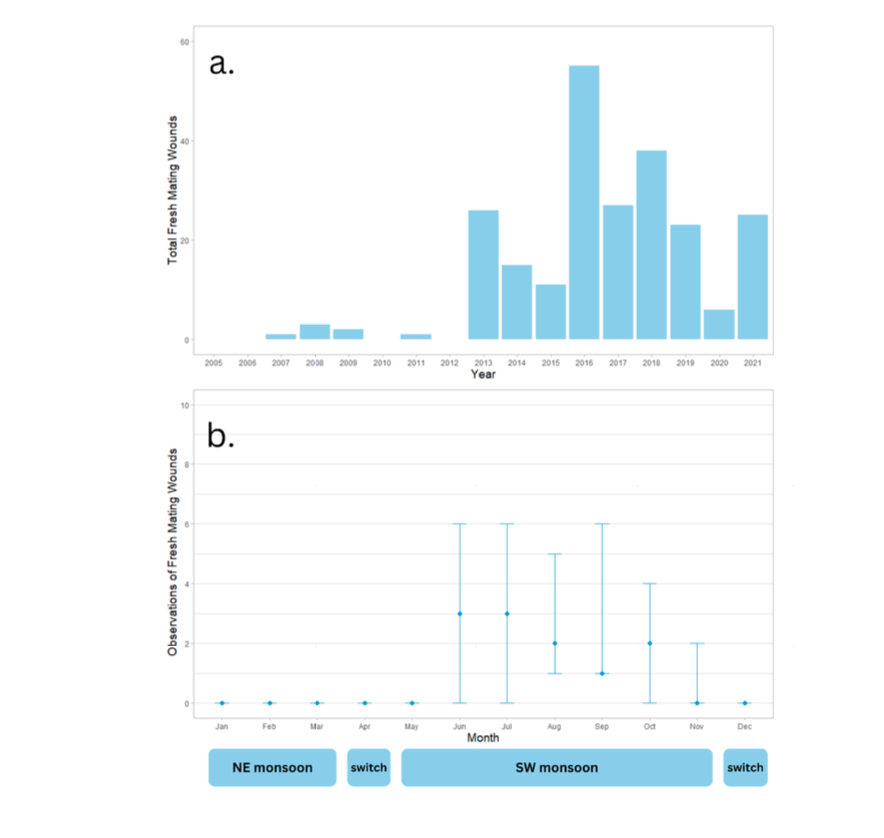
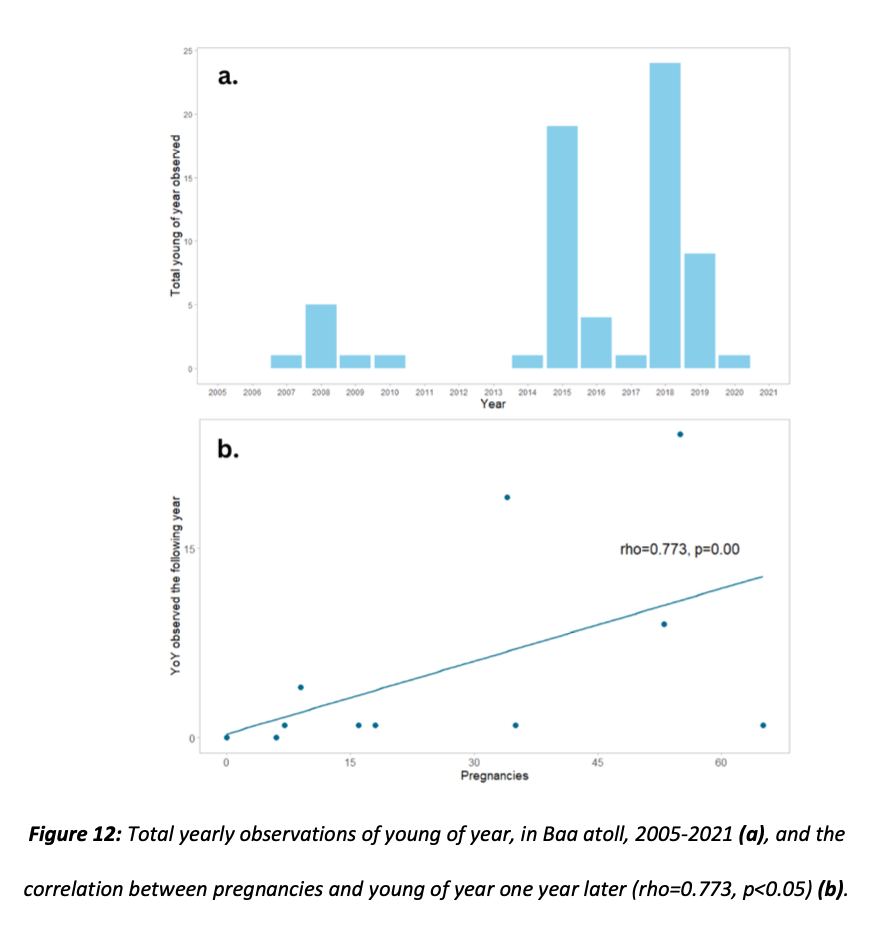
Summary: The Maldives holds the longest-running and largest reef manta (M. alfredi) dataset, with more than 5,500 individuals identified over 16 years. This study looked at reproduction in Baa Atoll from 2005 to 2021. It recorded 384 pregnancies (the largest on record), 184 fresh mating wounds and 67 young-of-year. Fecundity ran in 3–4 year cycles. Only 43% of mature females accounted for all pregnancies, and 38% were never seen pregnant or with mating wounds. That suggests a small, highly active group drives population growth. Reproductive periodicity was estimated at 6.8 years. Sea temperature and chlorophyll didn’t explain the patterns, but all pregnancies and mating wounds were seen in the southwest monsoon. Pregnant females were seen more often at feeding stations than at cleaning stations.
Abstract
“Maldives is home to the longest-running record and largest population of M.alfredi, across 16 years with over 5500 individuals photographically identified. This study set out to understand the reproductive patterns of the M.alfredi population in Baa, Maldives, by investigating observations of pregnant females, fresh mating wounds, and Young of Year (YoY) between 2005-2021. Further analysis was conducted into the site use of pregnant females, the influence of sea surface temperature (SST), chlorophyll-a concentrations, and monsoon seasons on such patterns. The study found that annual fecundity was not consistent each year but rather varied in multi-year cycles of 3-4 years. In total, 384 pregnancies were recorded, the largest record of M.alfredi pregnancy in the literature to date. Surprisingly, these pregnancies were attributed to just 43% (n=229) of all mature females, with 38% having never been sighted pregnant, or with fresh mating wounds. Reproductive periodicity was estimated at 6.8 years, lower than previously estimated, and 45 individuals had at least one pair of consecutive pregnancies, suggesting a highly active portion of the population are disproportionately responsible for the fecundity of the overall population. 184 instances of fresh mating wounds were observed, as well as 67 YoY. Environmental indicators SST and chlorophyll-a could not significantly explain these patterns of fecundity, however, all sightings of pregnant individuals and fresh mating wounds occurred in the southwestern monsoon season (between May and November). Pregnant individuals were also seen significantly more often at feeding stations compared to cleaning stations. This study suggests considerable intraspecific differences in female M.alfredi fecundity have been relatively overlooked as of yet, and highlights the importance of longevity of observations in accurately recording population patterns over time.”
Author Affiliations
University of Exeter
The Manta Trust
The Maldives Manta Conservation Programme