
Investigating the Abundance, Site Use and Behaviour of M. alfredi in Baa Atoll, Maldives
2023
Jessica Willis (MSc - University of Exeter)
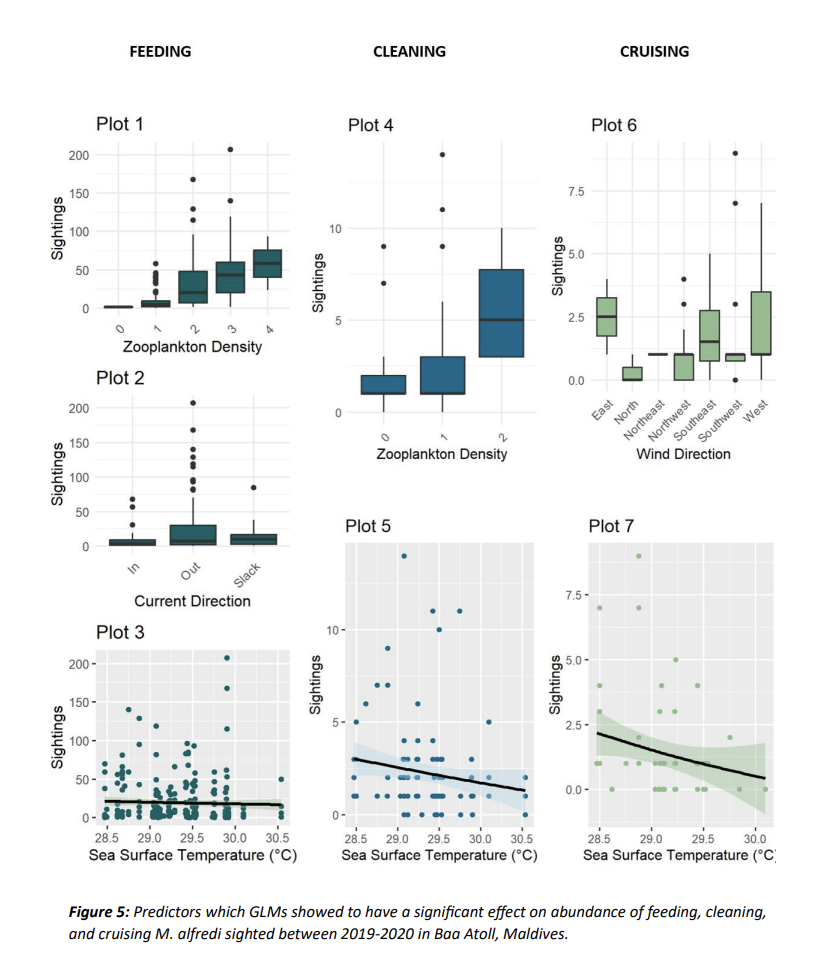
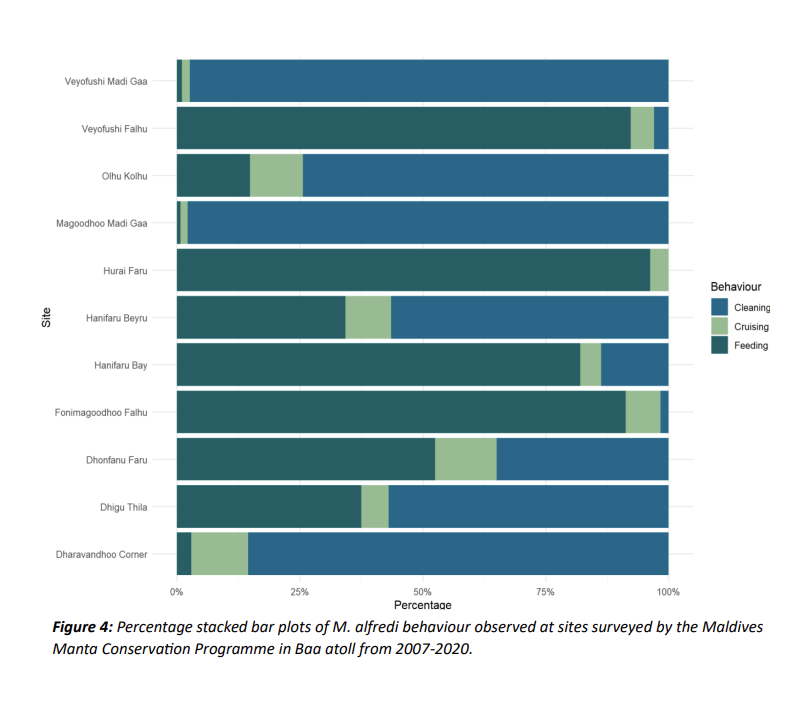
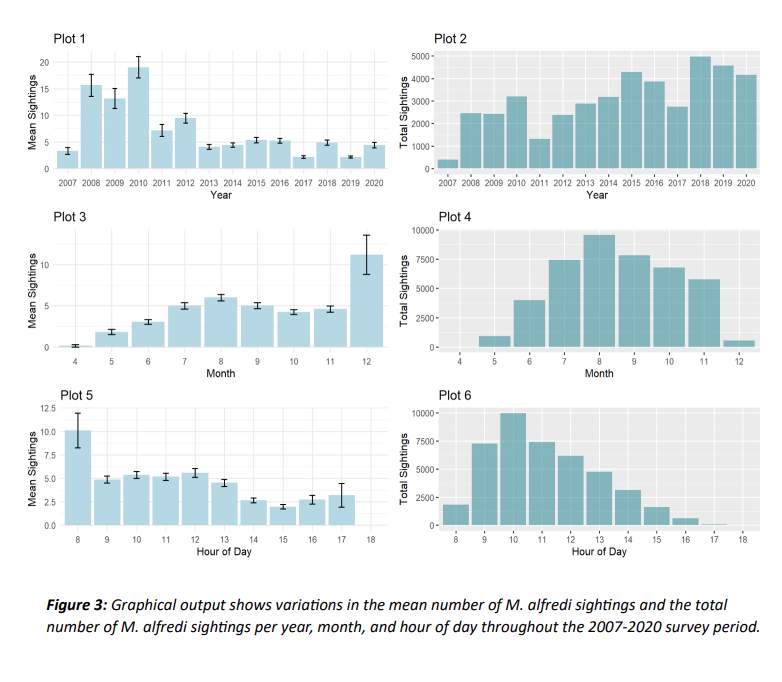
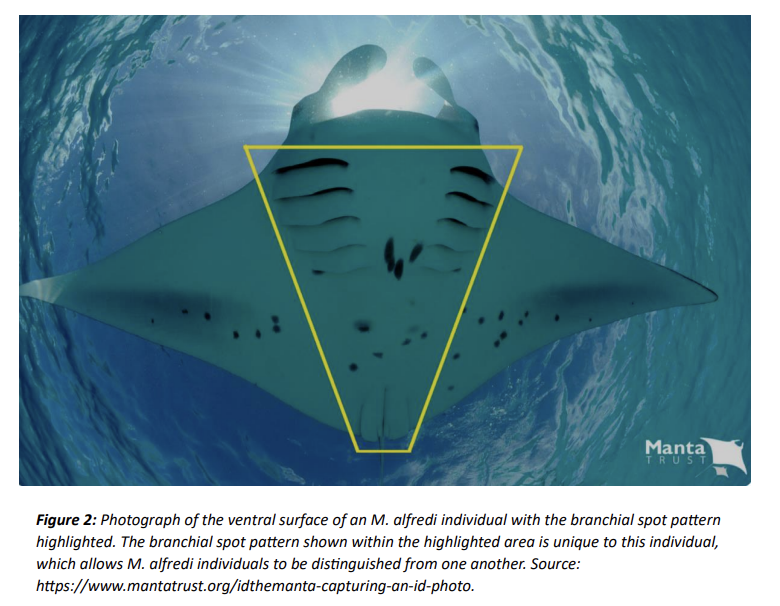
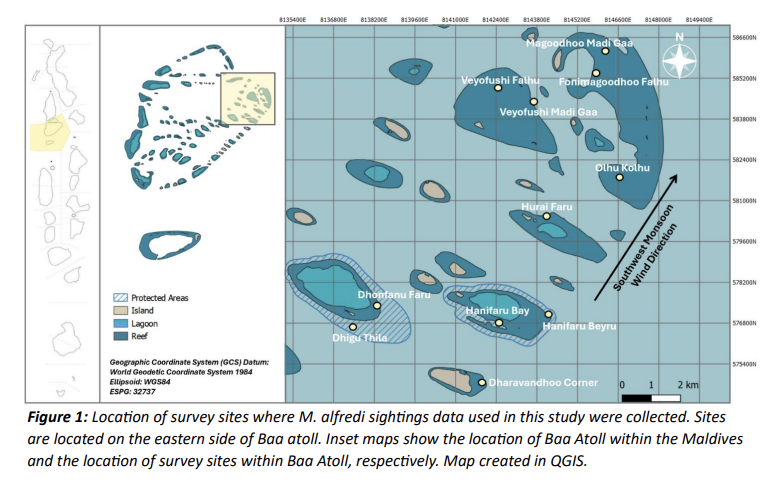
Summary: Reef mantas can’t recover from even low levels of fishing. The Maldives holds the largest known population, which moves across the archipelago with the monsoon. Baa Atoll hosts the biggest aggregations during the southwest monsoon. This study used Maldives Manta Conservation Programme photo-ID records from 2007 to 2020 to map abundance, key sites and behaviour. Mantas were most abundant in August and in the mornings, and seven sites logged more than 500 sightings each. Feeding increased with zooplankton density and outgoing currents, while cleaning peaked at low to mid zooplankton levels. Abundance dropped as sea temperature rose. The results identify key habitat for marine protected area designation.
Abstract
“Target fisheries and bycatch directly threaten global populations of M. alfredi, a species which exhibits vulnerable life-history traits and is unable to recover from even low levels of exploitation. The Maldives archipelago sustains the largest known population of M. alfredi, which migrates east to west biannually with the reversal of wind direction from the South Asian Monsoon. Baa Atoll contains several habitats which are important to M. alfredi during the southwest monsoon season and supports the largest known aggregations of the species. Identifying patterns in abundance, important habitat areas and the environmental drivers of M. alfredi behaviour can inform conservation efforts by determining sites which require further protection and can increase understanding of their behavioural ecology. This study used a subset of photo-ID sightings records collected from 2007-2020 by the Maldives Manta Conservation Programme in Baa Atoll during the southwest monsoon season to identify annual, monthly, and daily trends in M. alfredi abundance, important sites, and the primary behaviour exhibited in these areas. A subset of this data spanning 2019-2020 containing environmental variables was used to investigate the abundance of feeding, cleaning, and cruising M. alfredi. Generalised linear modelling found M. alfredi abundance to be highest during August and in the morning, and seven sites had >500 sightings throughout the survey period. Feeding behaviour increased significantly with increased zooplankton density and outgoing current, cleaning behaviour increased at low-mid zooplankton densities, and abundance of M. alfredi decreased as sea surface temperature increased. These findings highlight key areas of habitat which should be considered for marine protected area designation, and contribute to the understanding of trends in abundance of M. alfredi during the southwest monsoon in Baa Atoll, Maldives.”
Author Affiliations
The Manta Trust
The Maldives Manta Conservation Programme
University of Exeter