
Distribution of three mobulid ray species (Mobula tarapacana, M. mobular, and M. thurstoni) in the western Atlantic and Caribbean
December 2025
Jessica H. Pate, Atlantine Boggio-Pasqua, Nayara Bucair, Andrés Domingo, Nicolas Ehemann, Rodrigo Forselledo, Vicky Fong, Calusa Horn, Christian Jones, Marioxis Macías-Cuyare, Federico Mas, Sibele A. Mendonça, Gabriela M. Ochoa, Nicole A. Pelletier, Julia R. Willmott, Luis A. Zambrano-Vizquel & Guy M. W. Stevens
Keywords: Mobulidae• Devil Rays • Americas • Fisheries
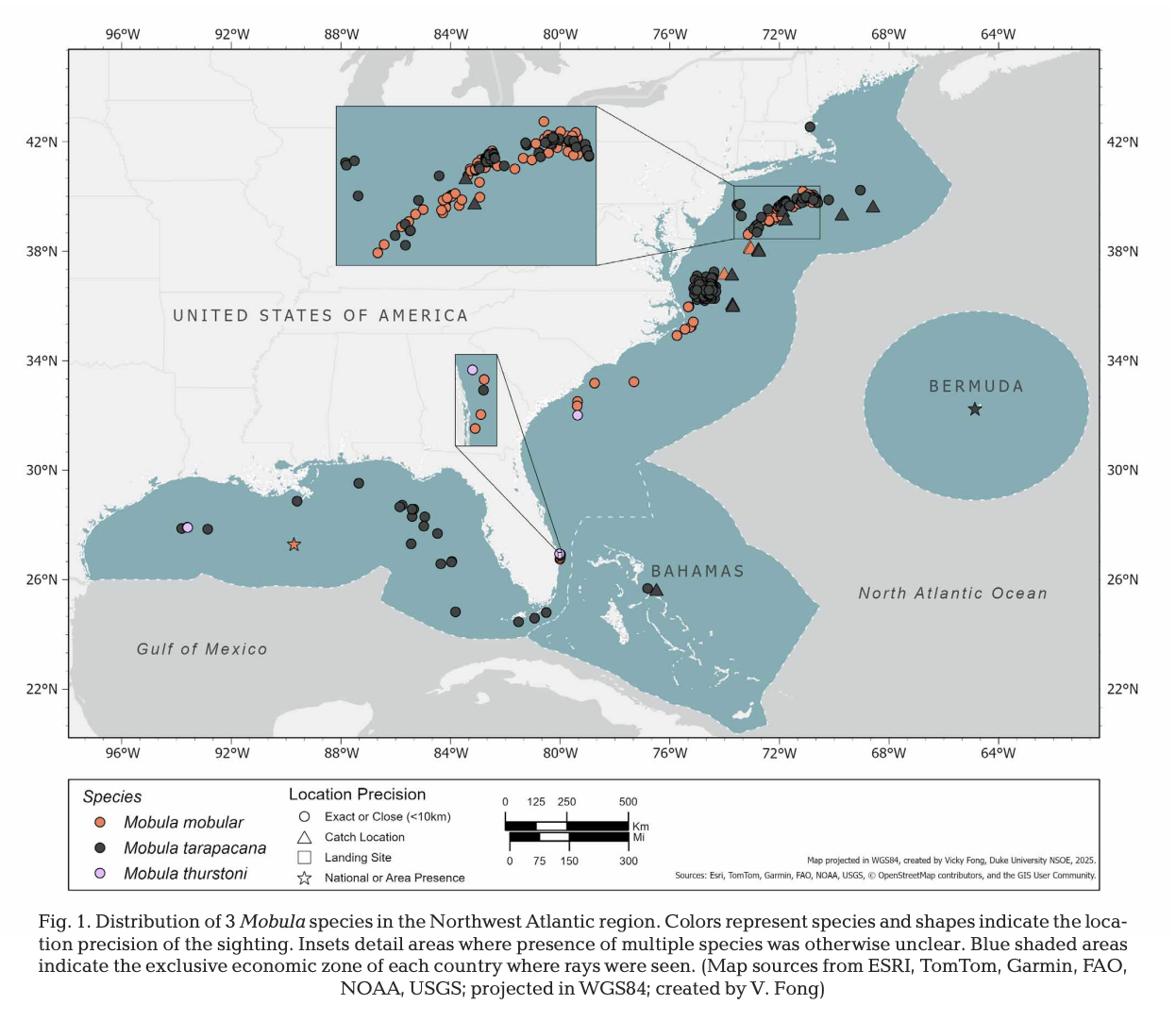
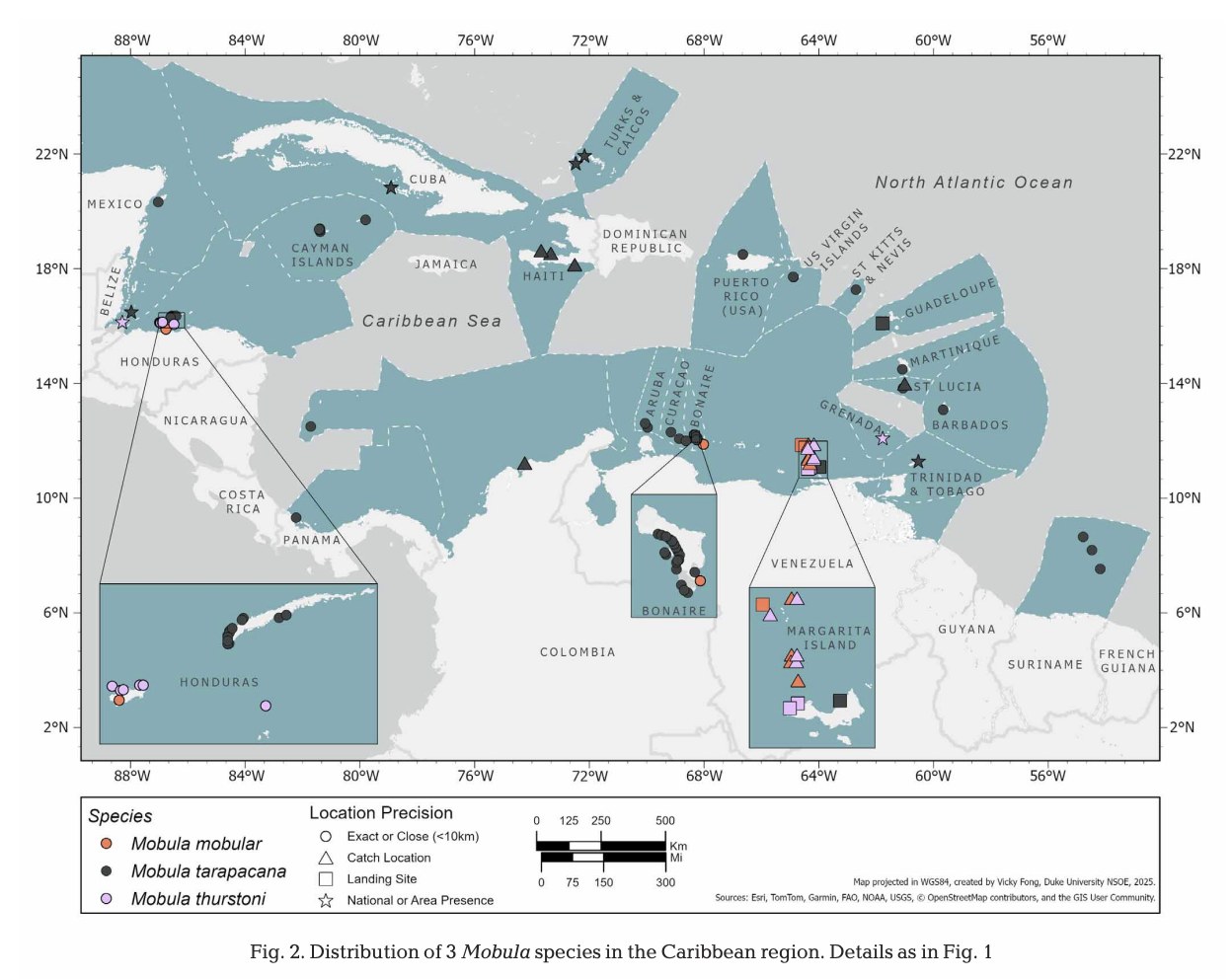
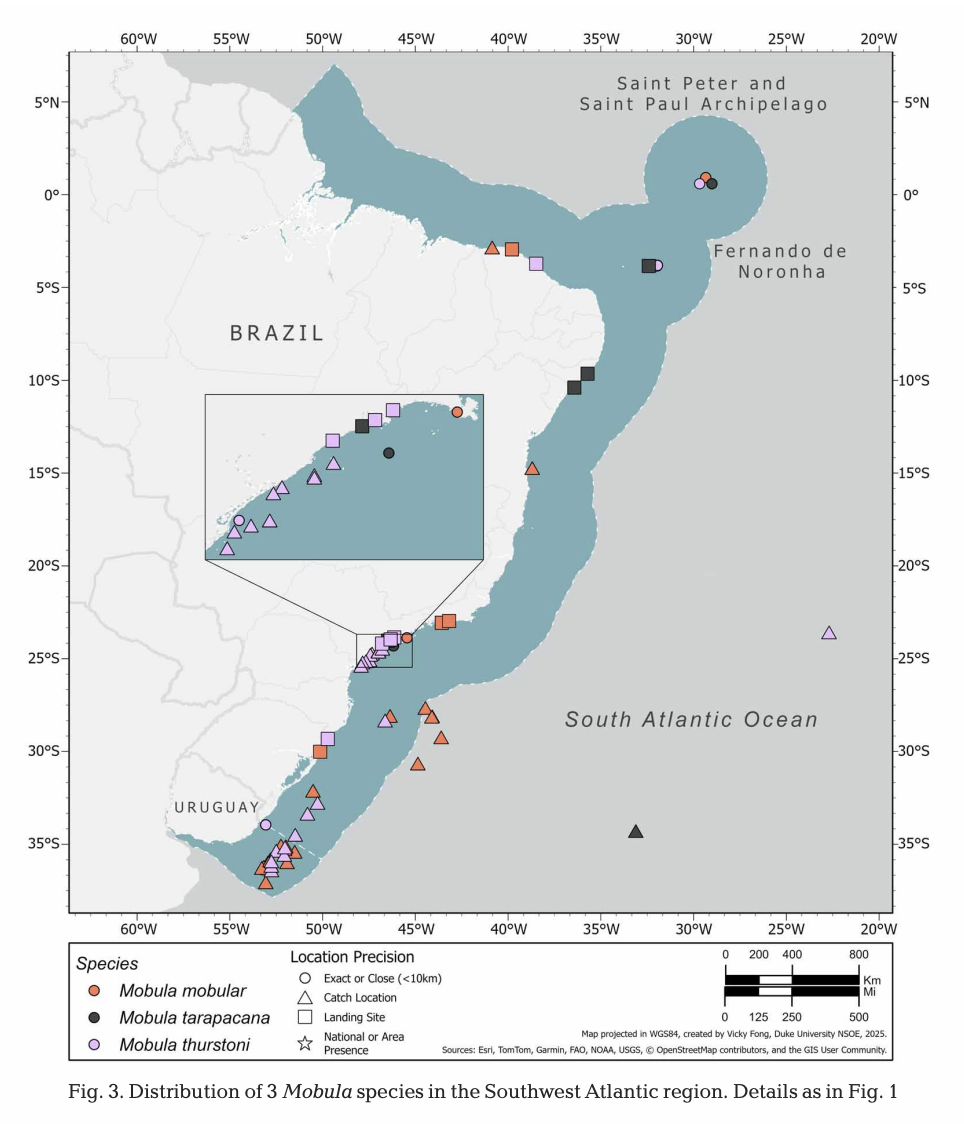
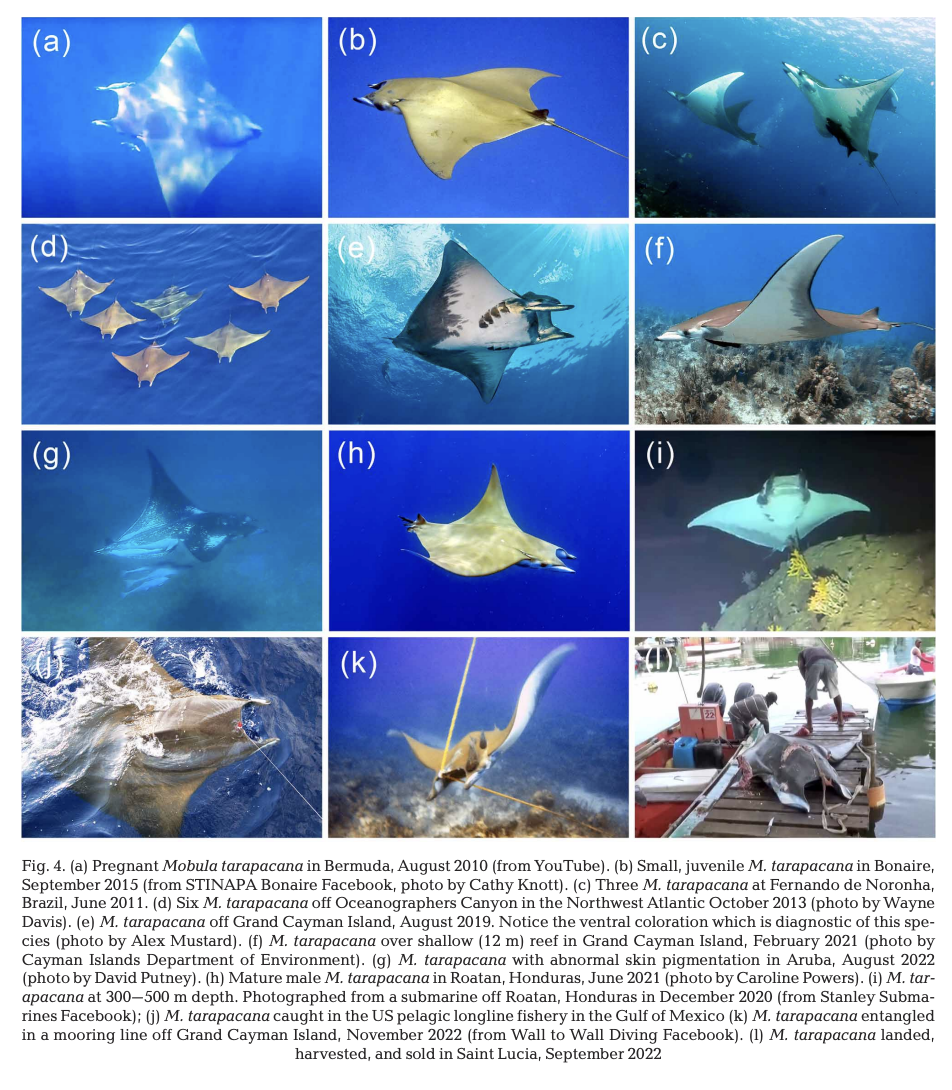
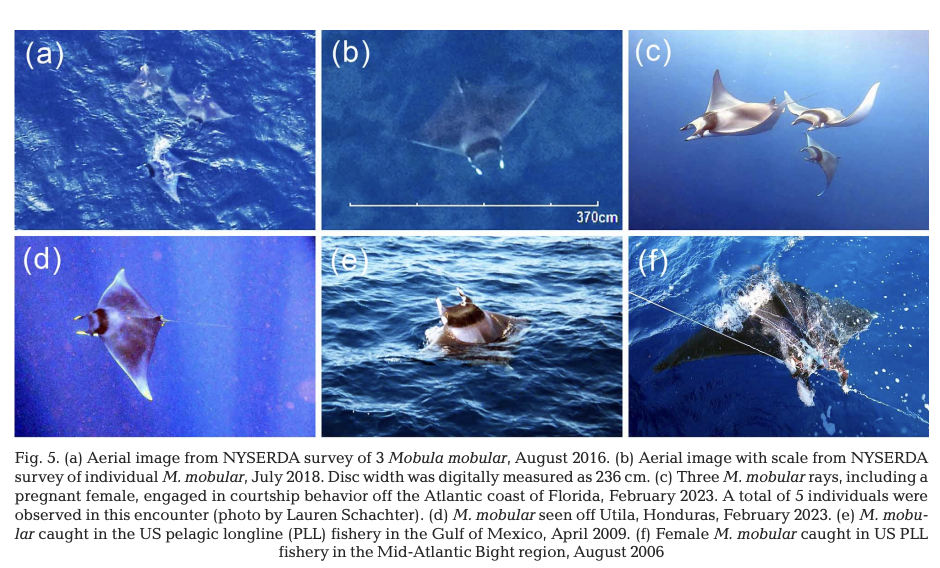
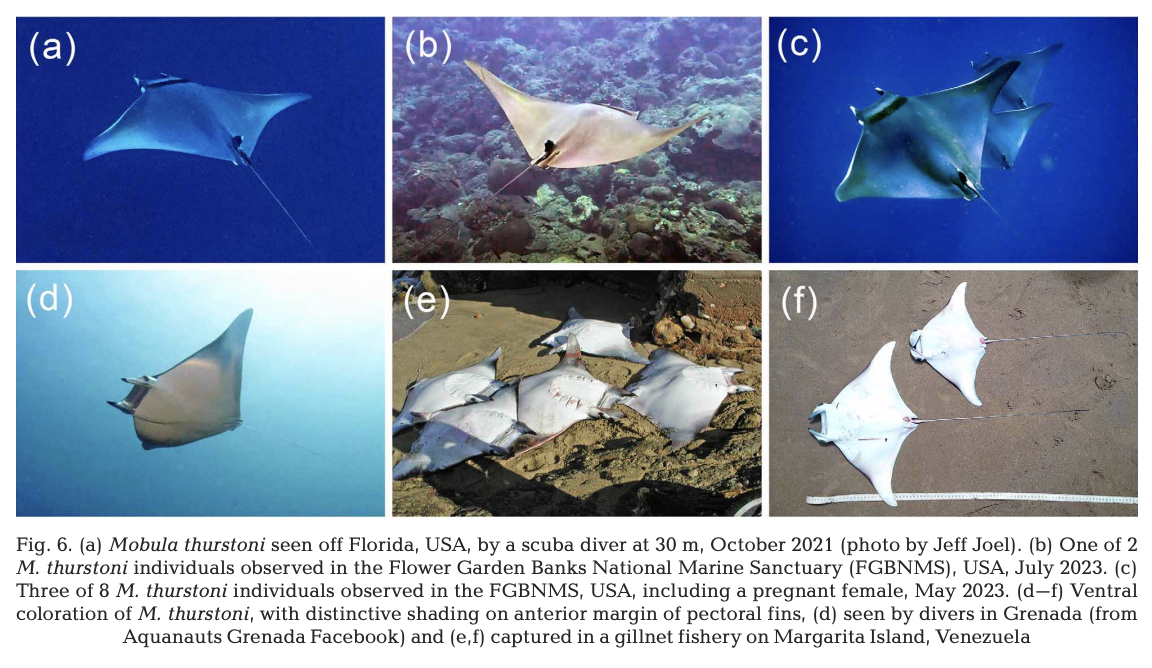
Summary: This study examines the status and distribution of three poorly understood devil ray species in the western Atlantic Ocean and Caribbean Sea amid global declines driven largely by fishing pressure. By compiling 970 records from diverse sources, including unpublished datasets, literature, online searches and incidental reports, the authors document sightings of sicklefin devil rays (Mobula tarapacana), spinetail devil rays (M. mobular) and bentfin devil rays (M. thurstoni). Results show M. tarapacana to be the most frequently recorded species and fisheries interactions accounted for over one fifth of all records. The study provides updated distribution maps, a country-level checklist of sightings, and identifies priorities for future research and improved species identification.
Abstract
“Populations of rays in the family Mobulidae have been declining globally, mainly due to fishing pressure. Within this family, devil rays remain far less understood than the more commonly studied manta rays, largely due to the rarity of occurrence in many regions, taxonomic uncertainties, and frequent species misidentification. Here, we compiled data from multiple sources—including unpublished data sets, research publications, internet searches, and incidental sighting reports—to describe the spatial distribution of 3 species of devil rays (Mobula tarapacana, M. thurstoni, and M. mobular) in the western Atlantic Ocean and Caribbean Sea. A total of 970 sightings of 1866 individuals of all 3 devil ray species were recorded, with 608 sightings of 1378 individual M. tarapacana, 263 sightings of 321 individual M. mobular, and 99 sightings of 167 individual M. thurstoni. Fisheries interactions were responsible for 21.4% (n = 208) of the sightings. We present updated distribution maps, provide a checklist of countries where devil ray sightings have occurred, and offer recommendations for future research.”
Author Affiliations
Marine Megafauna Foundation
Aix-Marseille University; Université de Toulon; CNRS; IRD; Mediterranean Institute of Oceanography (MIO)
Laboratory of Reproduction Ecology and Marine Organism Recruitment, Oceanographic Institute, University of São Paulo
Laboratorio de Recursos Pelágicos, Dirección Nacional de Recursos Acuáticos
Instituto Politécnico Nacional, Centro Interdisciplinario de Ciencias Marinas
Nicholas School of the Environment, Duke University
NOAA, National Marine Fisheries Service, Southeast Regional Office
NOAA, National Marine Fisheries Service, Southeast Fisheries Science Center
Laboratório de Pesquisa em Chondrichthyes, Universidade Federal do Rio Grande (FURG)
Laboratório de Oceanografia Pesqueira, Universidade Federal Rural de Pernambuco
Ilili
Institute of the Environment, Department of Biological Sciences, Florida International University
The Manta Trust
Normandeau Associates Inc.
Escuela de Ciencias Aplicadas al Mar, Universidad de Oriente (UDO)
Contribution towards the Manta Trust's Strategic Plan
Goal 2: Strategic Objective 2.1 – Relevant RFMOs, fishery collectives, fishing fleets, artisanal fishers, recreational, and subsistence fishers within our geographical focus areas are working towards measures to reduce manta and devil ray capture and bycatch mortality.
Goal 3: Strategic Objective 3.1 – All manta and devil ray species in the regions where we work are fully protected and conserved through species management plans.
Goal 3: Strategic Objective 3.4 – The environmental drivers on manta ray populations are better understood to help determine the impact of the climate crisis and inform conservation measures.