Manta and Devil Rays in the Canary islands: what do we know?
February 2026
Alicia Rodríguez-Juncá, Ana F. Sobral & Guy M.W. Stevens
Keywords: Mobulidae • Species Occurrence • Citizen Science • Fishers’ Interviews • Reproductive Ecology • Mobula thurstoni
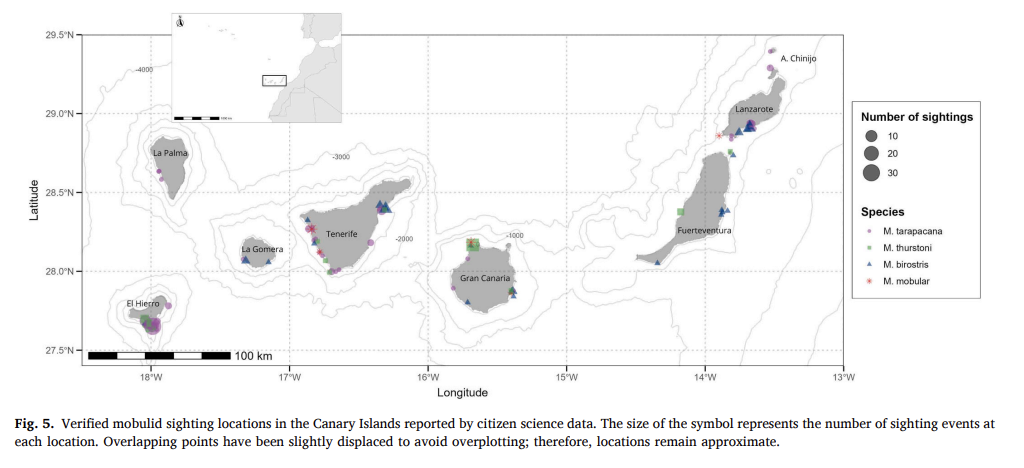
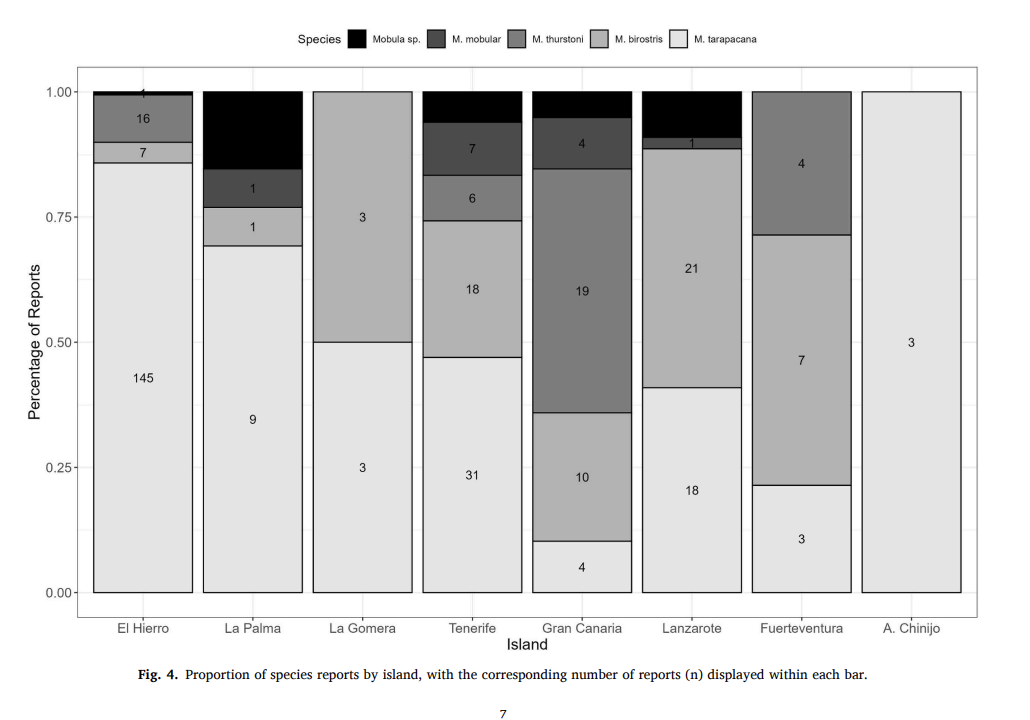
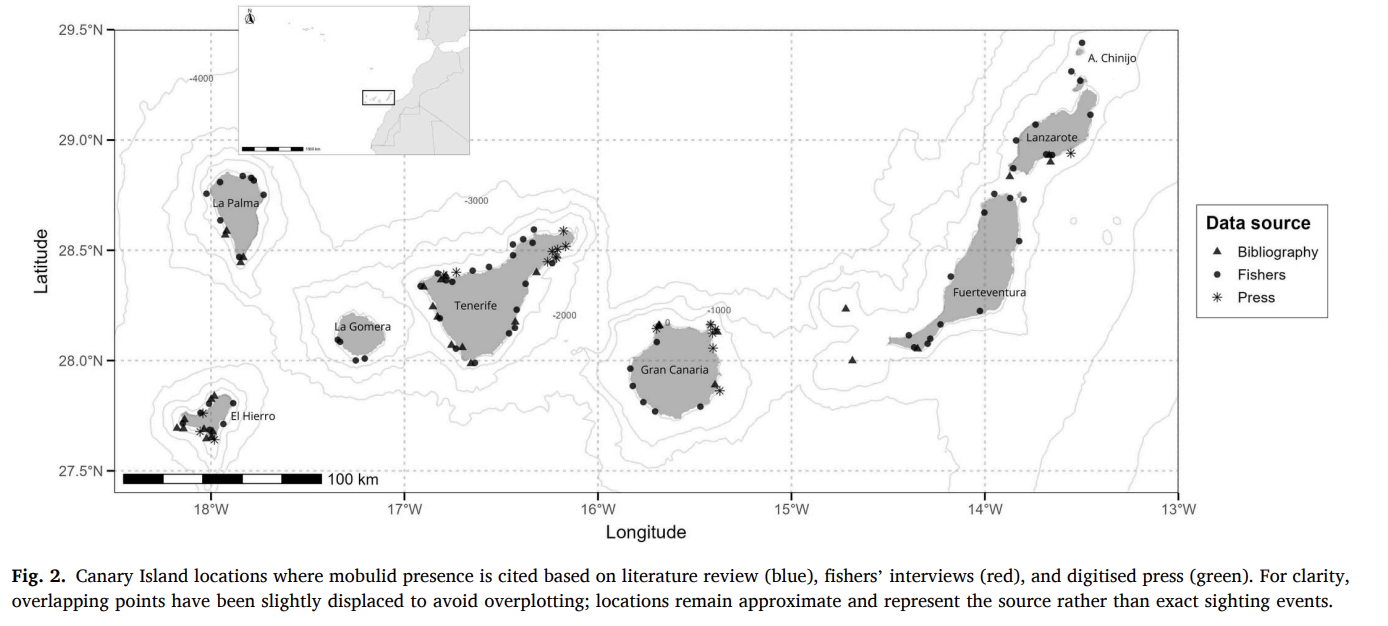
Summary: Understanding the diversity, distribution, and human interactions of manta and devil rays is vital for their conservation. In the Canary Islands, a combined approach using literature records (140 entries, 1836–2025), interviews with 225 fishers, and 356 citizen science sightings established the first regional baseline for manta and devil ray species. Four species were confirmed: the oceanic manta ray (Mobula birostris), the spinetail devil ray (Mobula mobular), the sicklefin devil ray (Mobula tarapacana), and the previously undocumented bentfin devil ray (Mobula thurstoni). Sightings and reproductive behaviours indicate the archipelago is an important habitat, while occasional fishing and vessel impacts highlight ongoing threats, underscoring the islands’ conservation significance.
Abstract
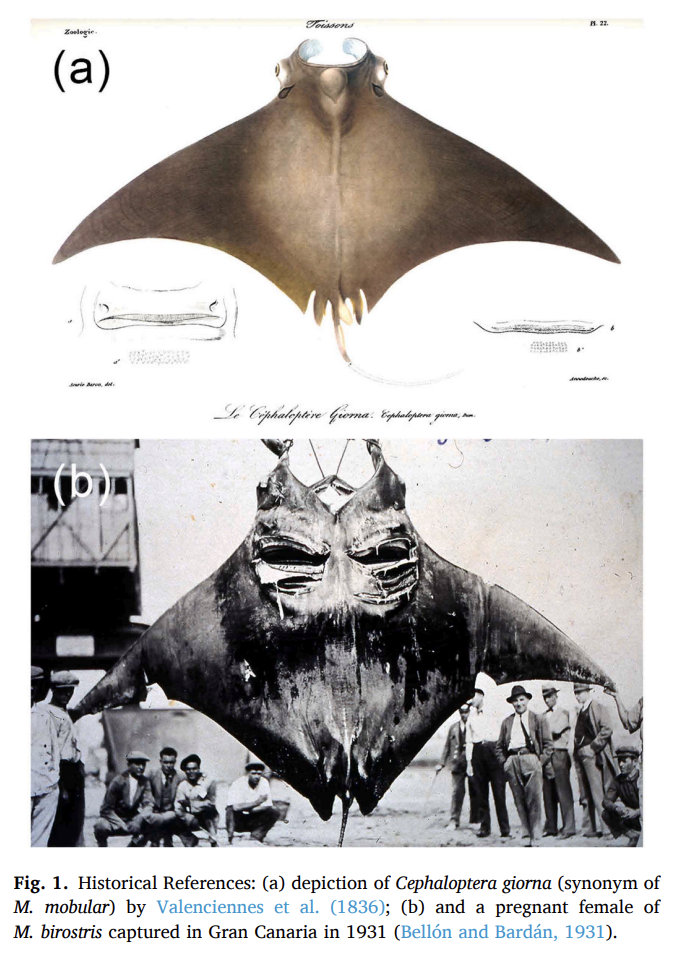
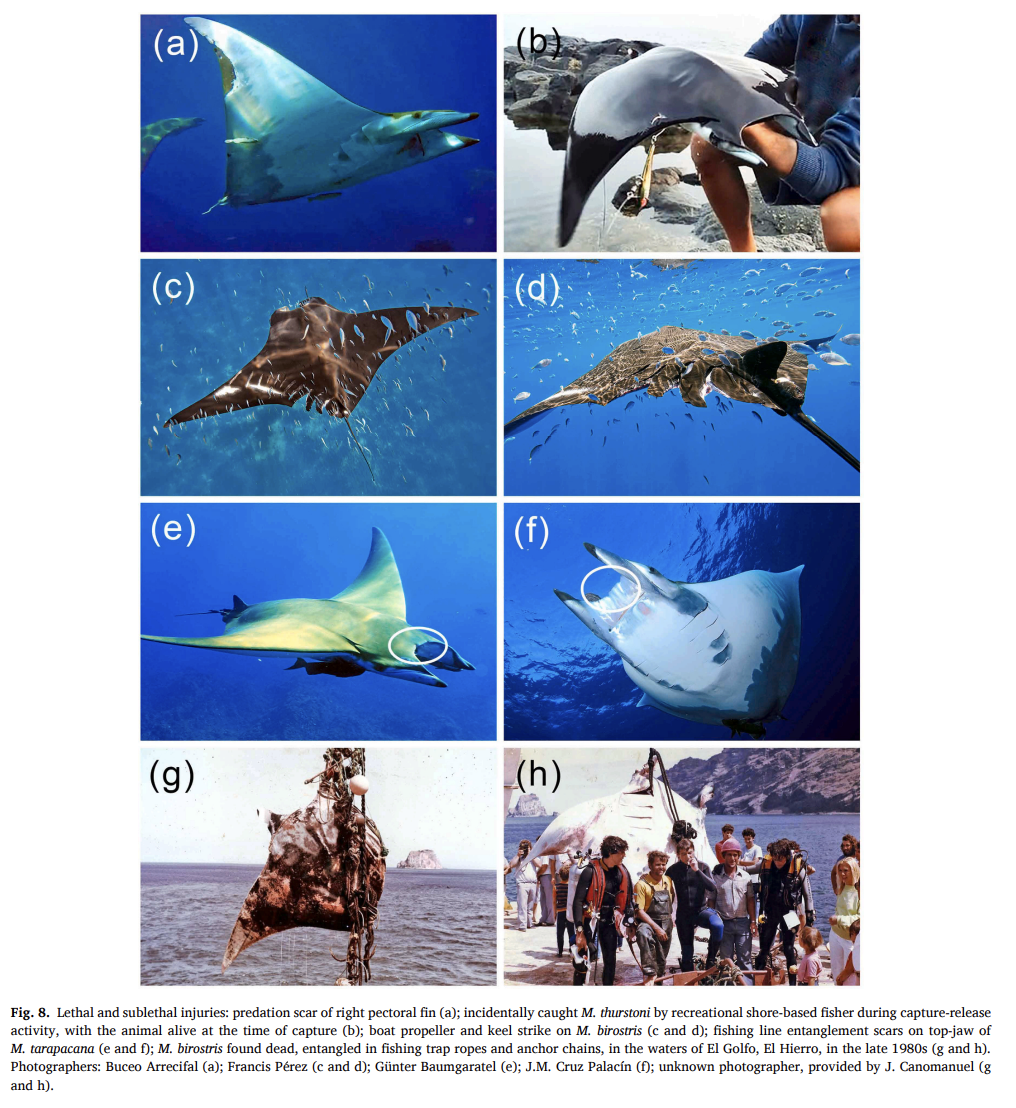
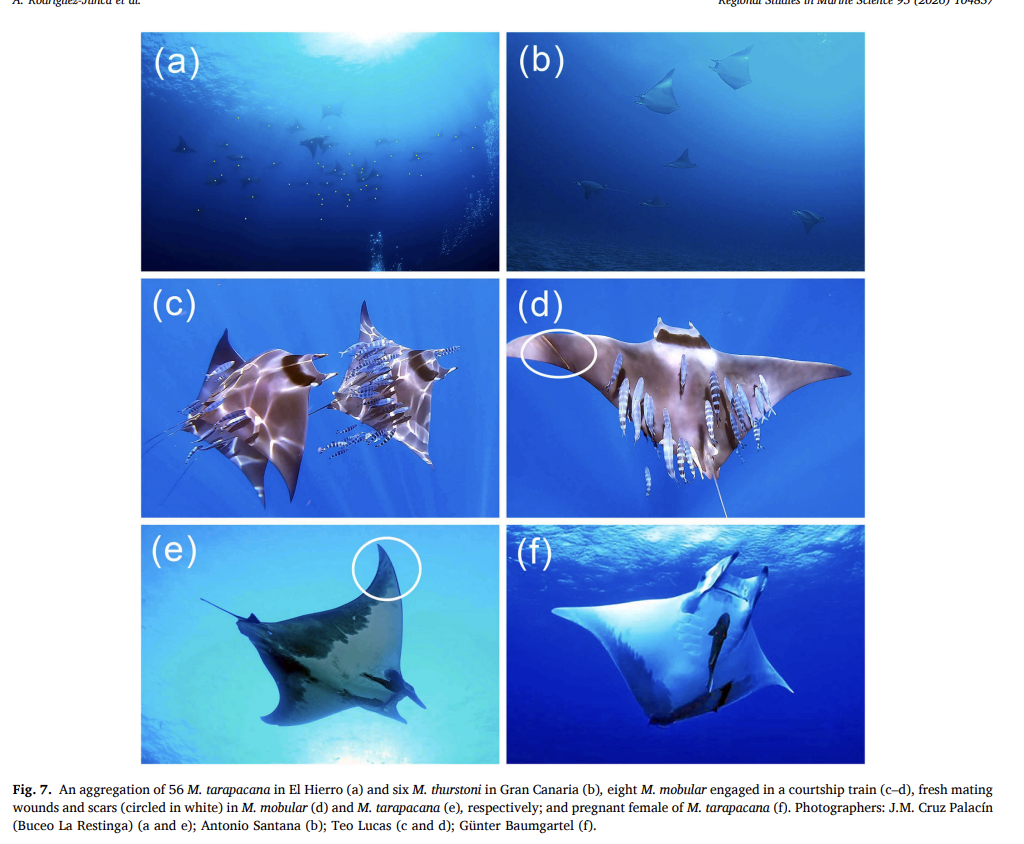
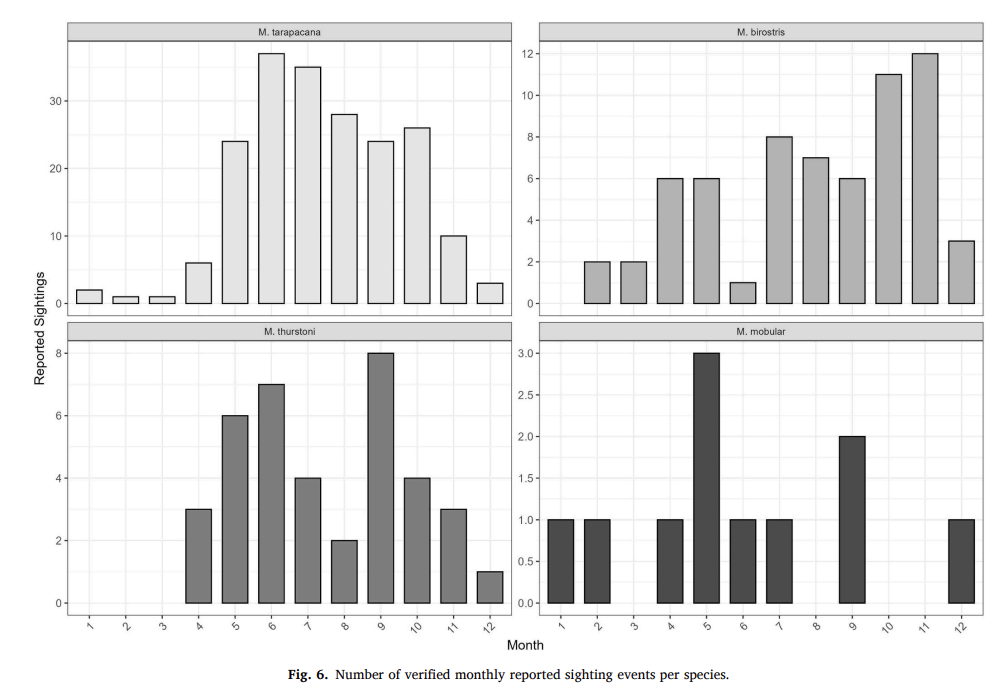
“Understanding species diversity, occurrence, and anthropogenic interactions of mobulids (manta and devil rays) is essential for conservation of these threatened species. In the Canary Islands, we combined a literature review (140 records, 1836–2025), fishers interviews (n=225), and citizen science sightings (n=356) to establish the first mobulid baseline in this understudied region. Four species are confirmed: Mobula birostris, Mobula mobular, Mobula tarapacana, and the previously undocumented Mobula thurstoni. Historical context and corrected species misidentifications are provided. Thirty-five percent of fishers reported frequent mobulid sightings, whereas interactions were rare for depredation, gear damage (70%), and incidental captures (64%). M. tarapacana dominated western-central islands, M. birostris eastern-central, and M. thurstoni Gran Canaria. Mobula tarapacana was the most common species (60%), present year-round, peaking from May to October. Large aggregations were documented for M. tarapacana (up to 56 individuals) and M. thurstoni (up to 18 individuals). Observations of juveniles (M. birostris and M. thurstoni), pregnant females (M. tarapacana and M. birostris), mating wounds (M. mobular) and scars (M. tarapacana), and courtship behavior (M. mobular) suggest the archipelago may provide an important reproductive habitat. Mobulids here face lower fishing pressure than in nearby African fishing grounds, yet evidence of occasional impacts—vessel strikes, entanglement, and potential habitat displacement—underscore the need for further research. These findings highlight the Canary Islands’ importance for multiple mobulid species, especially relevant in light of their global population declines.”
Author Affiliations
Universidad de la Laguna
Manta Catalog
Universidade dos Açores
The Manta Trust
Funding
Save Our Seas Foundation
Canary Government
Canary Islands Agency for Research, Innovation
Information Society of the Ministry of Universities, Science, Innovation, and Culture
European Social Fund Plus (ESF+) Canary Islands Operational Program 2021–2027
Contribution towards the Manta Trust's Strategic Plan
Goal 2: Strategic Objective 2.1 – Relevant RFMOs, fishery collectives, fishing fleets, artisanal fishers, recreational, and subsistence fishers within our geographical focus areas are working towards measures to reduce manta and devil ray capture and bycatch mortality.
Goal 3: Strategic Objective 3.1 – All manta and devil ray species in the regions where we work are fully protected and conserved through species management plans.
Goal 3: Strategic Objective 3.5: Impact of boat strikes and entanglement are better understood to inform necessary conservation measures.
Goal 4: Strategic Objective 4.1 – More people (a diverse range of individuals) local to manta and devil ray conservation initiatives play an active role in their design and implementation.
Goal 4: Strategic Objective 4.2 – People who interact with manta and devil rays and their habitats in geographical focus areas are supportive of their conservation and act accordingly.