Natural and reduced anthropogenic injuries rates in reef manta rays (Mobula alfredi) from the Chagos Archipelago, central Indian Ocean
January 2026
J. Savage, H. Koldewey, T.B. Letessier, D. Morritt, M. Rowcliffe, G.M.W. Stevens & J.L. Harris
Keywords: Entanglement • Manta Ray • Marine Protected Area • Chagos Archipelago • Photographic Identification • ALDFG
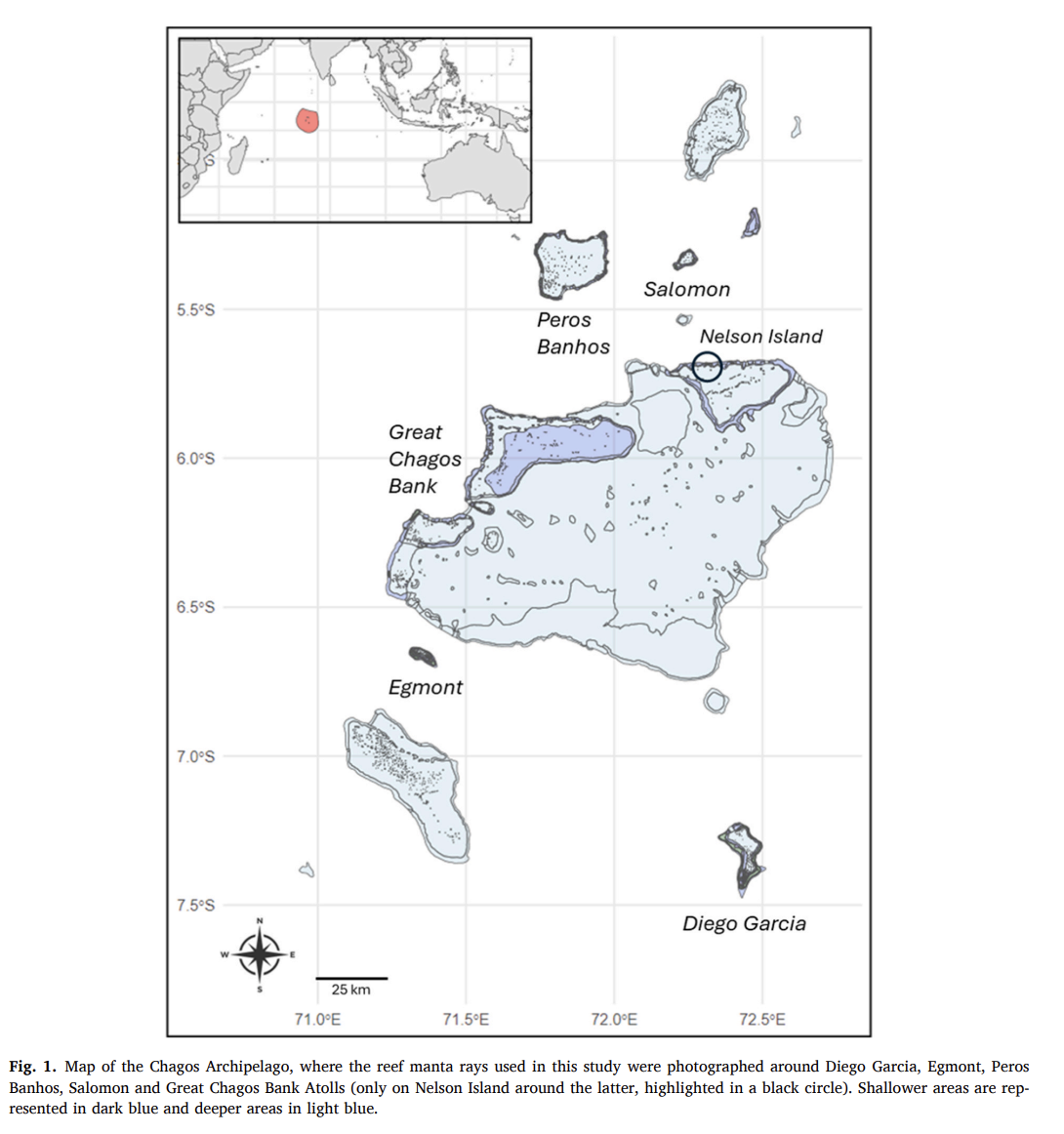
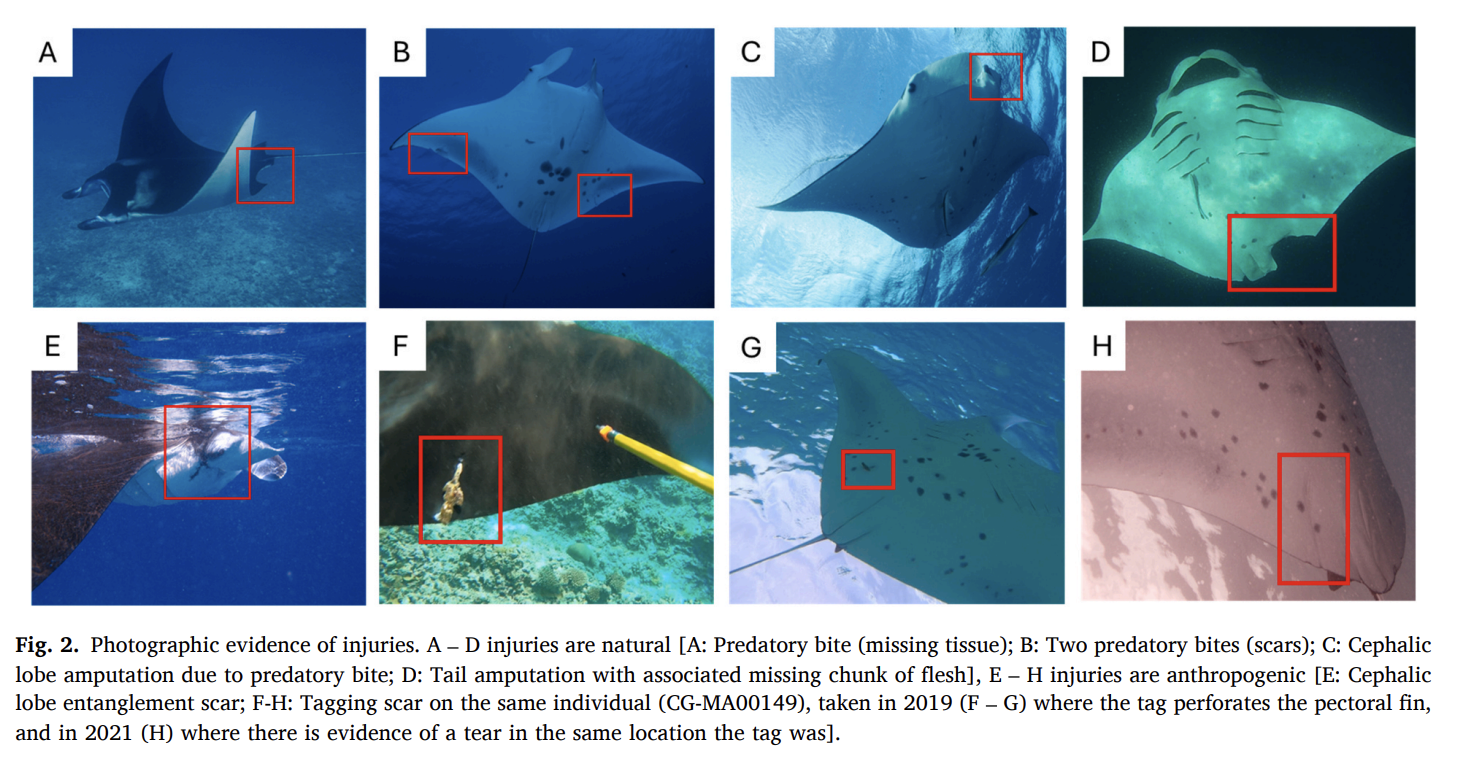
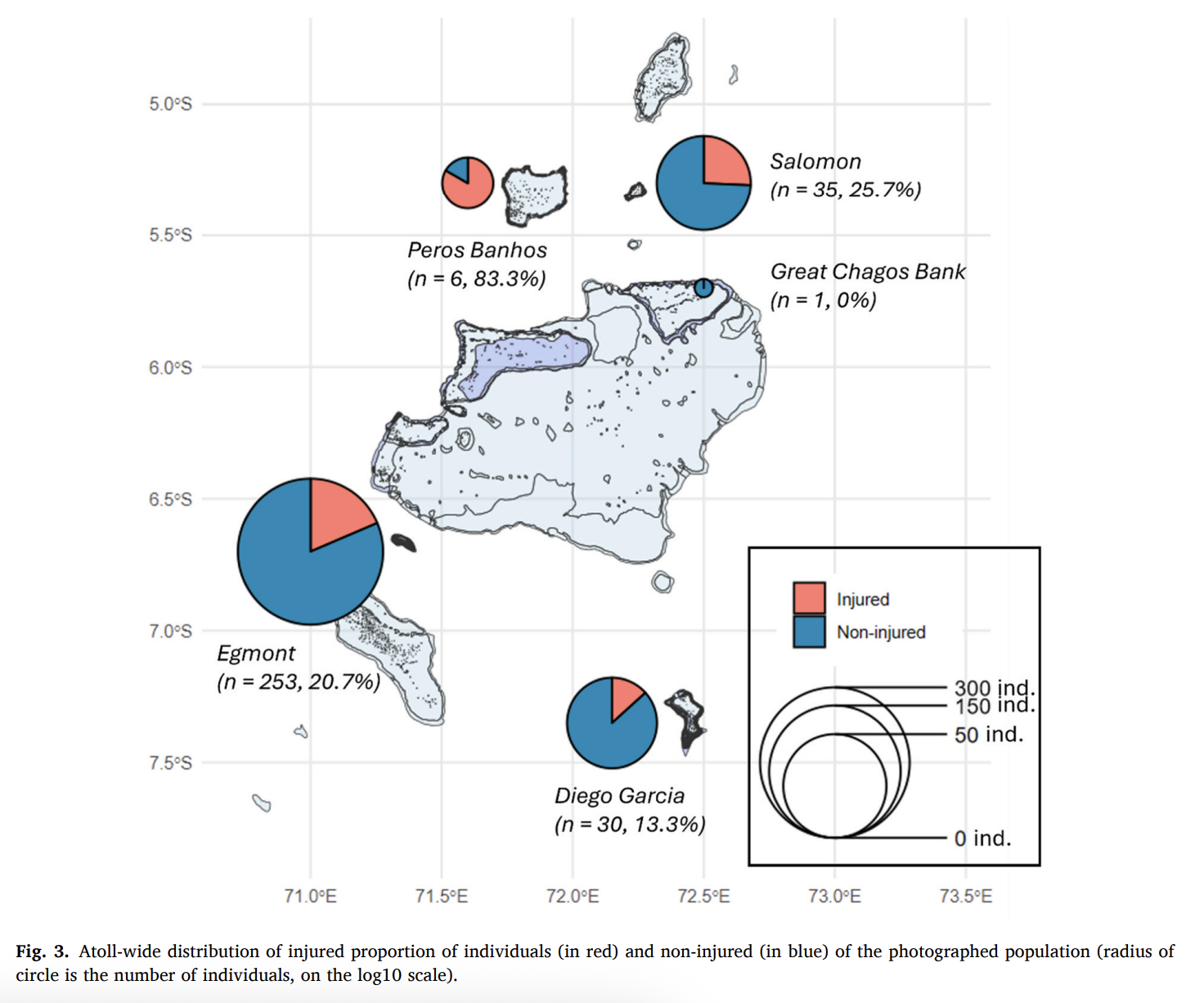
Summary: Abandoned, lost or discarded fishing gear (ALDFG) makes up nearly two-thirds of open-ocean plastic debris and poses a serious entanglement risk to reef manta rays (Mobula alfredi), a species listed as Vulnerable on the IUCN Red List. This study examined photographic identification data from the Chagos Archipelago, a large, remote no-take marine protected area (MPA). Only one individual (0.3% of 325 manta rays) showed evidence of entanglement, far lower than global averages. Predation injuries were observed in 18.2% of individuals, comparable to other populations. The findings suggest that remoteness and effective protection reduce entanglement risk, highlighting the importance of continued MPA enforcement.
Abstract
“Abandoned, lost, or otherwise discarded fishing gear (ALDFG) accounts for nearly two-thirds of plastic debris in the open ocean and can entangle marine megafauna. Reef manta rays (Mobula alfredi) are susceptible to entanglement in ALDFG, with consequences ranging from sublethal injuries to mortality. Mobula alfredi are listed as Vulnerable to extinction on the IUCN Red List of Threatened Species, in part, due to their slow reproduction rate and susceptibility to unsustainable fishing pressures. Their exposure to ALDFG could further hinder their survival; therefore, it is essential to quantify the impacts of ALDFG. This study assesses a photographic identification database for evidence of entanglement and other injuries in the reef manta ray population of the Chagos Archipelago, a large, remote, no-take marine protected area (MPA) in the Indian Ocean where illegal fishing persists. Only one individual (0.3 % of the photographed population, n = 325) showed evidence of entanglement injury, which is substantially lower than rates reported in other populations globally (mean = 7.1 %). Additionally, 18.2 % of the population showed evidence of predatory bites, which is comparable to the percentage of individuals with predation injuries in other populations (mean = 21.5 %). The results of this study suggest that the remoteness, protected status, and large size of the MPA may contribute to reducing entanglement of reef manta rays. Continued enforcement of the MPA is essential to reduce illegal fishing activities and other anthropogenic impacts on the species it protects.”
Author Affiliations
Zoological Society of London
Royal Holloway University of London
University of Exeter
University of Plymouth
The Manta Trust
Contribution towards the Manta Trust's Strategic Plan
Goal 1: Strategic Objective 1.2 - There is improved enforcement of existing protective policies
Goal 3: Strategic Objective 3.2 – Key manta and devil ray aggression sites in the regions where we work fall within protected areas that are effectively managed.
Goal 3: Strategic Objective 3.5 - Impact of boat strikes and entanglement are better understood to inform necessary conservation measures.