
Hiding in Plain Sight: Evidence of Echeneidae Cloacal and Gill Diving Behavior in Manta Ray Hosts
May 2026
Emily A. Yeager, Jessica Pate, Guy M. W. Stevens, Bryant Turffs & Catherine Macdonald
Keywords: Behavior • Remora • Symbiosis • Symbiosis Continuum
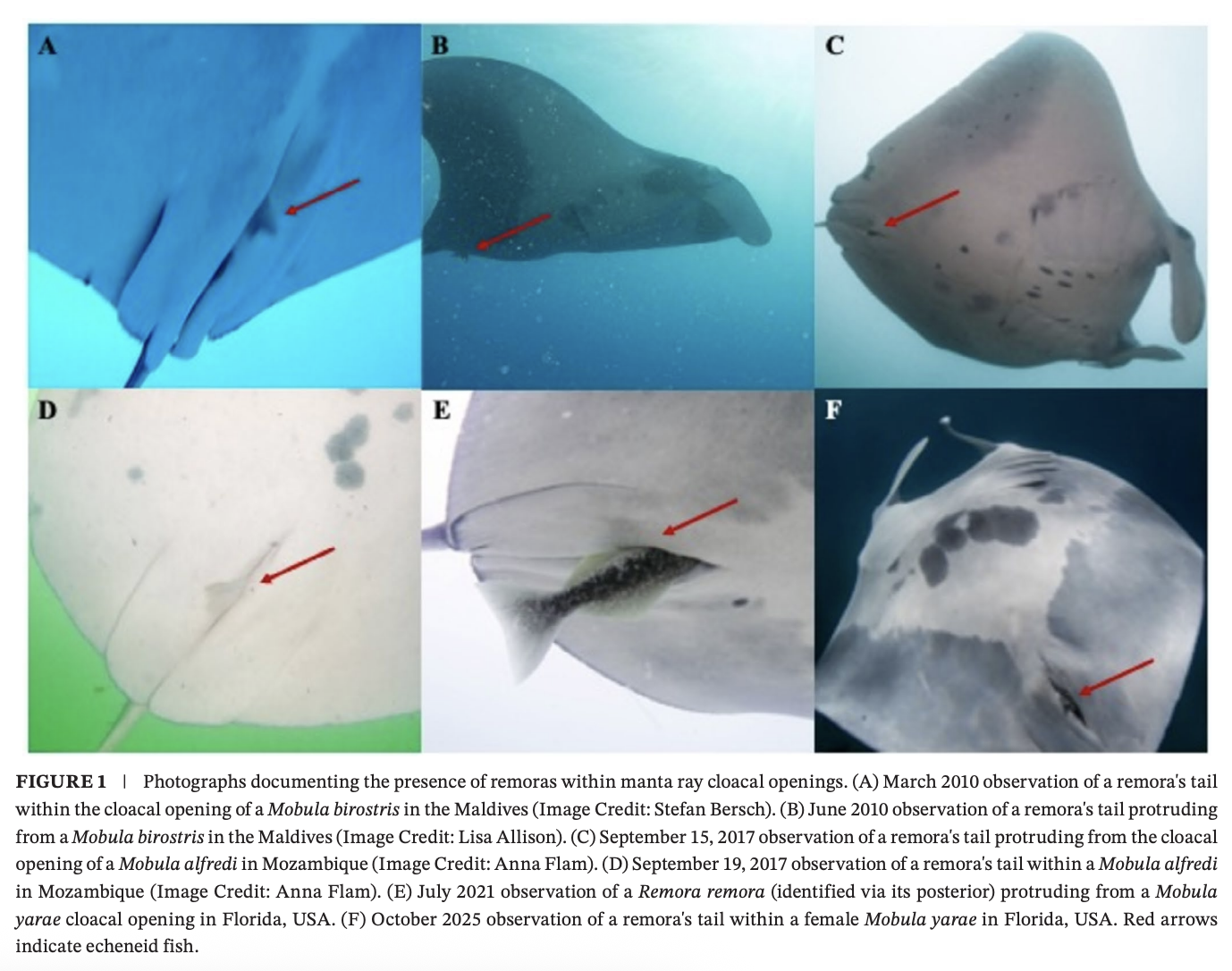
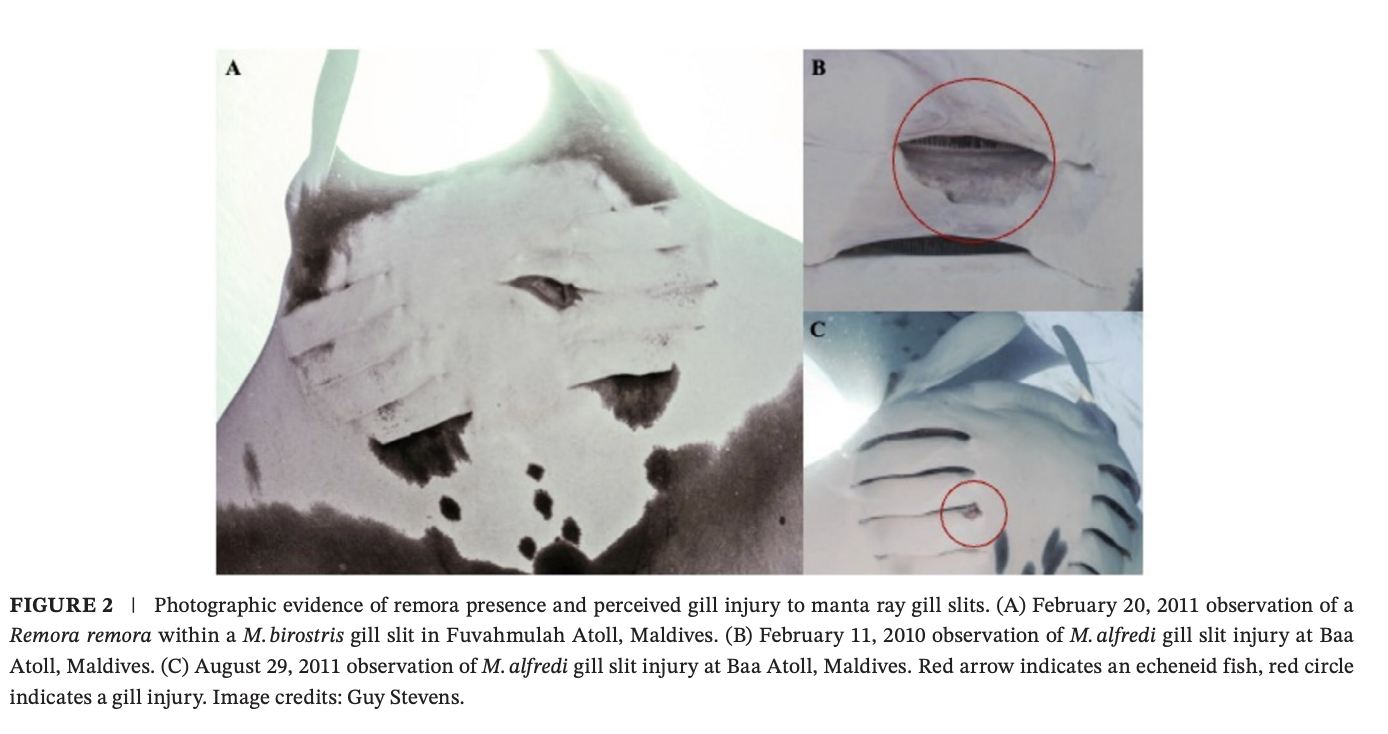
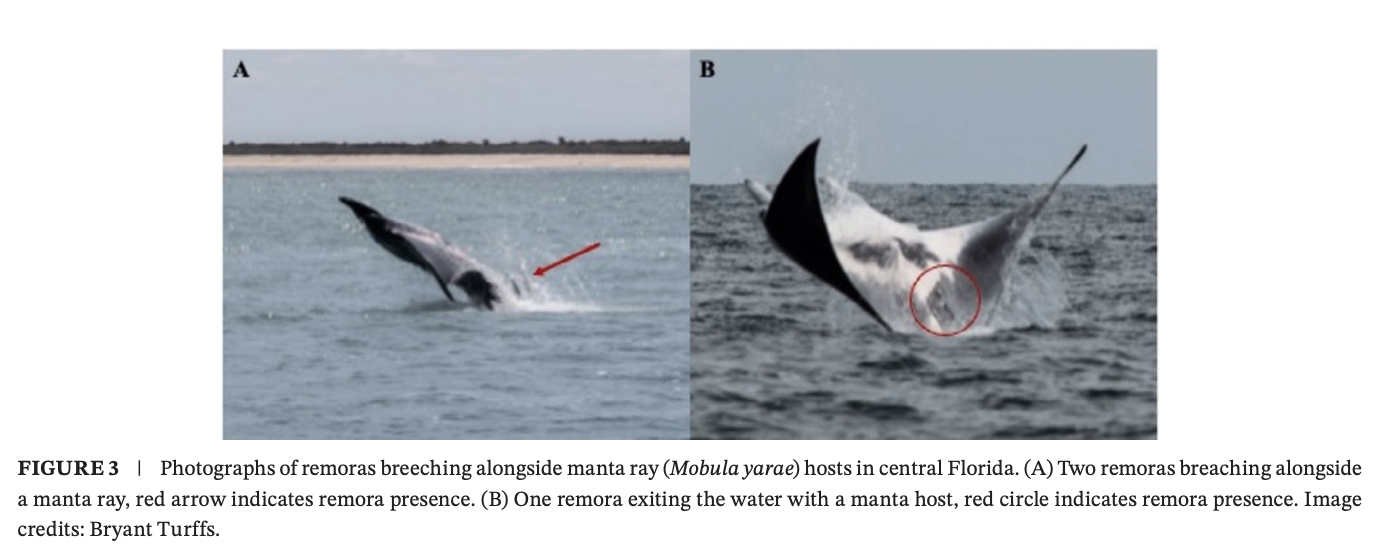
Summary: This study documents unusual symbiotic behaviour between remoras (Echeneidae) and manta rays across multiple ocean basins. Researchers recorded seven instances of remoras diving into the cloacae of all three known manta ray species – the Atlantic (Mobula yarae), oceanic (M. birostris) and reef manta ray (M. alfredi) – in both juvenile and adult individuals. The cloaca is a single opening used for excretion and reproduction in many marine animals. They also observed remoras attaching beneath gill slits and identified gill injuries likely caused by intrusion. Because both remoras and manta rays are highly mobile, their interactions remain difficult to study. These findings expand knowledge of remora-host relationships, highlighting the complexity and diversity of marine symbioses while providing a basis for future research and conservation planning.
Abstract
“Symbioses between remoras (Family Echeneidae) and marine megafauna are well-documented across diverse lineages. However, despite recent advancements in understanding the intricacies of these interactions, the dynamics of these relationships remain poorly understood, largely due to the highly mobile nature of both host and symbiont. Here we report seven observations of Echeneidae cloacal diving behavior in manta rays. These observations span all three currently described species of manta rays (Mobula yarae, Mobula birostris, and Mobula alfredi), demonstrate that large Echeneidae can perform cloacal diving behavior in both juvenile and adult manta rays, and show that this behavior occurs across multiple ocean basins. We also document one observation of Echeneidae attachment beneath a host's gill slit and several occurrences of gill injuries consistent with Echeneidae intrusion. These observations contribute to the growing database of Echeneidae-host behavioral interactions and provide an important foundation for understanding the extent, diversity, and dynamics underlying these highly debated, cryptic megafauna-symbiont interactions in marine environments. By providing new evidence of the complexity of symbiotic relationships in marine environments, this study also offers a multi-species natural history context that may inform future research and conservation considerations.”
Video of a Remora remora entering a Mobula yarae cloacal opening in Florida, USA (credit: Yeager et al., 2026)
Author Affiliations
Department of Environmental Science and Policy, Rosenstiel School of Marine, Atmospheric, and Earth Science, University of Miami
Shark Research and Conservation Program, Rosenstiel School of Marine, Atmospheric, and Earth Science, University of Miami
Marine Megafauna Foundation
The Manta Trust
Maldives Manta Conservation Programme
Contribution towards the Manta Trust's Strategic Plan
Goal 1: Strategic Objective 1.1 – The status, distribution, abundance, critical habitats, movement patterns, and ecology of manta and devil rays are understood through collaborative research and monitoring programmes.
Goal 1: Strategic Objective 1.3 – Scientific knowledge generated through research is translated into conservation management recommendations and policy-relevant outputs.
Goal 4: Strategic Objective 4.2 – People who interact with manta and devil rays and their habitats in geographical focus areas are supportive of their conservation and act accordingly.