Oceanic atoll in southern Maldives offers refuge for elasmobranch species amidst global declines
25 October 2026
Kaitlyn M. Zerr, Simon Hilbourne, Isabel R. Gregr, Irthisham H. Zareer, Guy M. W. Stevens & Julia K. Baum
Reef Sharks • Time-lapse Video • Remote Reefs • Marine Protected Areas • Elasmobranchs • Marine Megafauna
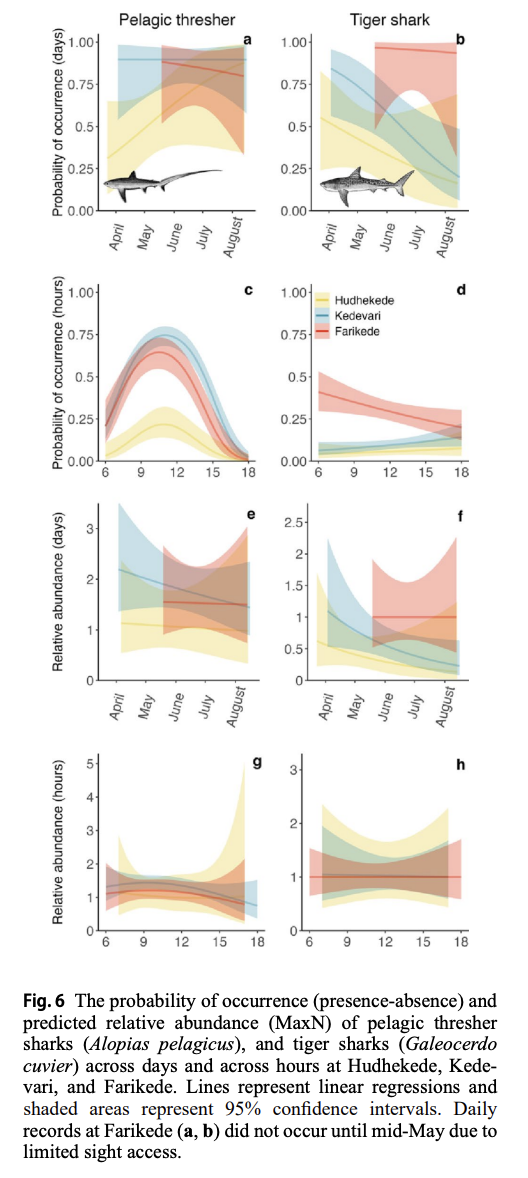
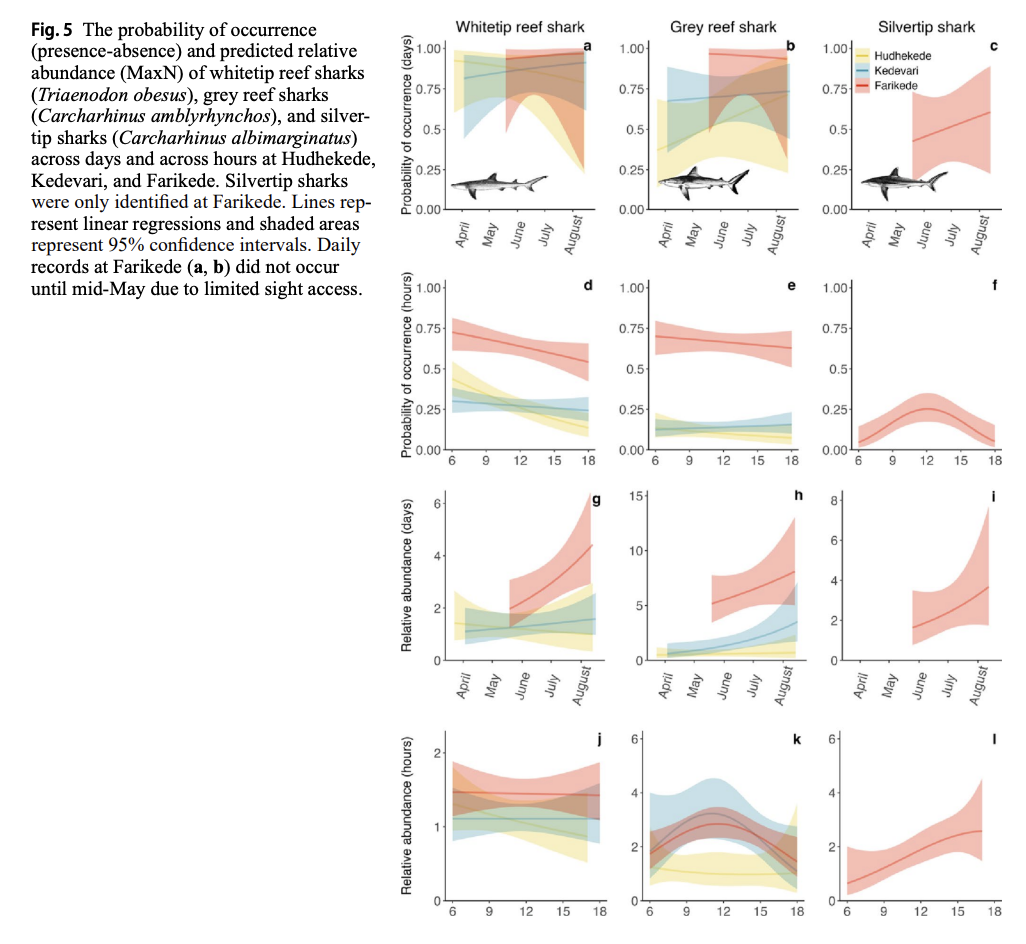
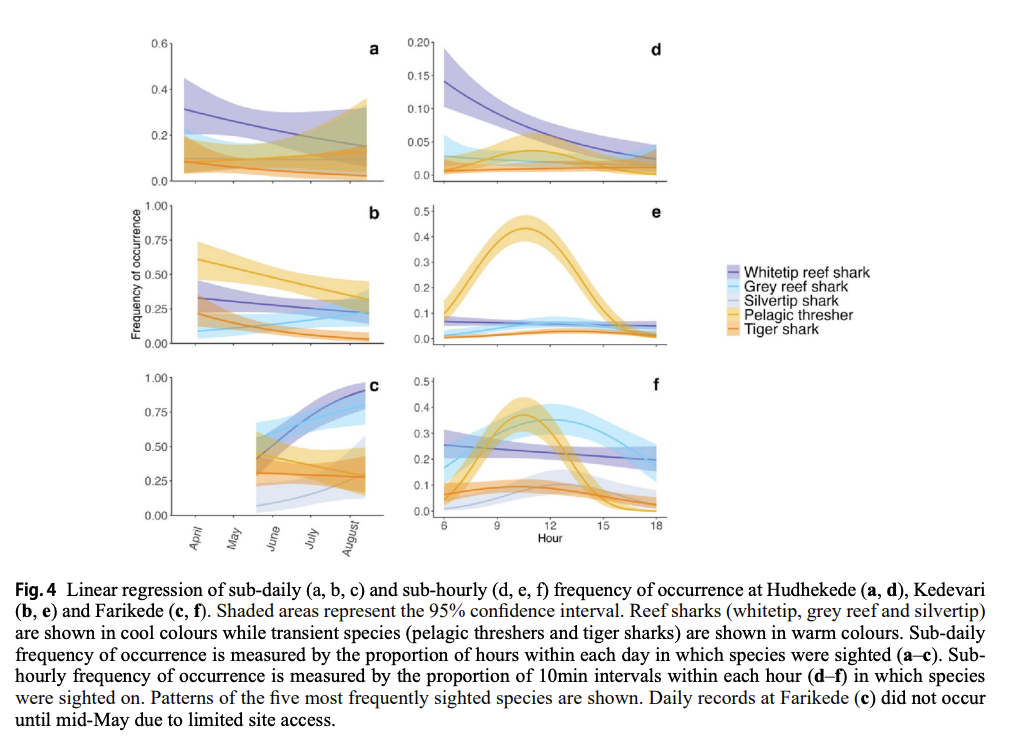
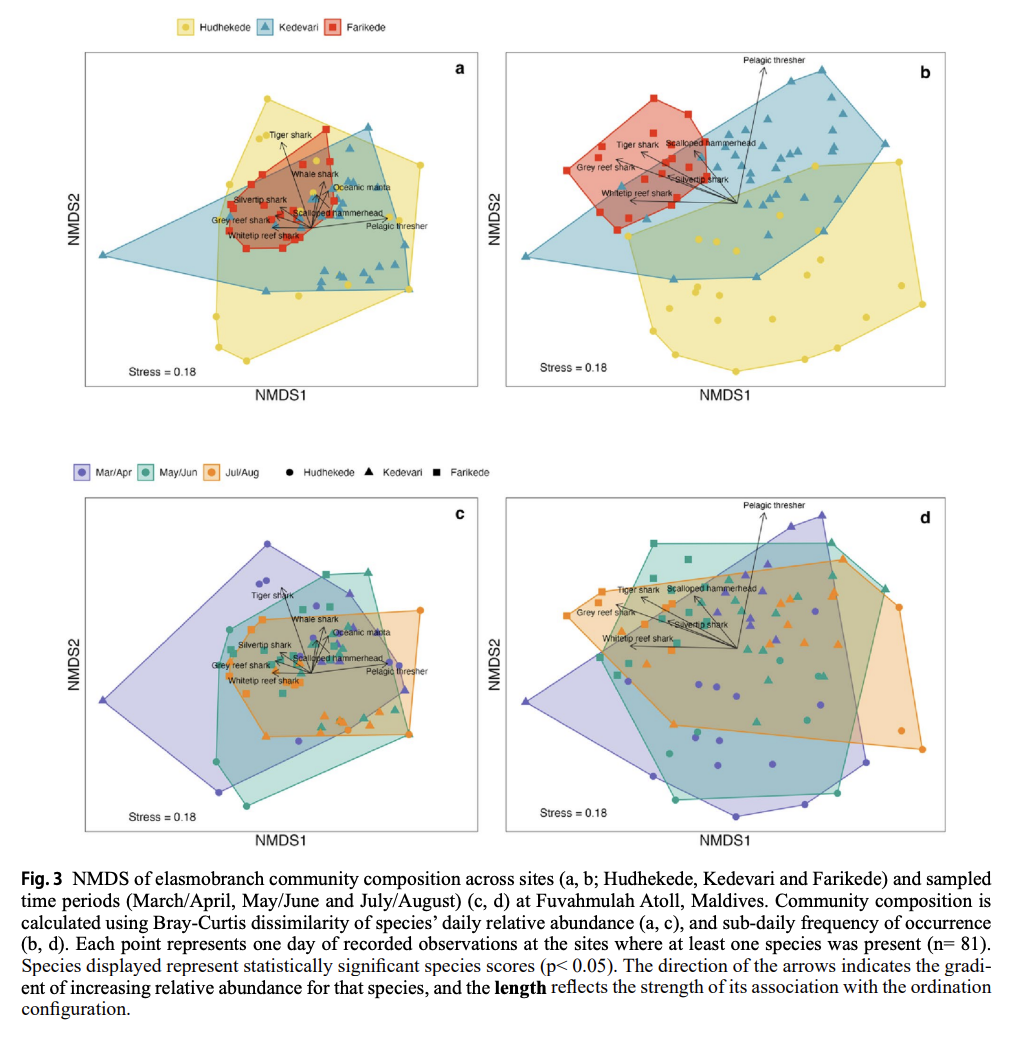
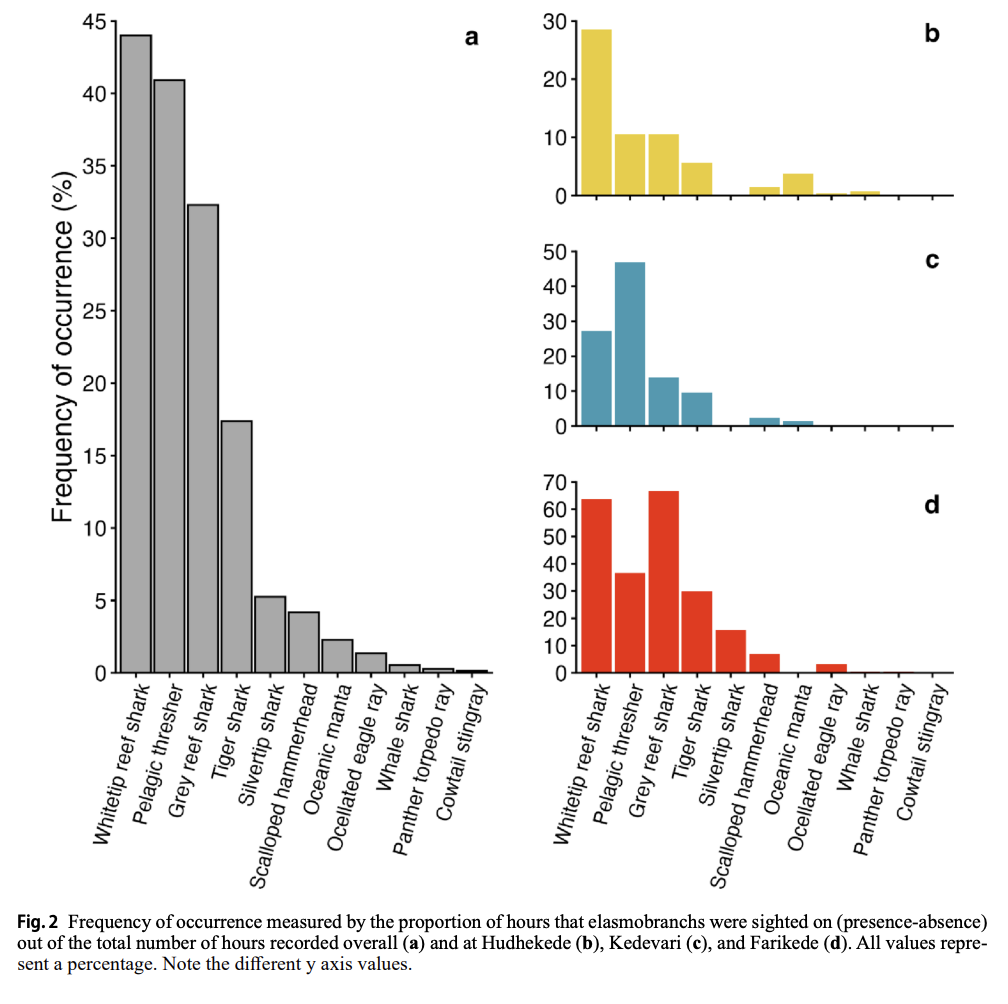
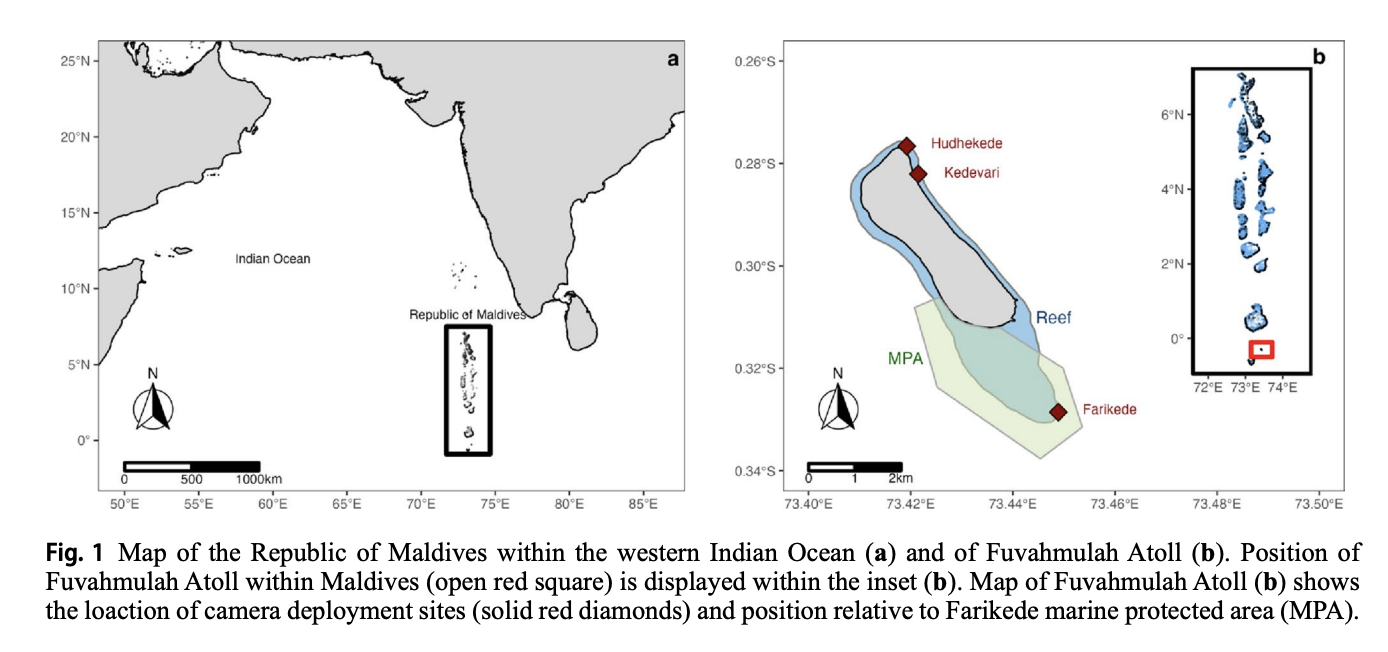
Summary: Sharks and rays have declined widely, but those at Fuvahmulah Atoll, a recently designated UNESCO Biosphere Reserve in the southern Maldives, are little studied. Researchers used timelapse cameras at three shallow forereef sites from March to August 2022, analysing over 1.6 million images. Elasmobranchs appeared on 95% of days and 72% of daylight hours. Of 11 species, whitetip reef sharks were seen most often, while pelagic threshers appeared in the most images, lingering at a cleaning station. Occurrence varied by time of day, site and season. Shark sightings peaked inside the Farikede marine protected area, underlining the importance of protection.
Abstract
“Despite their ecological and socioeconomic importance, oceanic and reef-associated elasmobranchs (sharks and rays) have experienced widespread declines. Within the Indian Ocean, Fuvahmulah Atoll, a highly exposed oceanic atoll in the southern Republic of Maldives, was recently designated as a UNESCO Biosphere Reserve, partly due to its extraordinary marine megafauna. However, Fuvahmulah’s elasmobranch populations have been little studied. Using remote timelapse cameras at three shallow forereef sites on the atoll, we quantified elasmobranch sightings during daylight hours between March and August 2022 (n = 1,629,756 images analyzed). Elasmobranchs were sighted almost every day (95%, n = 60) and most hours (72%, n = 550). Of the four ray and seven shark species sighted, whitetip reef sharks were seen on the most hours (n = 327) and days (n = 56), but pelagic thresher sharks were sighted in the most images (n = 27,447), reflecting the long periods this species spent at one site known to be a cleaning station. We document significant differences in species’ occurrences, relative abundances (MaxN), and frequency of occurrences diurnally, across sites, and seasons. The highest shark sighting rates overall, and for grey reef, whitetip reef, and tiger sharks, were observed within the Farikede marine protected area, for which management plans are in development. Our findings, which represent the first quantitative reports of Fuvahmulah’s elasmobranchs, underscore the atoll’s importance and that of protected areas for ensuring the persistence of these megafauna.”
Author Affiliations
The Manta Trust
Maldives Manta Conservation Programme
University of Victoria
Maldives Whale Shark Research Programme
Funding
Natural Sciences and Engineering Research Council of Canada (NSERC) Canada Graduate Scholarship
NSERC Michael Smith Foreign Study Supplement
Rufford Foundation
University of Victoria (UVic)
UVic’s Centre for Asia-Pacific Initiatives
The Manta Trust
Maldives Manta Conservation Programme
Discover Sharks
Contribution towards the Manta Trust's Strategic Plan
Goal 3: Strategic Objective 3.1 – All manta and devil ray species in the regions where we work are fully protected and conserved through species management plans.
Goal 3: Strategic Objective 3.2 – Key manta and devil ray aggregation sites fall within protected areas that are effectively managed.
Goal 3: Strategic Objective 3.3 – The majority of tourists and operators in the regions where we work comply with responsible practices
Goal 3: Strategic Objective 3.4 – The environmental drivers on manta and devil ray populations are better understood to help determine the impact of the climate crisis and inform conservation measures.